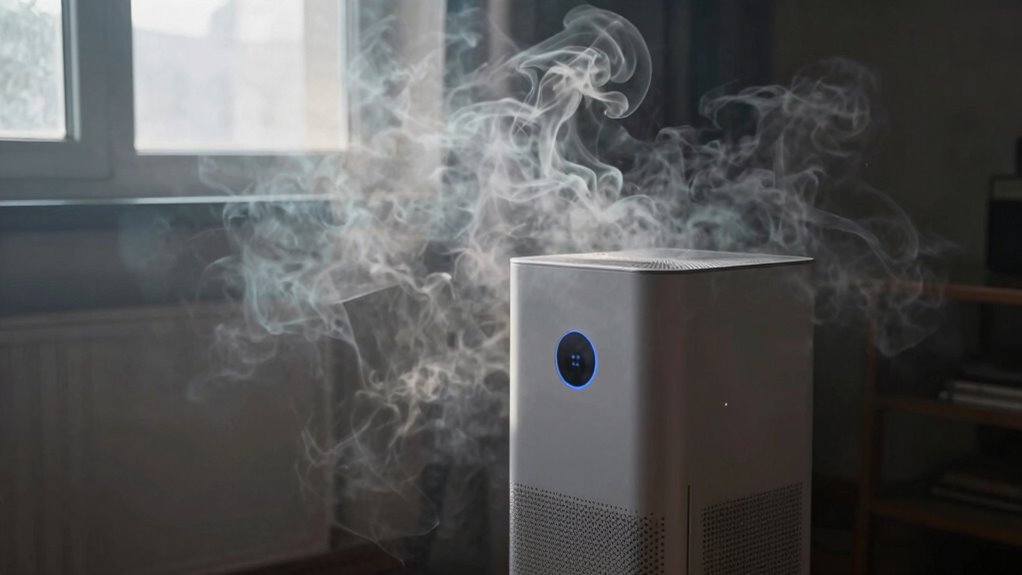
During smoke season, an air purifier can help reduce indoor smoke particles and odors, making your home feel fresher. It captures tiny pollutants with HEPA filters and absorbs odors with activated carbon filters, but it can’t eliminate the actual source of smoke like candles or cooking. Proper maintenance, like replacing filters regularly, is essential for effectiveness. To improve indoor air quality further, use ventilation and control indoor sources—keep going for more helpful tips.

Get oils, diffusers and self-care delivered free with Prime
- Fast, free delivery on millions of items
- Prime Video, Amazon Music and more included
- Member-only deals all year
Key Takeaways
- Air purifiers effectively reduce smoke particles and odors but cannot eliminate the source of smoke itself.
- Proper maintenance, including regular filter replacement, is essential for optimal purifier performance.
- They work gradually and are most effective when combined with good ventilation and source control measures.
- Purifiers do not instantly clear all pollutants; their effectiveness depends on proper use and complementary strategies.
- Managing expectations and understanding limitations help ensure healthier indoor air during smoke seasons.
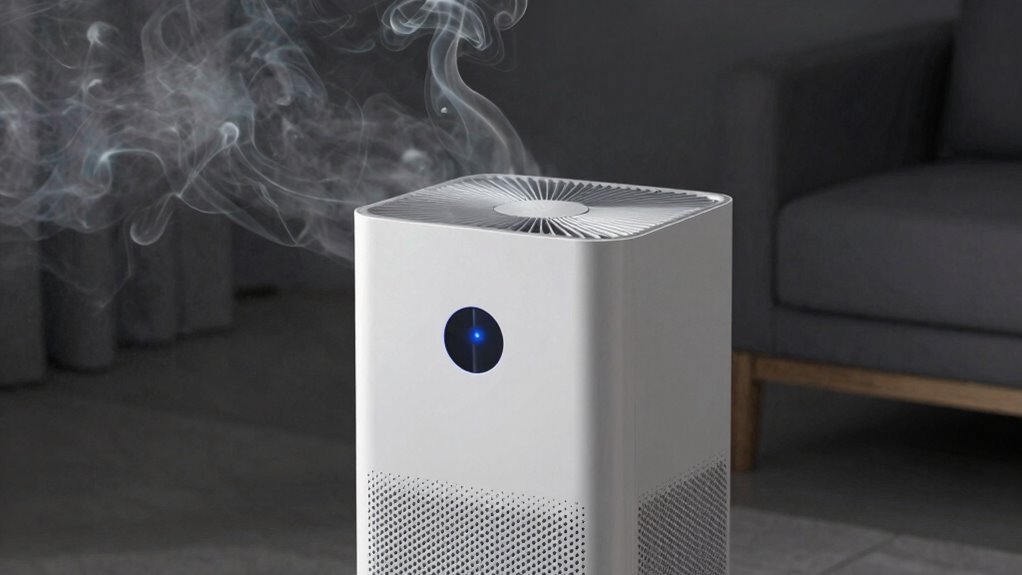
If you’re dealing with smoke in your home, an air purifier designed for smoke can make a profound difference. Smoke particles and the associated indoor odor can linger long after the fire has gone out, making your living space uncomfortable and unhealthy. A good air purifier for smoke is specifically equipped to handle tiny particles, including the dangerous pollutants that are invisible to the naked eye. It pulls in air, traps the smoke particles in filters, and releases cleaner air back into your space. This can noticeably improve indoor air quality, especially during seasons when outdoor smoke is prevalent or if you live in an area prone to wildfires.
However, it’s important to understand what an air purifier for smoke can and cannot do. While it’s effective at reducing indoor odor caused by smoke, it doesn’t eliminate the source of the smoke itself. If you’re still burning candles, cooking with strong spices, or smoking indoors, the odor and particles will continue to persist despite the purifier’s efforts. To truly improve your environment, you need to control these sources in addition to running your air purifier regularly. Also, keep in mind that the effectiveness depends on proper air purifier maintenance. Regularly replacing filters, especially HEPA and carbon filters, is essential to keep the device functioning at peak performance. Neglecting maintenance can cause the purifier to become less effective, allowing smoke odors and particles to escape back into your home.
Additionally, an air purifier for smoke isn’t a magic solution that will instantly clear out all pollutants. It works best as part of an all-encompassing approach, including good ventilation and source control. Some purifiers are equipped with activated carbon filters that absorb odor molecules, but these filters need periodic replacement to stay effective. If you’re not attentive to air purifier maintenance, you risk reducing its ability to combat indoor odors, which defeats the purpose of having one in the first place. Proper air quality management is essential for maintaining a healthier indoor environment. Regularly monitoring indoor air quality with air quality measurements can help you determine if your efforts are effective and if additional measures are needed. Incorporating source control strategies such as improving ventilation or reducing indoor smoke sources can further enhance indoor air quality. Understanding the importance of filter maintenance can help ensure your air purifier continues to perform optimally over time. Moreover, understanding the limitations of air purifiers can help set realistic expectations and guide your overall approach to indoor air health.
air purifier for smoke with HEPA filter
As an affiliate, we earn on qualifying purchases.
As an affiliate, we earn on qualifying purchases.
Frequently Asked Questions
Can Air Purifiers Remove All Types of Smoke Particles?
An air purifier can’t remove all types of smoke particles because of its limitations. It mainly targets smaller smoke particles, like those from cigarettes or wildfires, but larger particles might escape filtration. Smoke particle size varies, and some particles can slip through filters, especially if they’re less efficient or clogged. So, while an air purifier helps reduce smoke, it can’t entirely eliminate every smoke particle, especially the larger or more stubborn ones.
How Long Does It Take for an Air Purifier to Clear Smoke?
It can take hours or even days for an air purifier to fully clear heavy smoke, especially in large or poorly ventilated spaces. During this time, your indoor air quality dramatically improves, but you must stay patient and keep your purifier well-maintained. Regular filter changes and proper placement guarantee peak performance, helping you breathe cleaner air faster. Don’t rush—trust the process and keep your purifier running.
Are There Specific Features to Look for in Smoke-Specific Purifiers?
When choosing a smoke-specific air purifier, look for features like HEPA filters and activated carbon filters, which target smoke particles and odors. You should also consider ease of air purifier maintenance and adherence to filter replacement schedules, guaranteeing ongoing effectiveness. A purifier with adjustable fan speeds and real-time air quality monitors can boost performance. These features help guarantee your purifier effectively reduces smoke and maintains clean indoor air.
Can Air Purifiers Eliminate the Smell of Smoke Completely?
You might think an air purifier can wipe out every trace of smoke smell, but irony is, it often can’t eliminate it completely. While indoor ventilation and air quality monitoring help, residual odors cling stubbornly. A high-quality purifier with activated carbon filters reduces the smell considerably, but some lingering scent may remain. So, don’t rely solely on it—combine ventilation and monitoring for the best chance at fresh air.
Do Air Purifiers Require Special Filters for Wildfire Smoke?
Yes, air purifiers often require special filters, like HEPA or activated carbon, to effectively handle wildfire smoke. Regular air purifier maintenance and timely filter replacement are essential to keep it working efficiently. Check the manufacturer’s recommended filter replacement frequency, usually every 3 to 6 months, especially during smoke season. This guarantees your purifier continues to filter out harmful particles and odors caused by wildfire smoke.
Conclusion
So, while an air purifier can markedly reduce smoke and improve your indoor air quality, it’s not a magic fix. You might think you’re safe, but hidden dangers could still linger, waiting to surprise you. Will your purifier be enough when smoke returns? Keep your eyes open and stay vigilant—because the next smoky surprise could be just around the corner. Are you ready to face what’s really in the air?
Evergreen bestsellers Picks
bestsellers
As an affiliate, we earn on qualifying purchases.