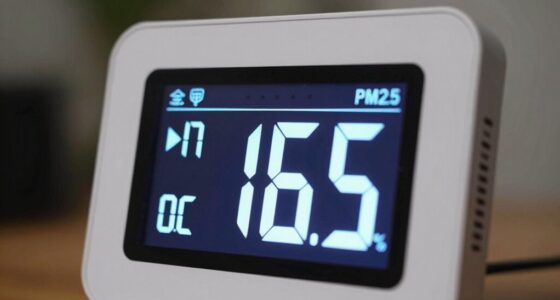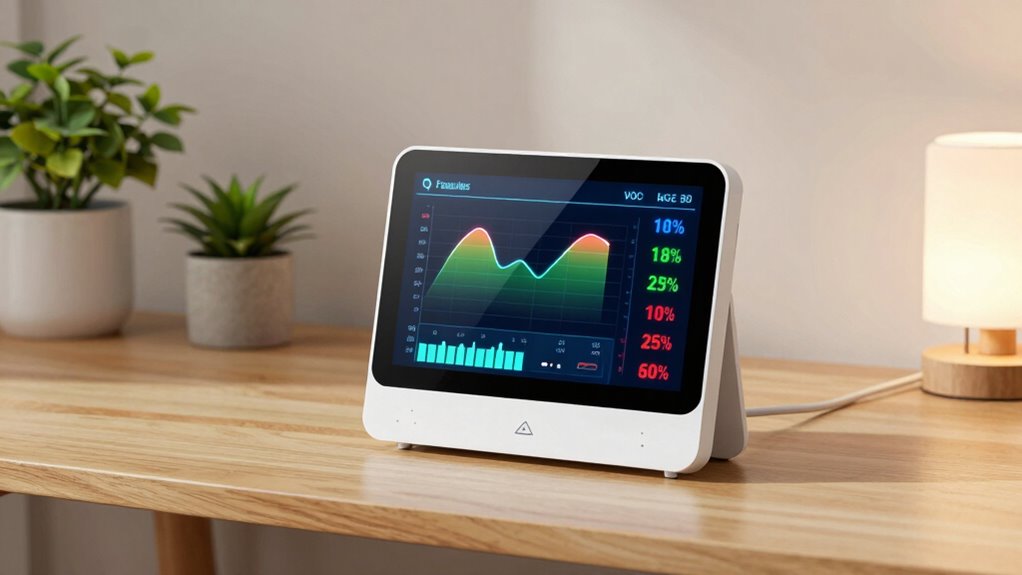

An indoor air quality monitor tells you real-time levels of pollutants like PM2.5, VOCs, CO2, and humidity, giving immediate insights into your air’s health. It helps you see if your air purifier is working effectively and guides you to improve ventilation when CO2 rises. By identifying pollution sources and trends, it empowers you to take targeted actions for a safer, healthier environment. Keep exploring to discover how it can help you maintain better indoor air quality effortlessly.
Key Takeaways
- It provides real-time data on indoor pollutant levels like PM2.5, VOCs, CO2, and humidity.
- It shows the effectiveness of air purifiers and indicates when filters need replacement.
- It detects poor ventilation by monitoring CO2 levels, guiding airflow improvements.
- It identifies pollution sources and tracks trends over time for targeted mitigation.
- It empowers users to make informed decisions for healthier indoor environments.
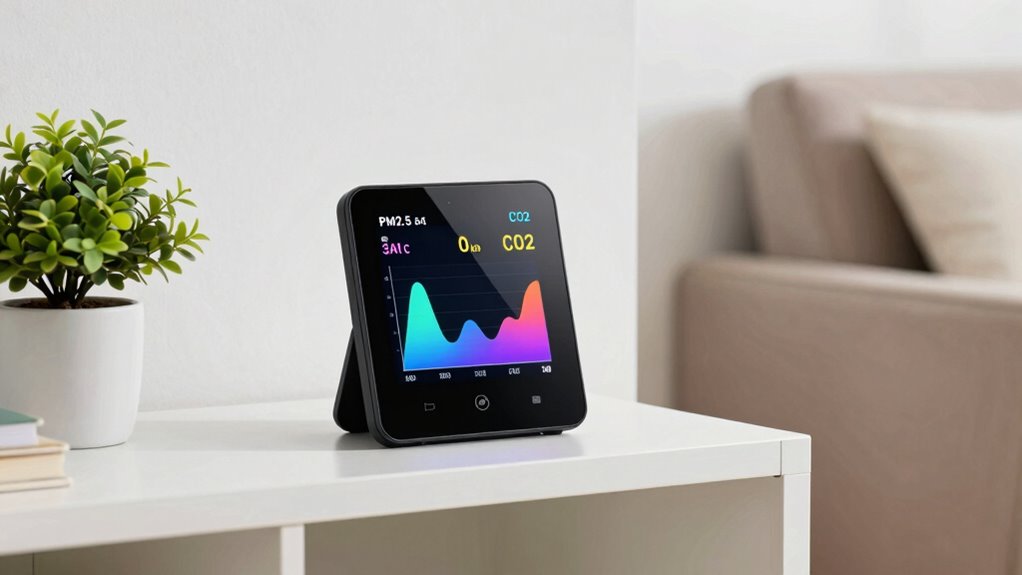
Indoor air quality monitors are essential tools for maintaining a healthy living environment, especially as indoor air can sometimes be more polluted than outdoor air. These devices give you real-time data on what’s happening in your space, so you can take immediate action to improve your indoor environment. When you check an air quality monitor, it tells you more than just whether the air smells fresh or stale. It measures specific pollutants like particulate matter (PM2.5 and PM10), volatile organic compounds (VOCs), carbon dioxide (CO2), and humidity levels. Understanding these readings helps you gauge the overall healthiness of your indoor air and decide what steps to take next.
Indoor air quality monitors provide real-time data on pollutants like PM, VOCs, CO2, and humidity for a healthier living environment.
One of the key insights an air quality monitor provides is the effectiveness of your air purifier. If you’re using a device to clean the air, the monitor helps you see whether it’s working as expected. For example, if the monitor shows high levels of PM or VOCs even when your purifier is on, it indicates that your device might need maintenance, a replacement filter, or perhaps a different model better suited to your space. Conversely, if the monitor shows low pollutant levels after running your purifier, you gain confidence that your equipment is doing its job. This real-time feedback allows you to optimize your air purifier’s effectiveness, ensuring cleaner air without unnecessary overuse or waste.
Beyond air purifiers, your indoor air quality monitor also informs your ventilation strategies. It reveals whether your current ventilation methods are adequate or if you need to improve airflow. For instance, elevated CO2 levels suggest poor ventilation, meaning stale air isn’t being replaced quickly enough. In such cases, you might need to open windows more often, use exhaust fans, or consider installing an HVAC system with better airflow control. The monitor’s data helps you identify the right moments to increase ventilation, reducing indoor pollutants and humidity that can foster mold growth or dust accumulation. Regularly monitoring indoor air quality can also help you recognize air quality trends, enabling proactive adjustments. Additionally, understanding the pollutant levels helps you better comprehend the sources of indoor pollution and how to mitigate them effectively. Monitoring indoor air quality is a crucial step in creating a healthier environment and preventing long-term health issues associated with poor air quality.
Furthermore, consistent monitoring can help identify hidden sources of pollution, allowing you to address issues that may not be immediately obvious. Ultimately, what an indoor air quality monitor tells you empowers you to take targeted actions. It bridges the gap between perception and reality, showing you concrete data about your indoor environment. With this information, you can fine-tune your ventilation strategies and ensure your air purifier operates at peak efficiency. By continuously monitoring, you’re better equipped to create a safer, healthier space for yourself and your loved ones—one where the air you breathe supports overall well-being. Proper indoor air quality management is essential for maintaining a comfortable and safe environment.
indoor air quality monitor with PM2.5 VOC CO2 humidity
As an affiliate, we earn on qualifying purchases.
As an affiliate, we earn on qualifying purchases.
Frequently Asked Questions
How Often Should I Calibrate My Air Quality Monitor?
You should calibrate your air quality monitor at least once every six months, but sensor maintenance might require more frequent calibration depending on usage. Check the manufacturer’s guidelines for calibration frequency, as environmental factors like dust or humidity can affect sensor accuracy. Regular calibration guarantees your monitor provides reliable readings, helping you maintain a healthy indoor environment. Keep track of calibration dates to stay on top of sensor maintenance.
Can Indoor Air Quality Monitors Detect Allergens Like Pollen?
Pollen detection and allergen monitoring are generally beyond the capabilities of most indoor air quality monitors. These devices primarily track particles like dust, smoke, and VOCs, but they don’t specifically identify or quantify pollen or allergens. If allergen awareness is your goal, consider specialized allergen monitors or air purifiers with allergen filters. These tools help you detect, monitor, and manage airborne allergens more accurately, ensuring a healthier, happier home environment.
Do These Monitors Require Wi-Fi Connection to Work Properly?
Indoor air quality monitors generally need Wi-Fi to send data to your smartphone or cloud services, so they are Wi-Fi dependent. Without a stable connection, you might face connectivity issues, preventing real-time updates or data syncing. Some models offer offline modes or local storage, but for consistent monitoring and remote access, a reliable Wi-Fi connection is crucial. Make certain your Wi-Fi is strong to avoid disruptions in monitoring.
Are There Portable Air Quality Monitors for Outdoor Use?
Think of a portable device as your trusty outdoor sensor, ready to leap into action wherever you go. Yes, there are portable air quality monitors designed for outdoor use. These devices are compact and lightweight, making them perfect for hiking, camping, or city adventures. They give you real-time data on pollutants, allergens, and air quality levels, helping you stay informed and make smarter decisions about your environment, wherever you are.
What Is the Typical Lifespan of an Indoor Air Quality Sensor?
You can expect an indoor air quality sensor to last around 2 to 5 years, depending on sensor durability and usage. Regular calibration, usually every 6 to 12 months, is essential to uphold accuracy. Over time, sensors may drift, so staying on top of calibration ensures reliable readings. Proper maintenance and choosing high-quality monitors can extend your sensor’s lifespan, giving you better indoor air insights for years.
Conclusion
Now that you’ve seen what an indoor air quality monitor reveals, imagine what it might be hiding. The hidden dangers lurking in your home could be more than just dust or odors—they might be affecting your health in ways you don’t realize. Will you take action before it’s too late? With this device, you hold the power to uncover the truth. Are you ready to see what’s really in the air you breathe?