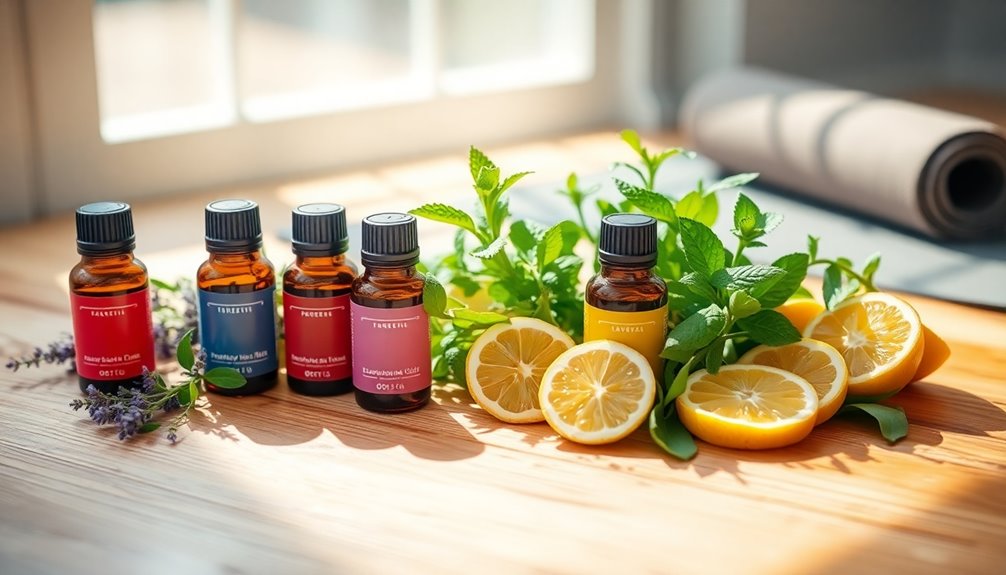
When diffusing citrus oils, always prioritize proper dilution and use high-quality diffusers made from materials like glass or stainless steel, as citrus oils can degrade plastics. Start with small amounts—about 1-2 drops in your diffuser—and avoid overuse in enclosed spaces to prevent irritation or sensitivities. Keep windows open for ventilation and monitor how your space responds. For detailed tips on safe diffuser use and blending techniques, there’s more to explore.
Key Takeaways
- Always dilute citrus oils properly according to manufacturer instructions before diffusing to prevent skin and eye irritation.
- Use citrus oils in well-ventilated areas and avoid over-diffusing to prevent overwhelming aromas and sensitivities.
- Start with small amounts and gradually increase to monitor reactions, especially around pets and children.
- Blend citrus oils with other calming or woody oils to balance their potency and create complex, safe aromas.
- Regularly check dilution ratios and diffusion duration to maintain safety and maximize aromatherapy benefits.
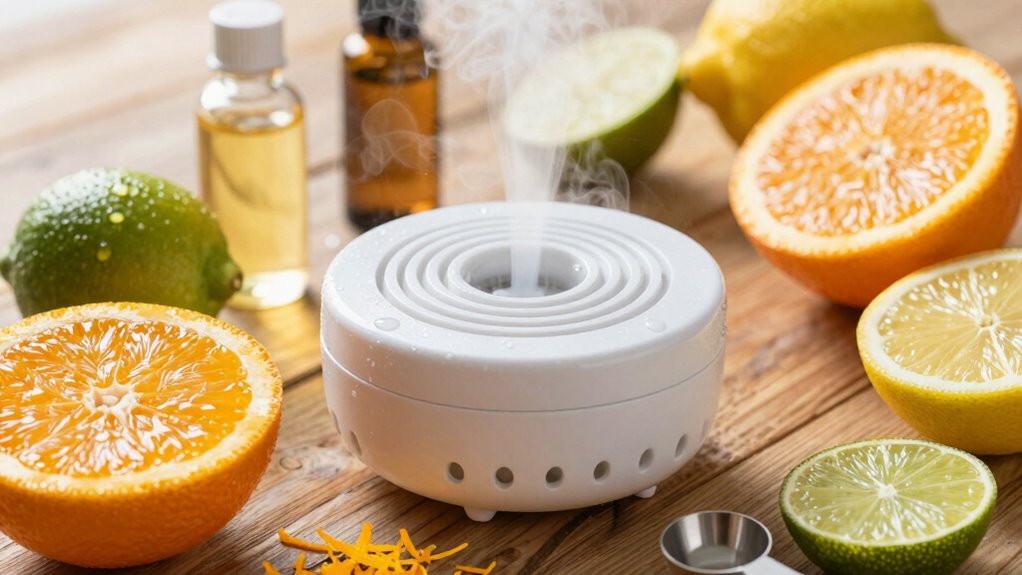
Have you ever wondered how diffusing citrus oils can brighten your space and mood? When you choose to incorporate citrus oils into your diffuser, it’s important to prioritize safety precautions to guarantee a positive experience. Citrus oils are potent, and improper use can lead to skin sensitivities or irritation if they come into direct contact with your skin or eyes. Always dilute citrus essential oils properly and avoid overuse, especially in enclosed spaces. Before diffusing, check the manufacturer’s instructions and recommended dilution ratios. Keep the diffuser in a well-ventilated area, and never leave it unattended for extended periods. If you have pets or children, take extra care, as citrus oils can be toxic to some animals and sensitive kids. Remember, moderation is key to safely enjoying the uplifting aroma of citrus without overwhelming your senses or risking adverse reactions. Understanding the potency and safety considerations of citrus oils helps ensure a safe and enjoyable aromatherapy experience.
Blending techniques play a vital role in maximizing the benefits of citrus oils while maintaining safety. When blending citrus oils with other essential oils, start with small amounts to gauge the scent and effect. Citrus oils like lemon, orange, and grapefruit mix well with herbs like mint or lavender, creating invigorating and balanced blends. Use a drop or two of each oil in your diffuser, and give the mixture a gentle swirl to combine. Consider layering citrus with woody or spicy oils if you want a more complex aroma—just guarantee the scents complement each other and don’t overpower your space. Always perform a patch test if you’re new to blending, especially if you plan to use the oils on your skin later. This helps detect any sensitivity before diffusing larger quantities.
Another tip for blending citrus oils safely is to pay attention to individual oil strengths. Some citrus oils are more concentrated and can be more stimulating or irritating than others. For example, bergamot and lemon are generally milder, but bergamot contains compounds that can cause photosensitivity, making your skin more sensitive to sunlight. So, if you’re diffusing citrus oils during the day, be mindful of these properties. Always start with a small amount and increase gradually, observing how your space and mood respond. Proper blending not only enhances your aromatherapy experience but also guarantees you stay within safe limits. By implementing safety precautions and thoughtful blending techniques, you can enjoy the vibrant, mood-boosting benefits of citrus oils safely and effectively in your home.
Frequently Asked Questions
Can Citrus Oils Cause Allergic Reactions When Diffused?
Yes, diffusing citrus oils can cause allergic reactions, especially if you have skin sensitivity or allergies to certain scents. You might experience symptoms like sneezing, headaches, or irritated eyes. To stay safe, start with a low diffuser strength and guarantee good ventilation. If you notice any discomfort or allergic reactions, stop diffusing citrus oils immediately and consult a healthcare professional. Always patch test if applying oils topically.
How Long Should I Diffuse Citrus Oils Safely?
You should diffuse citrus oils for about 30 to 60 minutes at a time to make certain of safety. Don’t worry about overdoing it—taking regular breaks helps prevent overstimulation or allergic reactions. Always follow safety precautions by ensuring proper ventilation and using high-quality diffusers. If you notice any irritation or allergic symptoms, stop immediately. Limiting diffusion duration allows you to enjoy citrus scents without risking adverse effects.
Are Citrus Oils Safe Around Pets During Diffusion?
You should exercise caution with citrus oils around pets during diffusion because of pet safety concerns and citrus sensitivity. While some pets tolerate diffusing citrus oils, others may experience respiratory issues or skin irritation. Always monitor your pets closely, use lower diffuser strengths, and make sure good ventilation is in place. It’s best to consult your veterinarian before diffusing citrus oils if your pet has a history of sensitivities or health issues.
What Is the Ideal Dilution Ratio for Diffusing Citrus Oils?
Oh, because everyone loves an overly strong citrus blast in their living room, right? The ideal dilution ratio for diffusing citrus oils is typically 3-5 drops per 100ml of water. Follow dilution guidelines carefully to guarantee diffusion safety and prevent overwhelming your senses. Remember, more isn’t always better—overdoing it can cause headaches or irritation. Stick to these simple tips for a fresh, safe citrus ambiance.
Can I Mix Citrus Oils With Other Essential Oils Safely?
Yes, you can safely mix citrus oils with other essential oils by using proper blending techniques and scent layering. Start with small amounts, balancing citrus with complementary oils like lavender or eucalyptus. Always dilute according to recommended ratios, and test your blend before diffusing widely. This approach guarantees a harmonious aroma while minimizing potential irritation. Keep safety in mind, especially with citrus oils’ photosensitivity, and enjoy your customized scent.
Conclusion
So, go ahead and enjoy those zesty citrus scents, but remember—more isn’t always merrier. Overdoing it might turn your home into a tangy tornado or, worse, a phototoxic disaster. Use your diffuser wisely, follow the guidelines, and treat citrus oils like the fiery gems they are. After all, nobody wants their peaceful sanctuary to smell like a citrus explosion gone rogue. Stay safe, stay balanced, and keep that diffuser in check!