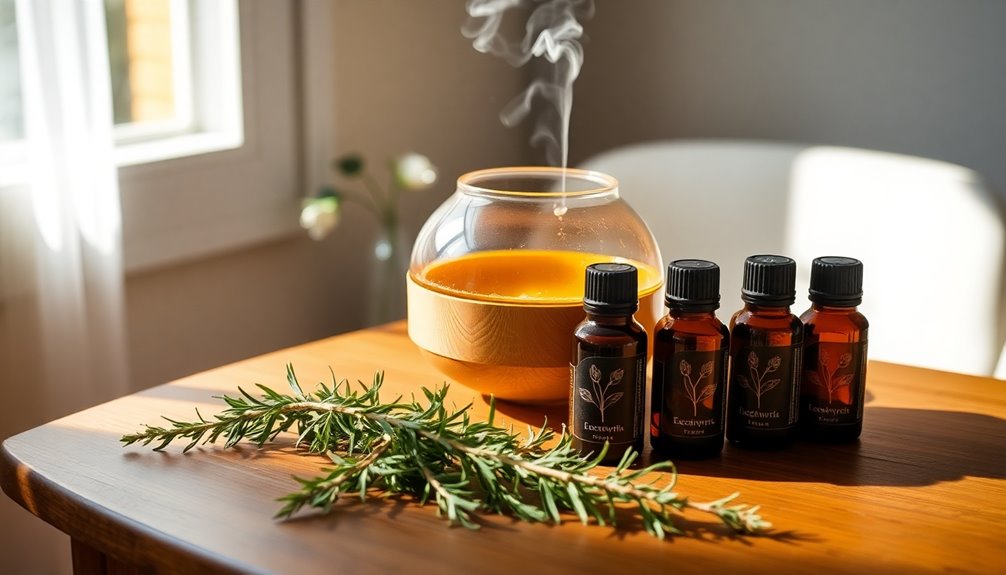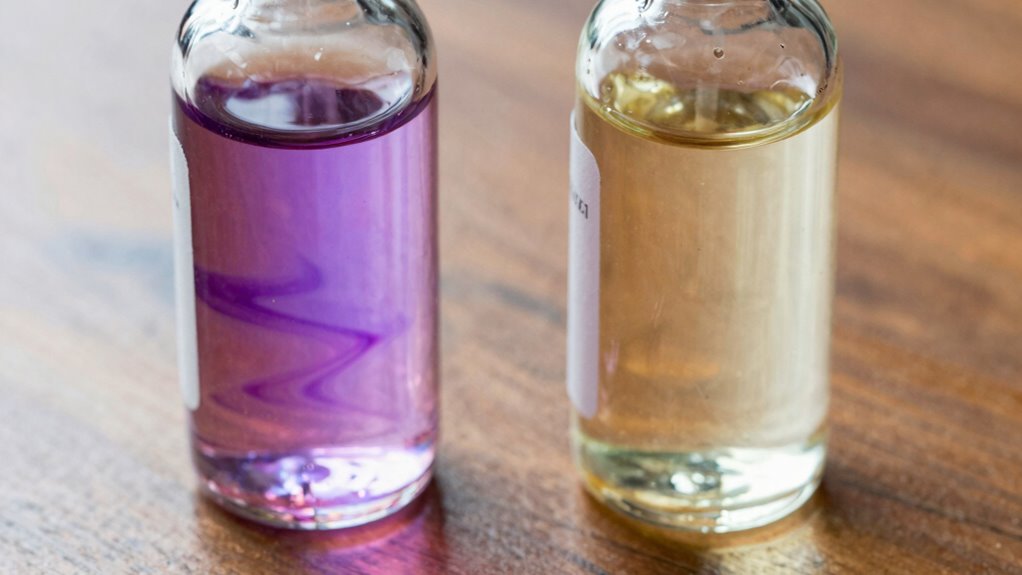

When shopping for oils, know that essential oils are natural extracts with true, delicate aromas that can change over time and require careful storage. Fragrance oils, on the other hand, are synthetic and designed for long-lasting, stable scents that hold up well in various products. To avoid being misled at checkout, understanding these differences helps you choose the right option. Keep going to discover more about how these oils truly differ.
Key Takeaways
- Essential oils are natural extracts with therapeutic benefits, while fragrance oils are synthetic and designed for scent stability.
- Fragrance oils are less expensive, more consistent, and suitable for various applications like candles and cosmetics.
- Essential oils are more fragile, sensitive to light and heat, and may change scent over time, unlike stable fragrance oils.
- Choose essential oils for natural purity and therapeutic properties; opt for fragrance oils for longevity and versatility.
- Always check product labels to distinguish between pure essential oils and synthetic fragrance oils before purchase.
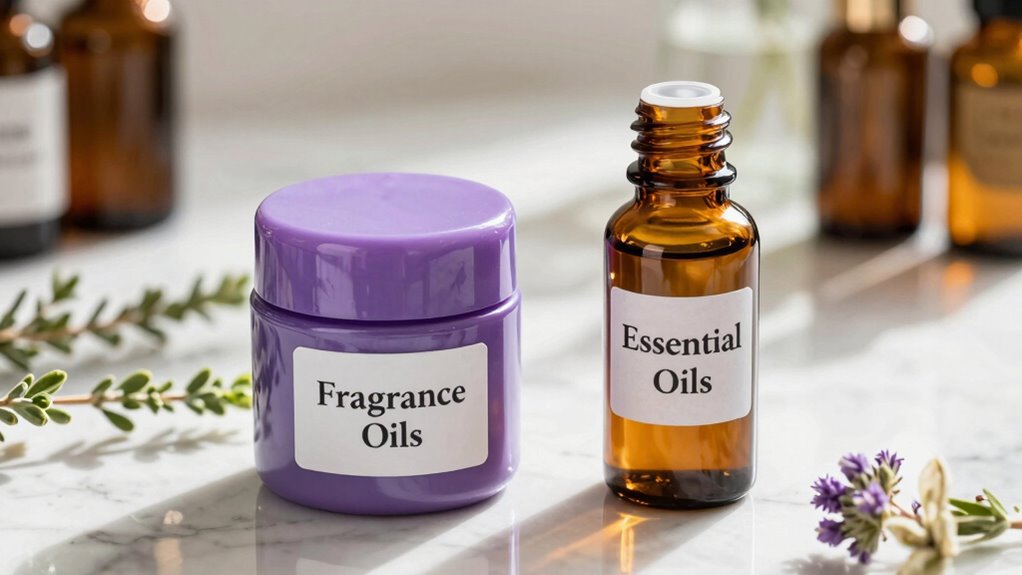
When choosing between fragrance oils and essential oils, understanding their key differences can help you make the right decision for your needs. One of the main distinctions lies in how each type of oil handles aroma preservation. Essential oils are natural extracts derived from plants, flowers, or herbs, and their aroma is preserved through careful distillation or cold pressing. Because they’re pure, their scent can be delicate and may degrade over time if not stored properly, but their natural aroma remains true to the source. Fragrance oils, on the other hand, often rely on synthetic scent production. These oils are created in labs by combining various aroma compounds, which allows manufacturers to craft specific scents that might not exist in nature. Synthetic scent production enables fragrance oils to maintain a consistent aroma for longer periods and ensures stability in different products and conditions. This makes fragrance oils particularly appealing for those seeking longevity and uniformity in their scents.
Additionally, fragrance oils are often formulated to be more versatile, making them suitable for a wide range of applications from candles to personal care products.
You should also consider that essential oils tend to be more complex and nuanced, offering a natural aroma profile that changes subtly over time as the oils age. They’re often prized for their therapeutic properties, especially in aromatherapy, where pure, natural scents can have calming, energizing, or medicinal effects. However, because essential oils are sensitive to heat, light, and air, they require proper storage to conserve their aroma and efficacy. Fragrance oils, by contrast, are engineered to resist such degradation, making them ideal for long-lasting scent in candles, perfumes, and cosmetics. They’re also less expensive and more readily available than pure essential oils, which can be costly and sometimes hard to source.
It’s important to recognize that while essential oils are marketed as natural and organic, they aren’t always free from impurities or contaminants, especially if not sourced from reputable suppliers. Conversely, fragrance oils are more controlled in their composition, as their synthetic scent production process ensures consistency but often involves chemicals that some people prefer to avoid for health reasons. If your goal is aroma preservation and natural scent authenticity, essential oils are usually the better choice. But if you want a stable, long-lasting fragrance with a wide variety of scent options, fragrance oils might be more suitable. Ultimately, your decision depends on your priorities—whether you value natural purity, therapeutic benefits, or synthetic stability and variety.
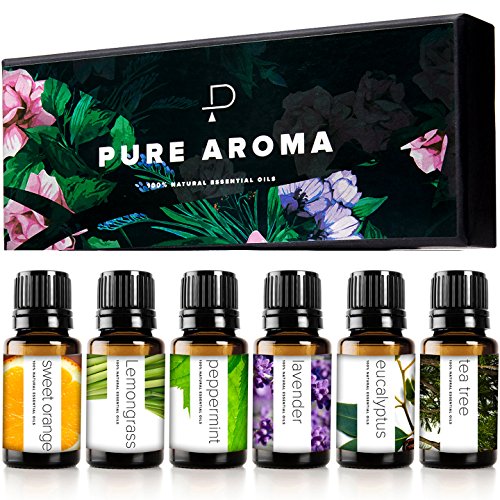
Essential Oils Set by Pure Aroma – Top 6 Aromatherapy Oils Gift Set-6 Pack, 10ml (Eucalyptus, Lavender, Lemongrass, Sweet Orange, Peppermint, Tea Tree)
Discover the natural benefits of aromatherapy with our Pure Aroma Essential Oil Set. This curated collection of 6…
As an affiliate, we earn on qualifying purchases.
As an affiliate, we earn on qualifying purchases.
Frequently Asked Questions
Are Fragrance Oils Safe for Skin Contact?
Fragrance oils are generally not safe for skin contact because they contain synthetic chemicals that can cause skin irritation. Unlike essential oils, which are pure plant extracts, fragrance oils often include additives that might provoke allergic reactions or irritation. If you want to avoid skin issues, it’s best to steer clear of fragrance oils and opt for natural, high-quality essential oils instead. Always do a patch test before full application.
How Long Do Essential Oils Typically Last?
Essential oils typically last between 1 to 3 years, depending on the type and storage. To maximize shelf life, store them in a cool, dark place, tightly sealed, and away from sunlight. Proper storage tips include using dark glass bottles, avoiding temperature fluctuations, and keeping caps tightly closed. Regularly check for changes in scent or color, and remember, the better you store them, the longer they last.
Can Fragrance Oils Be Used in Aromatherapy?
You can use fragrance oils in aromatherapy, but be cautious. Unlike essential oils, fragrance oils are synthetic fragrances and might contain chemicals that could trigger allergies or sensitivities. If you have allergy concerns, it’s better to stick with pure essential oils, which are natural and generally safer for therapeutic use. Always check ingredient labels and test a small amount first to avoid adverse reactions.
Do Fragrance Oils Contain Natural Ingredients?
You might think fragrance oils contain natural ingredients, but the truth is, most are made with synthetic fragrances, not natural extracts. These oils often hide chemicals that mimic scents, creating a false impression of purity. So, if you’re searching for truly natural products, be cautious—fragrance oils rarely contain genuine natural ingredients. Instead, they rely on artificial compounds, making them less authentic than you might hope.
Are There Any Health Risks With Essential Oils?
Yes, there are health risks with essential oils. You might experience skin sensitivities or allergic reactions, especially if you have sensitive skin. Some essential oils contain synthetic chemicals or additives, which can cause irritation or adverse effects. Always dilute essential oils properly, do a patch test first, and consult with a healthcare professional if you’re pregnant, nursing, or have health conditions. Staying cautious helps you enjoy their benefits safely.

Honey Vanilla Fragrance Oil 4 fl. oz. Scented Oil for DIY Soap Making, Candles, Bath Bombs, Body Butters. Used in Aromatherapy Diffusers, Burners and Warmers. Great Addition to Lotions and Creams.
✅ HONEY VANILLA – Has all of the characteristics of vanilla you love most -nutty, velvety, buttery, smooth…
As an affiliate, we earn on qualifying purchases.
As an affiliate, we earn on qualifying purchases.
Conclusion
Now that you know the difference, don’t let yourself get caught off guard at checkout. Remember, not all that smells good is good for you—fragrance oils can be a wolf in sheep’s clothing, often hiding synthetic ingredients. Stick to essential oils for a pure, natural experience. It’s better to be safe than sorry, so do your homework and read labels carefully. Don’t let convenience fool you—your health’s worth the extra effort.

ASAKUKI Essential Oil Diffuser for Home, 500ML Aromatherapy Diffuser Humidifier with Remote Control, 7 Color LED Lights, Quiet Cool Mist Diffuser for Bedroom, Office, Gift for Mom (Yellow)
5-IN-1 AROMATHERAPY DEVICE: This ultrasonic essential oil diffuser is an amazing multi-functional aromatherapy device unlike any other you've…
As an affiliate, we earn on qualifying purchases.
As an affiliate, we earn on qualifying purchases.

PHATOIL 3.38FL.OZ Coconut & Vanilla Fragrance Oils for Aromatherapy, Essential Oils for Diffusers for Home, Perfect for Diffuser, Yoga, DIY Candle and Soap Making – 100ml
High Quality Glass Bottle with Free Dropper: The fragrance oils come in high-quality glass bottles and are infused…
As an affiliate, we earn on qualifying purchases.
As an affiliate, we earn on qualifying purchases.