
Yes, essential oils can go stale over time if not stored correctly. You’ll notice signs like a change in aroma, a dull or rancid smell, cloudiness, or thickening. Sometimes, they develop a film or sediment, indicating chemical changes. Oils high in citrus tend to oxidize faster. To keep them fresh, store in dark bottles in a cool, dark place and seal tightly. Keep watching for these signs to maintain their best effects and learn more about preserving your oils.
Listen free for 30 days with Audible
Thousands of audiobooks and originals — cancel anytime.
As an affiliate, we earn on qualifying purchases.
Key Takeaways
- Essential oils can lose potency and aroma, indicating they may have gone stale.
- Changes in scent, such as off or rancid odors, are common signs of spoilage.
- Cloudiness, thickening, or sediment formation signals chemical alteration.
- Citrus oils and high-volatility oils oxidize faster, showing signs sooner.
- Proper storage in dark, cool bottles extends shelf life and helps detect spoilage early.

Have you ever wondered if essential oils can go stale? It’s a common question, especially if you’ve invested in some beautiful bottles and want to get the most out of your collection. The good news is that, yes, essential oils can lose their potency over time, but understanding the signs and proper storage can help you preserve their aromatherapy benefits longer. When oils go stale, their aroma and therapeutic properties diminish, which means you won’t experience the same calming, energizing, or healing effects.
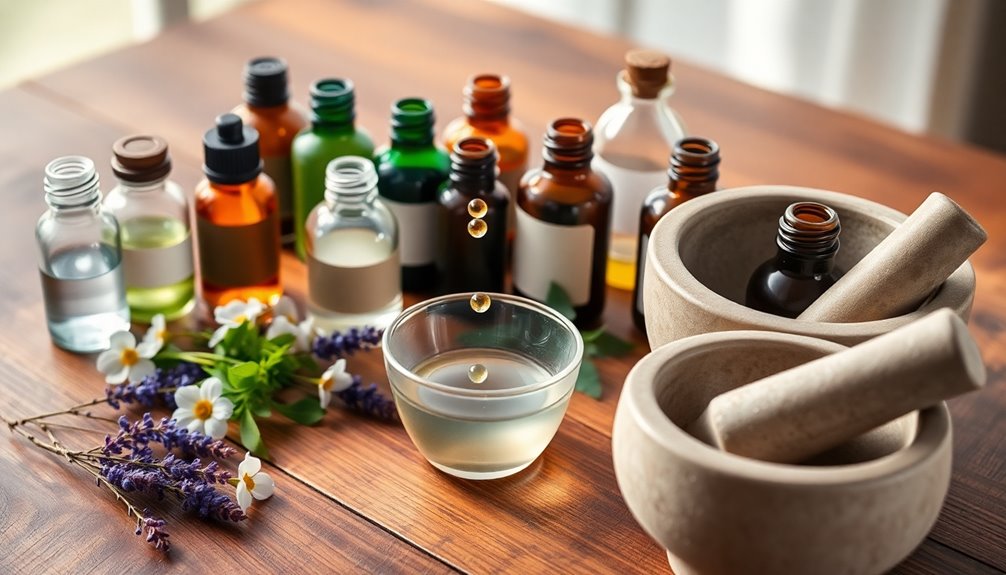
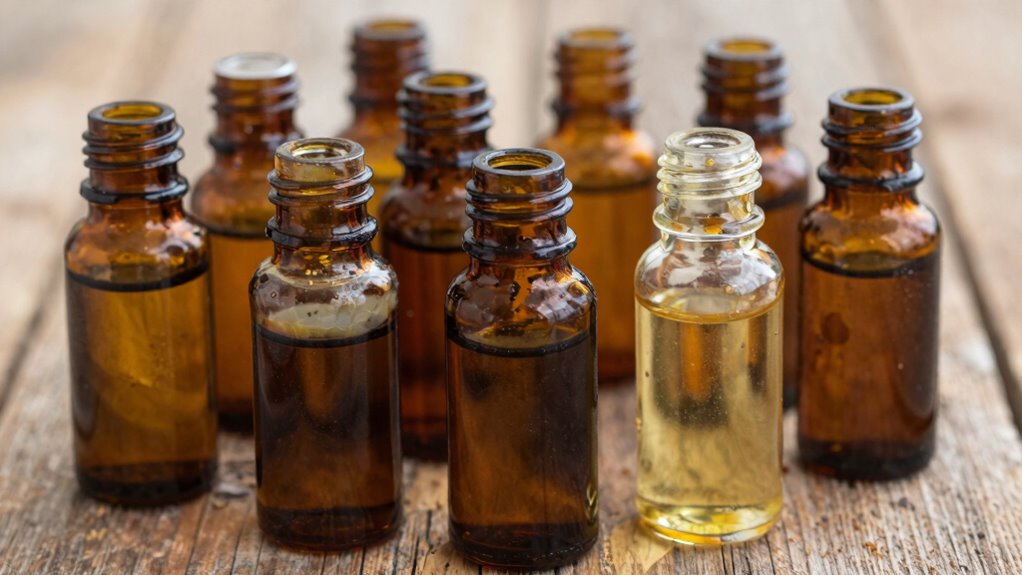
The key to maintaining the quality of your essential oils lies in knowing how to store them correctly. Proper storage tips include keeping your oils in a cool, dark place away from direct sunlight and temperature fluctuations. Light and heat accelerate oxidation, causing the oils to break down quicker. Make sure your bottles are tightly sealed after each use to prevent air from entering, as exposure to oxygen speeds up spoilage. Consider storing your oils in dark glass bottles, which help block light and preserve their integrity better than clear ones. Additionally, oxidation processes can be slowed down by using amber or cobalt blue bottles, which are especially effective for oils with high limonene content like citrus oils. Protecting oils from oxidation is essential for prolonging their shelf life and maintaining their therapeutic qualities. Properly sealing and storing your oils can significantly extend their shelf life, ensuring you get the most therapeutic benefits from your collection. Regularly inspecting your oils for any changes can also help you catch potential spoilage early and prevent waste.
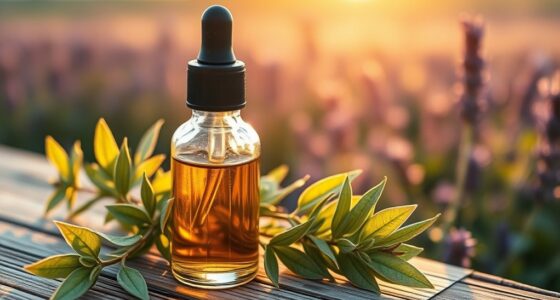
Store essential oils in a cool, dark place in tightly sealed, dark glass bottles to preserve their potency and extend shelf life.
You’ll also want to watch for specific signs that indicate your essential oils may have gone stale. One of the most noticeable signs is a change in aroma. If your oil no longer has that vibrant, familiar scent or smells off or rancid, it’s likely past its prime. The scent is a good indicator because it’s directly tied to the oil’s therapeutic qualities. Another sign is a change in texture or appearance. Some oils may become cloudy, thick, or develop a film on the surface. If you notice any separation or sediment that wasn’t there before, it’s a sign that the oil’s chemical composition has altered. Additionally, understanding the chemical composition of your oils can help you identify when they are no longer effective.
It’s also important to note that certain oils are more prone to going stale than others. Citrus oils, for example, tend to oxidize faster because of their high limonene content. If you’re using essential oils primarily for aromatherapy benefits, paying close attention to their scent and appearance is key. Regularly checking your oils and storing them properly can extend their shelf life drastically, so you get the most out of their therapeutic properties. Moreover, being aware of the oxidation process can help you take proactive steps to prevent premature spoilage.
amber glass essential oil bottles
As an affiliate, we earn on qualifying purchases.
As an affiliate, we earn on qualifying purchases.
Frequently Asked Questions
How Long Do Essential Oils Typically Last Before Going Bad?
Essential oils typically last 1 to 3 years before going bad, depending on their storage conditions. You should store them in a cool, dark place away from direct sunlight to preserve their aromatherapy benefits. Over time, they may lose potency or develop a stale smell. Proper storage helps maintain their quality, ensuring you get the most out of their therapeutic effects and longevity.
Can Expired Essential Oils Harm My Skin or Health?
Expired essential oils might seem harmless, but they can harm your skin or health due to synthetic additives and reduced shelf stability. While new oils offer pure, therapeutic benefits, stale ones can cause irritation or allergic reactions. It’s tempting to reuse old bottles, but the risk outweighs the savings. Protect yourself by discarding expired oils and choosing fresh, properly stored options for safe, effective use.
Should I Refrigerate Essential Oils to Extend Their Shelf Life?
You don’t need to refrigerate essential oils to extend their shelf life. Proper storage techniques, like keeping oils in a cool, dark place away from direct sunlight, help preserve their scent and potency. Refrigeration isn’t necessary and could cause condensation, which may degrade the oils. Instead, focus on airtight containers and consistent storage conditions to maintain their aroma and effectiveness over time.
How Can I Tell if an Essential Oil Has Gone Rancid?
Ever wondered if your essential oil has gone rancid? If it smells off, sour, or has a strange, dull aroma, it’s a sign to toss it. Rancid oils lose their aromatic and therapeutic properties, affecting your aromatherapy benefits. When creating DIY essential oil blends, using fresh oils guarantees maximum scent and effectiveness. Trust your nose—if the scent isn’t vibrant and clean, it’s time to replace it for safe, effective use.
Do Different Oils Expire at Different Rates?
Yes, different essential oils expire at different rates. Citrus oils, for example, tend to last only 6-12 months, while thicker oils like patchouli or vetiver can last several years. This impacts your aromatherapy benefits, as expired oils lose potency and may develop an off smell. When creating essential oil blends, always check expiration dates to guarantee maximum effectiveness, and store oils properly to prolong their freshness.
Conclusion
So, don’t let your essential oils sit in the dark forever without use. Keep an eye out for changes in scent, color, or thickness — those are your clues it’s time to say goodbye. Remember, an ounce of prevention is worth a pound of cure, so store them properly and use them within their prime. When in doubt, trust your nose; if it smells off, it’s better to be safe than sorry.
Flea & tick season Picks
flea and tick prevention
As an affiliate, we earn on qualifying purchases.