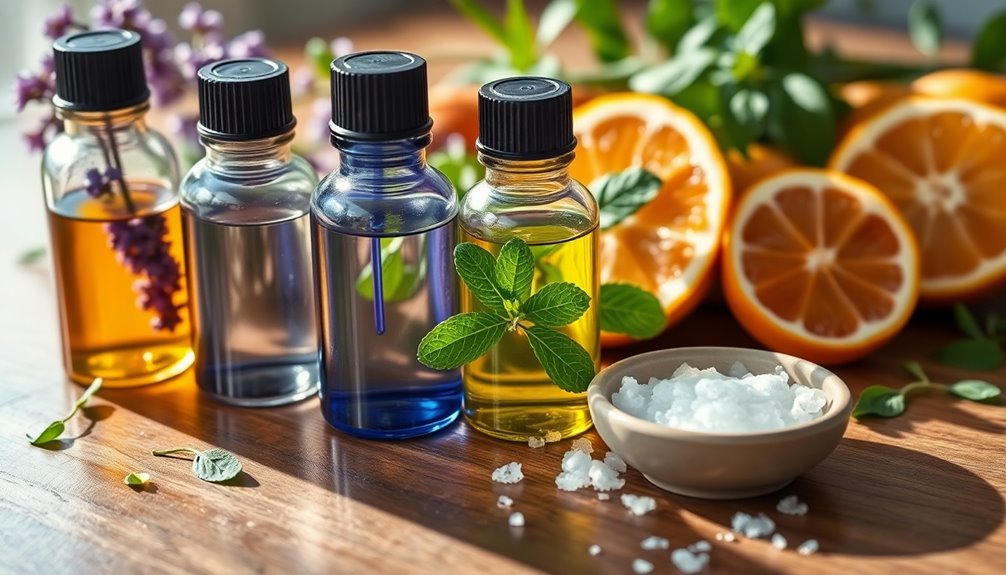
To prevent waste, understand your essential oils’ shelf life based on their type. Citrus oils, like lemon and orange, stay fresh for just 6-12 months because they oxidize quickly; resin oils like Frankincense last 1-3 years, and floral oils such as Rose typically stay good for 1-2 years. Proper storage and regular checks help you know when to replace them, ensuring you get the most out of your bottles—if you continue, you’ll discover tips to prolong their effectiveness.
Key Takeaways
- Citrus oils have a shorter shelf life of 6-12 months due to rapid oxidation; use them more frequently to prevent waste.
- Resin oils like Frankincense and Myrrh last longer, typically 1-3 years, so hoarding may not be necessary if stored properly.
- Floral oils are delicate, lasting 1-2 years; regularly check for signs of deterioration to avoid keeping expired bottles.
- Proper storage in dark, cool, airtight glass bottles extends each oil’s potency, reducing the need to hoard and discard prematurely.
- Regularly assess your oils for changes in smell, appearance, or scent strength to determine when it’s time to replace them.

Understanding the shelf life of essential oils is fundamental to guarantee you get the most benefit from their aromatic and therapeutic properties. Proper storage conditions play a critical role in maintaining their quality and extending their longevity. If you leave your oils exposed to heat, light, or air, you’re risking oil oxidation, which can diminish their potency and safety over time. This process can cause the oils to become rancid, lose their fragrance, and potentially cause skin irritation or other adverse reactions when used. To prevent this, you need to be mindful of how you store your bottles, ensuring they’re kept in a cool, dark place away from direct sunlight and heat sources. Keep bottles tightly sealed when not in use to minimize exposure to air, which accelerates oxidation. Glass bottles, especially amber or cobalt blue ones, are ideal because they block harmful UV rays, further protecting your oils from light-induced degradation. Proper storage is essential for prolonging the life of your essential oils and maintaining their therapeutic benefits.
Different types of essential oils have varying shelf lives, largely influenced by their chemical composition. Citrus oils, for example, are more susceptible to oxidation due to their high levels of limonene, which makes them particularly prone to rapid deterioration if not stored properly. They often last only about 6 to 12 months, so you should use them more frequently to avoid waste. Resin and resin-based oils, like Frankincense and Myrrh, tend to have longer shelf lives, often lasting 1 to 3 years. They are generally more stable because their chemical structures are less sensitive to oxidation. Floral oils, such as Rose or Jasmine, usually fall somewhere in between, lasting about 1 to 2 years depending on their specific composition and storage conditions. These oils can be more delicate, so consistent, optimal storage is essential to preserve their delicate aromas and therapeutic properties.
Knowing the differences in shelf life and how to care for your essential oils helps you avoid hoarding bottles that have lost their effectiveness. Regularly check your oils for changes in smell or appearance—any sour or rancid odor, cloudiness, or sediment signals it’s time to replace them. By maintaining proper storage conditions and understanding each oil’s vulnerability to oxidation, you’ll maximize their lifespan and ensure you’re always using fresh, potent oils. This way, you get the full aromatic and health benefits without wasting money on expired or degraded products.

4 Pack, 1 oz Thick Dark Amber Glass Dropper Bottles with 1 Funnels & 4 Labels – 30ml Tincture Bottles with Eye Dropper – Leakproof Essential Oils Bottle – Storage and Travel for Beauty or Health
- Bottle Capacity: 30ml (1 oz)
- Package Includes: 4 bottles, 1 funnel, 4 labels
- Leakproof Design: Suitable for oils and liquids
As an affiliate, we earn on qualifying purchases.
As an affiliate, we earn on qualifying purchases.
Frequently Asked Questions
How Can I Tell if an Essential Oil Has Gone Bad?
You can tell if an essential oil has gone bad by checking for oxidation indicators and scent deterioration. If the oil develops a dull or off smell, it’s a sign of oxidation, meaning its quality has declined. Additionally, if the scent weakens or changes markedly, it’s time to discard it. Trust your senses—if the oil looks cloudy or has sediment, these are also signs it’s no longer good to use.
Does Storing Oils in the Fridge Extend Their Shelf Life?
Storing oils in the fridge can extend their shelf life by slowing down oxidation and evaporation, especially for citrus and floral oils. Refrigeration benefits include maintaining the freshness and potency of your essential oils by keeping storage temperature low and stable. Just make sure you tightly seal bottles to prevent moisture and odors from affecting the oils, and let them return to room temperature before use for best results.
Are There Specific Storage Tips for Citrus Oils?
Citrus oils are like delicate flowers, easily losing their essence if mishandled. To prevent citrus oil degradation, you should store them in a cool, dark place, away from sunlight and heat. Proper bottle storage is essential; keep bottles tightly sealed and upright to minimize exposure to air. Avoid storing citrus oils in the fridge for long periods, as temperature fluctuations can accelerate breakdown, diminishing their aromatic and therapeutic qualities.
Can I Mix Old Essential Oils With New Ones Safely?
You shouldn’t mix old essential oils with new ones, as blending safety and scent compatibility become compromised. Old oils may have degraded, affecting their aroma and therapeutic properties. Mixing them can lead to unpredictable scents and potential skin irritation. Always check the oils’ scent, color, and clarity before blending. To confirm safety and quality, it’s best to use fresh oils for your blends and avoid combining expired or questionable bottles.
What’s the Best Way to Dispose of Expired Essential Oils?
When essential oils expire, don’t toss them in the trash—think bigger! The best way to dispose of expired oils is through oil recycling or eco-friendly disposal methods. You can dilute them with water and use them in compost or contact local waste management for specific disposal guidelines. Avoid pouring oils down drains to prevent environmental harm. Proper disposal protects your environment and keeps your home safe from chemical buildup.
Conclusion
Think of your essential oils as delicate flowers in a garden—they need the right care and timing to flourish. Don’t let those precious bottles become forgotten relics gathering dust. By understanding their shelf life—whether citrus, resin, or floral—you’ll guarantee each drop remains potent and vibrant. So, don’t hoard like a squirrel storing acorns for winter. Instead, use your oils wisely and enjoy their true magic before they fade into memory.