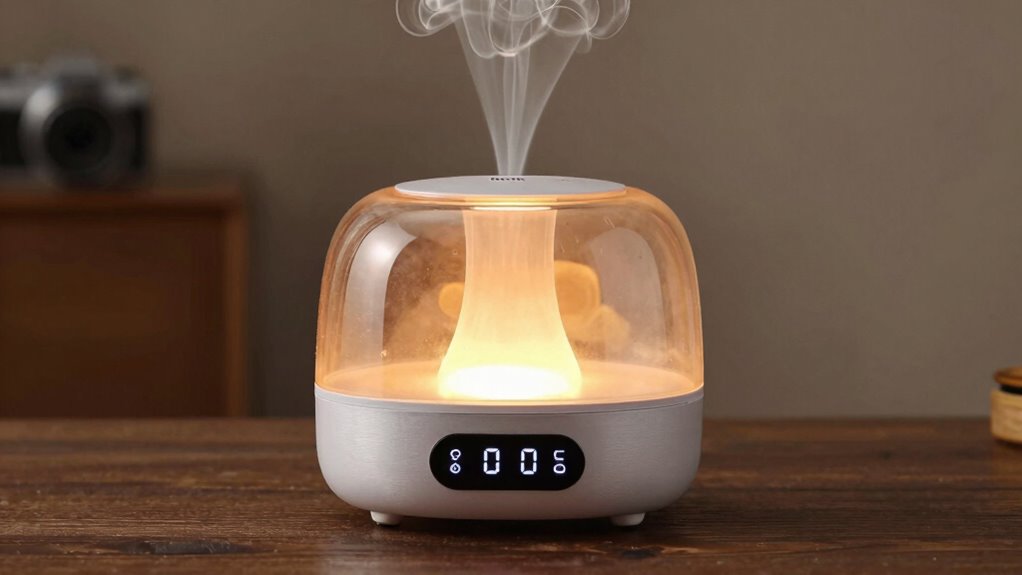

If you want to save oils, intermittent diffusion is your best bet. By turning the diffuser on and off at preset intervals, you use less oil and extend its lifespan, providing a gentle, lasting aroma. Continuous diffusion keeps the scent steady but quickly drains your oils, leading to faster replacements. Choosing between them depends on your needs; keep going to discover how each setting impacts your oil use and scent experience even more.
Key Takeaways
- Intermittent diffusion uses timers to alternate operation, significantly saving oil compared to continuous diffusion.
- Continuous diffusion runs nonstop, consuming more oil quickly and reducing overall oil lifespan.
- Intermittent settings balance scent intensity and oil conservation by scheduled on/off cycles.
- Continuous diffusion is best for immediate, intense aromatherapy, while intermittent prolongs oil use for subtle, long-term scent.
- Using timers with intermittent diffusion maximizes oil savings and extends diffuser operation time.
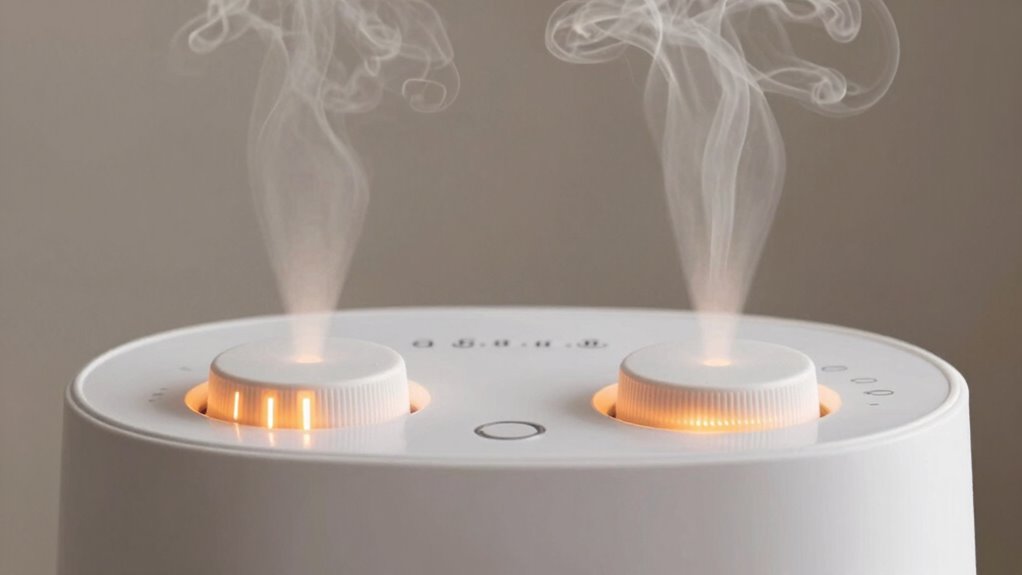
Have you ever wondered how to optimize your diffusion timer settings for the best results? Achieving the right balance can substantially enhance your experience and help you get the most out of your essential oils. When it comes to diffusion, understanding diffusion timer settings is key to maximizing oil preservation while maintaining a consistent, pleasant aroma in your space. Whether you prefer continuous or intermittent diffusion, each setting influences how your oils are used and how long they last.
Continuous diffusion involves running your diffuser nonstop until the reservoir runs out or you turn it off. This setting delivers a steady stream of aroma, making your room smell consistently inviting. However, it can also lead to faster oil consumption and potential overuse. If you’re aiming to preserve your oils longer, continuous diffusion may not be the best choice, as it tends to burn through your supply more quickly. On the flip side, it’s ideal if you want immediate, intense aromatherapy benefits or need a strong scent for a specific event. To optimize oil preservation with continuous diffusion, consider limiting the duration or using a diffuser that allows you to set specific time intervals, giving your oils time to rest and preventing unnecessary waste. Additionally, understanding how diffuser mechanisms work can help you select the most efficient model for your needs.
Intermittent diffusion, on the other hand, turns your diffuser on and off at preset intervals. This setting is great for conserving oils because it reduces overall consumption while still providing a pleasant aroma. By scheduling your diffuser to run for a few minutes every hour, you can extend the life of your oils without sacrificing the benefits of aromatherapy. Many diffusers have built-in timers or adjustable settings that let you customize these intervals. When you choose intermittent diffusion, you’re essentially giving your oils a chance to “rest” between uses, which not only helps with oil preservation but also prevents your space from becoming overwhelming with scent. This method is particularly effective if you want to maintain a subtle scent throughout the day or night without constantly replenishing your oils.
Ultimately, the best diffusion timer setting depends on your priorities. If you want strong, immediate scent and don’t mind replacing oils more frequently, continuous diffusion works well. But if your goal is to extend your oils’ lifespan and create a more subtle, consistent aroma, intermittent diffusion is the smarter choice. Adjusting your diffusion timer settings thoughtfully can help you strike the perfect balance between enjoying your favorite scents and preserving your essential oils. Remember, the key is to find a setting that aligns with your needs, ensuring both optimal diffusion and oil conservation.

ASAKUKI Essential Oil Diffuser for Home, 500ML Aromatherapy Humidifier
- Multi-Functional Aromatherapy Device: Includes 500ml tank, LED lights, modes, remote
- Ultra-Quiet Operation: Noise level below 23 dB for peaceful use
- Remote Control Convenience: Control from 16.5 feet, adjust modes and timers
As an affiliate, we earn on qualifying purchases.
As an affiliate, we earn on qualifying purchases.
Frequently Asked Questions
Can Timer Settings Affect the Oil’s Scent Strength?
Yes, timer settings can affect your oil aroma by changing the diffuser duration. When you set a shorter timer, the diffuser runs less, resulting in a milder scent. Conversely, longer or continuous settings produce a stronger aroma. Adjusting the timer allows you to control the oil aroma’s intensity, helping you enjoy a pleasant scent without wasting oils. Experiment with different durations to find your ideal diffuser experience.
Do Different Oils Require Different Diffusion Timer Settings?
Yes, different oils require different diffusion timer settings based on oil compatibility and diffuser maintenance. Thicker or more potent oils may need shorter, intermittent diffusion to prevent overpowering scents and avoid clogging. Lighter oils work well with longer, continuous diffusion. Adjust your timer accordingly, and always clean your diffuser regularly to maintain ideal performance and scent quality. This guarantees your diffuser functions efficiently and prolongs its lifespan.
How Does Ambient Temperature Influence Diffusion Timing?
You might think ambient temperature doesn’t impact diffusion timing, but it actually does. Temperature effects can speed up or slow down the diffusion rate, meaning higher temperatures cause oils to disperse faster, while cooler temps slow it down. To optimize your diffuser, adjust the timer settings based on room temperature. Keep in mind, balancing diffusion rate with temperature guarantees a consistent, enjoyable aroma without wasting oils.
Are There Safety Concerns With Long Diffusion Durations?
Long diffusion durations can raise safety concerns, especially if you neglect diffuser maintenance. Overuse may lead to oil buildup or residue, which could cause malfunctions or even hazards. To guarantee scent longevity and safety, follow manufacturer guidelines and avoid prolonged continuous diffusion. Regularly clean your diffuser, and use intermittent settings to prevent overheating. This way, you enjoy a steady, safe aroma without compromising device safety or your health.
Can Timers Be Programmed for Automatic Scent Changes?
Yes, timers can be programmed for automatic scent changes, allowing you to switch scents seamlessly. This technique promotes scent consistency and maximizes timer accuracy, so your diffuser shifts smoothly between fragrances without manual intervention. By setting precise times, you enjoy a dynamic, delightful aroma experience. Consequently, automated scheduling simplifies scent management, ensuring your space stays beautifully balanced while saving you effort and maintaining consistent, captivating aromas throughout the day.
Conclusion
So, now that you know the difference between continuous and intermittent diffusion, you can choose the perfect timer setting for your needs. Think of it like a trusty compass guiding your aromatic journey—whether you want a steady stream or occasional bursts of scent. Remember, selecting the right diffusion timer can truly transform your space, making it feel like a cozy corner of a vintage apothecary. It’s your move—set the timer and breathe in the bliss!