
For a balanced home setup that handles music and movies, I’d start with the Yamaha YHT-4950U; its 5.1-channel receiver-based system offers a more flexible surround foundation than a compact stereo. The Sony SS-CS5M2 is a stronger fit if music-focused bookshelf speakers matter most, while the Philips FX10 suits listeners who want a self-contained stereo with a CD player. The main tradeoff is between simple all-in-one operation, room-filling surround sound, and the extra setup involved with separate speakers and components. Read on for how the options compare and which one matches your room, sources, and listening priorities.

Get oils, diffusers and self-care delivered free with Prime
- Fast, free delivery on millions of items
- Prime Video, Amazon Music and more included
- Member-only deals all year
Key Takeaways
- The Yamaha YHT-4950U is the most adaptable choice here for buyers who want a conventional 5.1 home theater system with a receiver.
- The Sony SS-CS5M2 is a pair of passive bookshelf speakers, so it suits music listeners who already have or plan to add an amplifier.
- The Philips, Sharp, and Panasonic systems combine core components such as a CD player and radio, making them easier to set up than separate speaker systems.
- The Klipsch Reference Cinema Dolby Atmos 5.1.4 targets immersive movie sound with height channels, but it asks more of room placement and setup than a compact stereo.
- Several products serve different meanings of “hi-fi”: stereo systems prioritize straightforward music playback, while soundbars and surround packages prioritize cinematic presentation.
| Philips FX10 Bluetooth Stereo System with CD Player |  | Best for Powerful All-in-One Stereo | Connectivity: Bluetooth, USB, audio-in | Supported media: CD, MP3 | Radio: FM | VIEW ON AMAZON | See Our Full Breakdown |
| Philips Bluetooth Micro Stereo System with CD Player and FM Radio |  | Best for Beginners | Connectivity: Bluetooth | Media: CD, MP3-CD, USB | Radio: FM with up to 10 presets | VIEW ON AMAZON | See Our Full Breakdown |
| Sharp XL-B530 Micro Component System with Bluetooth and CD Player |  | Best for a Traditional Living-Room Stereo | Power output: 100 W RMS; 200 W maximum | Connectivity: Bluetooth, USB, aux input, AM/FM radio | Supported formats: CD, MP3, WMA | VIEW ON AMAZON | See Our Full Breakdown |
| Panasonic Compact Stereo System with CD Player, Bluetooth, FM Radio, USB, and Remote Control – Black |  | Best Compact Feature Set | Power output: 20 W RMS (10 W + 10 W) | Connectivity: Bluetooth, USB, FM radio, CD player | Woofer: 10 cm | VIEW ON AMAZON | See Our Full Breakdown |
| Klipsch Reference Cinema Dolby Atmos 5.1.4 System |  | Best for Immersive Home Theater | Audio output mode: Surround | Number of audio channels: 5.1.4 | Connectivity: Wired RCA | VIEW ON AMAZON | See Our Full Breakdown |
| LG S40TR 4.1 Channel Home Theater Soundbar with Wireless Subwoofer and Rear Speakers |  | Best for Easy Surround Sound | Channels: 4.1 | Subwoofer: Wireless | Rear surround speakers: Included | VIEW ON AMAZON | See Our Full Breakdown |
| ULTIMEA BS-3 3-Way Powered Bookshelf Speakers with App Control |  | Best Powered Stereo Pair | Configuration: 3-way stereo | Woofer: 5.25 inches | Tweeter: 1 inch | VIEW ON AMAZON | See Our Full Breakdown |
| Saiyin 5.0 Passive Home Theater Speaker System |  | Best Compact Passive Surround Set | Configuration: 5.0 channel | Included speakers: Four bookshelf speakers and one center speaker | Speaker size: 3 inches | VIEW ON AMAZON | See Our Full Breakdown |
| Sony SS-CS5M2 3-Way Hi-Res Bookshelf Speakers (Pair) | 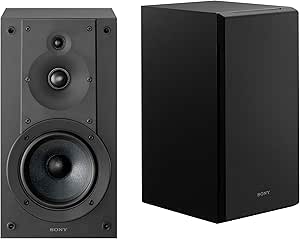 | Best for Detailed Stereo Listening | Configuration: 3-way, 3-driver stereo pair | Woofer: 5.12 inches | Tweeter: 0.98 inches | VIEW ON AMAZON | See Our Full Breakdown |
| Yamaha YHT-4950U 4K Ultra HD 5.1-Channel Home Theater System with Bluetooth |  | Best Complete Home Theater Package | Channels: 5.1 | Included components: AV receiver, five speakers, subwoofer, and speaker wires | HDMI ports: 4 | VIEW ON AMAZON | See Our Full Breakdown |
| hifi speaker systems for home | Connectivity |
|---|---|
| Philips FX10 Bluetooth Stereo | Bluetooth, USB, audio-in |
| Philips Bluetooth Micro Stereo | Bluetooth |
| Sharp XL-B530 Micro Component | Bluetooth, USB, aux input, AM/FM radio |
| Panasonic Compact Stereo Syste | Bluetooth, USB, FM radio, CD player |
| Klipsch Reference Cinema Dolby | Wired RCA |
| LG S40TR 4.1 Channel Home Thea | — |
| ULTIMEA BS-3 3-Way Powered Boo | — |
| Saiyin 5.0 Passive Home Theate | — |
| Sony SS-CS5M2 3-Way Hi-Res Boo | Wired |
| Yamaha YHT-4950U 4K Ultra HD 5 | — |
More Details on Our Top Picks
Philips FX10 Bluetooth Stereo System with CD Player
The Philips FX10 is the strongest fit here for listeners who want one shelf system to cover CDs, radio, and phone streaming with more stated output than the compact micro systems. Its 230 W output and dual amplification set it apart from the Panasonic compact system’s 20 W RMS, though the figures use different power ratings and are not directly comparable. Bass enhancement may suit energetic music, while the two-speaker stereo layout keeps this a conventional music system rather than a surround setup like the Klipsch Reference Cinema 5.1.4. I’d choose it for a main living space where physical media still matters. The tradeoff is that the listed connections omit Wi-Fi, and buyers seeking room-filling theater effects will need a multi-speaker system instead.
Pros:- Combines CD and MP3 playback with Bluetooth streaming and FM radio.
- 230 W output and dual amplification are aimed at a more forceful presentation than the compact Philips micro system.
- USB and audio-in add wired playback choices.
- Includes a remote for playback control.
Cons:- No Wi-Fi connectivity is listed.
- Two-speaker stereo cannot create the surround presentation of the Klipsch system.
- The listed output figure does not specify an RMS rating.
Best for: Listeners who want a single home stereo for CDs, FM radio, and Bluetooth streaming, with more output specified than a small micro system.
Not ideal for: Home theater buyers who want surround sound or listeners who need Wi-Fi streaming and multiroom features.
- Connectivity:Bluetooth, USB, audio-in
- Supported media:CD, MP3
- Radio:FM
- Output power:230 W
- Amplifier:Dual amplifier
- Speakers:2
- Audio output mode:Stereo
- Dimensions:4.6 x 9.1 x 11 inches
Our verdict“Choose the FX10 if you want a feature-rich stereo for mixed physical and wireless listening, and skip it if surround sound or Wi-Fi is a priority.”
Philips Bluetooth Micro Stereo System with CD Player and FM Radio
The Philips Bluetooth Micro Stereo is a straightforward starting point for a home system: it brings together CD, MP3-CD, USB playback, FM presets, and Bluetooth without asking the buyer to assemble separate components. Its two bookshelf speakers make it a conventional stereo choice, while the Klipsch Reference Cinema system is aimed at buyers willing to build a more involved surround setup. Output is listed as up to 18 W in the description, but another product specification gives 15 W, so I would treat its power as modest. That makes it better suited to a bedroom, study, or smaller sitting area than a large open room. Compared with the Panasonic compact stereo, it adds MP3-CD support and station presets, but its power details are less consistent.
Pros:- Plays CDs, MP3-CDs, and USB audio alongside Bluetooth streaming.
- FM radio stores up to 10 presets.
- Includes two speakers and an infrared remote.
- Simple all-in-one setup suits buyers new to home stereo systems.
Cons:- Output is modest, with conflicting 15 W and up-to-18 W figures in the supplied information.
- Corded electric power limits placement to locations near an outlet.
- No Wi-Fi connectivity is listed.
Best for: First-time stereo buyers furnishing a bedroom or study who want CDs, USB playback, FM presets, and Bluetooth in one package.
Not ideal for: Listeners filling a large or open-plan room, or buyers who need a clearly specified higher-power system.
- Connectivity:Bluetooth
- Media:CD, MP3-CD, USB
- Radio:FM with up to 10 presets
- Audio output:Up to 18 W in description; 15 W also listed
- Speakers:2
- Audio mode:Stereo
- Power source:Corded electric
- Remote control:Infrared
Our verdict“Pick this Philips for simple everyday stereo listening in a smaller room, but choose a more powerful system for broad coverage.”
Sharp XL-B530 Micro Component System with Bluetooth and CD Player
The Sharp XL-B530 suits listeners who want a component-style stereo with several ways to play music and a finish that reads more like living-room furniture than a small black box. It supports CD, MP3, and WMA, plus Bluetooth, USB, aux input, and AM/FM radio; that broader listed format and radio support gives it an edge over the Panasonic compact system’s stated playback options. Sharp lists 100 W RMS and 200 W maximum, but it still uses two speakers, so it is not a replacement for the Klipsch Reference Cinema 5.1.4 when movies and directional effects matter. Its 25-inch width and 18-pound weight call for more shelf space than the micro Philips. I’d favor it for a dedicated stereo spot, not a tight desk or small shelf.
Pros:- Supports Bluetooth, USB, aux input, and AM/FM radio.
- Plays CD, MP3, and WMA formats.
- Lists 100 W RMS output, giving buyers a clearer continuous-power figure than the Philips FX10 listing.
- Brown oak finish and LED display suit a visible home stereo setup.
Cons:- Its 25-inch width takes more shelf space than the Philips micro system.
- Two-speaker stereo does not provide the Klipsch system’s multichannel surround layout.
- The supplied information does not list a remote control.
Best for: Listeners setting up a dedicated living-room or office stereo who value several playback formats, radio, and a brown oak finish.
Not ideal for: People with narrow shelves or buyers seeking a surround system for films and games.
- Power output:100 W RMS; 200 W maximum
- Connectivity:Bluetooth, USB, aux input, AM/FM radio
- Supported formats:CD, MP3, WMA
- Number of speakers:2
- Dimensions:25 x 11 x 9.6 inches
- Weight:18 pounds
- Finish:Brown oak
- Display:LED
Our verdict“Choose the Sharp for a spacious, format-flexible stereo station, but look elsewhere if your room or shelf is tight.”
Panasonic Compact Stereo System with CD Player, Bluetooth, FM Radio, USB, and Remote Control – Black
The Panasonic Compact Stereo is the tidy, conventional choice for buyers who want CD, FM, USB, and Bluetooth playback with basic tone shaping in one system. Its bass and treble controls let listeners adjust the balance to their room or taste, a useful point of difference from the Philips micro system, whose supplied details emphasize presets and formats instead. At 20 W RMS, Panasonic’s output is modest beside the Sharp XL-B530’s listed 100 W RMS; that difference points toward a smaller listening space rather than a large shared room. Bluetooth Re-Master is intended to improve the sound of streamed music, though there is no Wi-Fi for direct internet or multiroom audio. I’d choose it for straightforward shelf listening, while film fans should consider the multichannel Klipsch setup.
Pros:- Combines CD, USB, Bluetooth, and FM radio playback.
- Bass and treble controls allow basic sound tailoring.
- Bluetooth Re-Master is designed to improve streamed audio.
- Includes a remote control and has a matte front panel.
Cons:- 20 W RMS output is less suited to large rooms than the Sharp XL-B530’s listed 100 W RMS.
- No Wi-Fi connectivity is listed.
- The supplied information describes the remote as basic.
Best for: Listeners furnishing a bedroom, den, or modest-sized living room who want physical media, Bluetooth, and simple tone adjustment.
Not ideal for: People who need strong output for a large room, Wi-Fi streaming, or a surround system for home theater.
- Power output:20 W RMS (10 W + 10 W)
- Connectivity:Bluetooth, USB, FM radio, CD player
- Woofer:10 cm
- Tweeter:6 cm
- Sound controls:Bass and treble
- Bluetooth feature:Bluetooth Re-Master
- Design:Matte textured front panel
- Included accessory:Remote control
Our verdict“Pick Panasonic for compact, adjustable stereo listening with familiar sources, but choose a higher-output option for a big room.”
Klipsch Reference Cinema Dolby Atmos 5.1.4 System
The Klipsch Reference Cinema 5.1.4 is the clear choice in this group for buyers who put movie immersion ahead of all-in-one music convenience. Its 5.1.4 channel layout and Dolby Atmos satellite speakers are designed to create height and surround effects that the two-speaker Philips and Sharp systems cannot reproduce. Horn and aluminum tweeters target clear high frequencies, while the powered subwoofer adds dedicated bass. That comes with a more involved installation: the system uses multiple components and the listed connection is wired RCA, with no wireless technology specified. It also does not replace the CD, radio, and USB conveniences offered by the stereo systems. I’d choose Klipsch for a home theater built around a compatible source, but skip it if you want a simple music system on a shelf.
Pros:- 5.1.4 channels and Dolby Atmos satellite speakers target immersive surround and height effects.
- Horn and aluminum tweeters are designed for clear high-frequency playback.
- Includes a subwoofer with a built-in digital amplifier for bass output.
- Satellite speakers support wall mounting.
Cons:- Multiple components require more setup and placement than the stereo systems in this roundup.
- No wireless connectivity is listed; the supplied connection information specifies wired RCA.
- The provided specifications do not state a total system power rating.
Best for: Movie and gaming fans building a wired home theater who want multichannel surround and Dolby Atmos effects.
Not ideal for: Listeners seeking a simple stereo for CDs and radio, or anyone who needs wireless speaker connections.
- Audio output mode:Surround
- Number of audio channels:5.1.4
- Connectivity:Wired RCA
- Wireless technology:None listed
- Speaker type:Satellite
- Mounting type:Wall mount
- Enclosure material:Aluminum
- Control method:Remote
Our verdict“Choose Klipsch for a component-based Atmos theater, and choose one of the Philips or Panasonic systems for simpler stereo listening.”
LG S40TR 4.1 Channel Home Theater Soundbar with Wireless Subwoofer and Rear Speakers
The LG S40TR suits home listeners who want a more enveloping TV setup without assembling a receiver-based system. Its 4.1-channel layout pairs a wireless subwoofer with rear speakers, so effects can reach behind the seating area; Dolby Audio and DTS compatibility support a range of movie and TV sources. Compared with the Yamaha YHT-4950U, it offers simpler control through an LG TV remote and app, while Yamaha includes a full AV receiver and five separate speakers for a more traditional system.
The tradeoff is that the LG still needs room for its multiple components, and wireless links can be affected by interference. Choose it for a straightforward surround upgrade; skip it if you want a compact stereo pair or the flexibility to build around a receiver.
Pros:- Rear speakers and a wireless subwoofer create a more enveloping movie setup than a basic stereo pair
- Dolby Audio and DTS compatibility support a range of home theater content
- LG TV remote and app control simplify everyday operation
- Crest-style design with metal grill offers a polished look and dust protection
Cons:- Multiple components need room around the TV and seating area
- Wireless connectivity may experience interference in some environments
Best for: TV and movie watchers who want rear surround effects and straightforward control without setting up an AV receiver
Not ideal for: Listeners seeking a compact music-first stereo system or people who want receiver-based control over a larger speaker setup
- Channels:4.1
- Subwoofer:Wireless
- Rear surround speakers:Included
- Audio formats:Dolby Audio and DTS compatibility
- Control:LG TV remote and app
- Design:Crest style with metal grill
Our verdict“Choose the LG S40TR for convenient TV-focused surround sound with rear speakers, provided you have space for the separate components.”
ULTIMEA BS-3 3-Way Powered Bookshelf Speakers with App Control
The ULTIMEA BS-3 is a strong fit for a living room where a powered stereo pair needs to handle both music and TV audio. Its three-way drivers separate bass, midrange, and treble, while HDMI ARC, optical, RCA, USB, and Bluetooth 6.0 make it easier to connect common sources without a separate amplifier. Compared with the Sony SS-CS5M2, the ULTIMEA is ready to play with built-in amplification and app EQ; Sony is a passive pair for buyers who already have an amplifier.
The 70W RMS output and bass reaching 50Hz suit everyday listening, but they do not replace the deeper impact of a dedicated subwoofer. There is a subwoofer output for expansion. Pick this set for flexible connections and easy tuning; skip it if you want a full surround layout or speakers for damp spaces, since they are not water resistant.
Pros:- Three-way drivers give lows, mids, and highs separate drivers
- HDMI ARC, optical, RCA, USB, and Bluetooth 6.0 cover varied sources
- App EQ offers movie, music, and gaming settings
- Subwoofer output allows future low-frequency expansion
Cons:- An external subwoofer is needed for a separate subwoofer setup
- Not water resistant
- Shelf-mount pair does not provide rear surround channels
Best for: Apartment and living-room listeners who want powered bookshelf speakers for TV and music with several source connections
Not ideal for: Buyers building a surround system or seeking strong low bass without adding an external subwoofer
- Configuration:3-way stereo
- Woofer:5.25 inches
- Tweeter:1 inch
- Power output:70W RMS
- Bass response:Down to 50Hz
- Inputs:HDMI ARC, optical, RCA, USB, Bluetooth 6.0
- Subwoofer output:Yes
- Dimensions:9.17 × 7.4 × 13.15 inches
Our verdict“Choose the ULTIMEA BS-3 if you want a versatile, app-adjustable stereo system without buying a separate amplifier.”
Saiyin 5.0 Passive Home Theater Speaker System
The Saiyin 5.0 gives home theater builders five separate speakers, including a dedicated center channel meant to keep dialogue distinct from surrounding effects. Its four compact bookshelf speakers can sit on shelves or stands, or mount on walls, which helps when floor space is limited. Compared with the LG S40TR, this set leaves amplification and wiring choices to you and has no wireless components; the LG is easier to control as a packaged TV system.
That flexibility comes with setup work: an AV receiver or amplifier is required, and speaker wire is not included. The 3-inch speakers are also modest in size, so buyers wanting fuller bass may prefer a system with a subwoofer, such as the Yamaha YHT-4950U. Pick Saiyin if you already own suitable equipment and want a compact five-speaker foundation; skip it if you need an all-in-one kit.
Pros:- Dedicated center speaker is designed to improve dialogue clarity
- Four bookshelf speakers support shelf, stand, or wall placement
- Compact enclosures suit rooms with limited space
- Three-year warranty
Cons:- Requires a separate AV receiver or amplifier
- Speaker wire is not included
- No subwoofer is included for dedicated low-frequency impact
Best for: Home theater builders with an AV receiver who need a compact five-speaker set and flexible mounting
Not ideal for: First-time buyers without an amplifier or anyone who wants a supplied subwoofer and speaker wire
- Configuration:5.0 channel
- Included speakers:Four bookshelf speakers and one center speaker
- Speaker size:3 inches
- Power:40 W × 4 bookshelf speakers; 75 W center speaker
- Peak power:230 W
- Impedance:6 ohms
- Placement:Wall mount, shelf, or stand
- Amplifier required:Yes
- Warranty:3 years
Our verdict“Choose the Saiyin set if you already have amplification and want compact, flexible five-channel speaker placement.”
Sony SS-CS5M2 3-Way Hi-Res Bookshelf Speakers (Pair)
The Sony SS-CS5M2 is the music-first choice for buyers who want a conventional wired bookshelf pair with a three-way design. A 5.12-inch woofer handles lower notes, while the precision tweeter and wide-dispersion super tweeter aim to present vocals and high frequencies across a broader listening area. Its stated 53–50,000 Hz response and bass-reflex enclosure give it a more detailed stereo focus than the Saiyin 5.0, whose five small speakers are arranged for surround sound and dialogue coverage.
Sony is passive, so an amplifier is needed, and wired connections restrict placement compared with the powered ULTIMEA BS-3. This pair is better suited to a music setup or front channels in a home theater than a complete surround system. Choose it if you value a compact stereo pair and already have amplification; skip it if you want wireless playback or included rear channels.
Pros:- Three-way, three-driver design separates woofer and high-frequency duties
- Wide-dispersion super tweeter supports a broad soundstage
- Bass-reflex enclosure supports low-frequency response
- Compact bookshelf format fits smaller listening rooms
Cons:- Wired connectivity limits placement flexibility
- An amplifier is needed to power the passive pair
- Not waterproof
Best for: Music listeners with an amplifier who want a compact wired stereo pair for a shelf or tabletop
Not ideal for: Buyers who need a complete surround package, wireless source connections, or speakers for damp environments
- Configuration:3-way, 3-driver stereo pair
- Woofer:5.12 inches
- Tweeter:0.98 inches
- Frequency response:53–50,000 Hz
- Impedance:6 ohms
- Maximum output power:100 watts
- Connectivity:Wired
- Dimensions:8.7 × 7 × 13.2 inches
Our verdict“Choose the Sony SS-CS5M2 for detailed wired stereo listening if you already have an amplifier and do not need surround speakers.”
Yamaha YHT-4950U 4K Ultra HD 5.1-Channel Home Theater System with Bluetooth
The Yamaha YHT-4950U is the most complete traditional theater kit here: it combines an AV receiver, five speakers, a subwoofer, and speaker wires. That makes it a practical starting point for buyers who want surround sound and video switching in one package rather than sourcing components individually. Compared with the LG S40TR, Yamaha has a receiver and wired speakers, plus four HDMI ports and 4K Ultra HD support; the LG offers a simpler soundbar-style setup with a wireless subwoofer and rear speakers.
Yamaha’s YPAO room optimization helps adapt the setup to the room, while Bluetooth adds wireless music playback. The tradeoff is a larger collection of wired components that needs careful placement. Choose it for a complete receiver-based system; skip it if you want a minimal footprint or wireless speaker connections.
Pros:- Includes AV receiver, five speakers, subwoofer, and speaker wires
- Four HDMI ports and 4K Ultra HD support fit a TV-centered setup
- Bluetooth supports wireless music streaming
- YPAO room optimization assists with setup
Cons:- Speakers require wired connections, which limits placement flexibility
- Receiver, speakers, and subwoofer take more space than a compact stereo pair
- Speaker placement options are not specified in the supplied product details
Best for: Home theater buyers who want a receiver, five speakers, subwoofer, and speaker wire in one system
Not ideal for: Listeners with limited room for wired components or those who want wireless speakers and minimal setup
- Channels:5.1
- Included components:AV receiver, five speakers, subwoofer, and speaker wires
- HDMI ports:4
- Video support:4K Ultra HD
- Wireless functionality:Bluetooth
- Frequency response:28Hz/25kHz
- AV receiver dimensions:17 × 6 × 12 inches
- Subwoofer dimensions:11 × 11 × 13 inches
Our verdict“Choose the Yamaha YHT-4950U for a full wired 5.1 home theater foundation with receiver and subwoofer included.”
How We Picked
I ranked these systems by how well their design fits home listening needs: music quality potential, movie capability, included components, connection and source flexibility, setup demands, and room-placement requirements. A complete stereo with a CD player earns credit for simplicity and everyday use; passive speakers are judged on their potential for a more tailored system, with the added amplifier requirement counted as a real tradeoff.
The ranking favors versatility across music and movies, then weighs how much extra equipment and effort each option asks from the buyer. That puts the Yamaha’s receiver-based 5.1 package near the top for mixed use, while the Sony pair ranks well for music-focused buyers who are comfortable building a system around it. Compact micro systems remain sensible for smaller rooms and direct CD or radio listening, but their all-in-one format is less adaptable than separate speakers and components. The LG soundbar and ULTIMEA powered bookshelf speakers offer easier routes to specific setups, while the Klipsch Atmos package and Saiyin passive set depend more heavily on room fit and compatible equipment.
| hifi speaker systems for home | Connectivity |
|---|---|
| Philips FX10 Bluetooth Stereo | Bluetooth, USB, audio-in |
| Philips Bluetooth Micro Stereo | Bluetooth |
| Sharp XL-B530 Micro Component | Bluetooth, USB, aux input, AM/FM radio |
| Panasonic Compact Stereo Syste | Bluetooth, USB, FM radio, CD player |
| Klipsch Reference Cinema Dolby | Wired RCA |
| LG S40TR 4.1 Channel Home Thea | — |
| ULTIMEA BS-3 3-Way Powered Boo | — |
| Saiyin 5.0 Passive Home Theate | — |
| Sony SS-CS5M2 3-Way Hi-Res Boo | Wired |
| Yamaha YHT-4950U 4K Ultra HD 5 | — |
Factors to Consider When Choosing Hifi Speaker Systems For Home
I’d choose a home speaker system by matching the setup to how I listen, the equipment I already own, and the room itself. These decisions often matter more than choosing the system with the most channels or the longest feature list.
Choose Stereo or Surround by Your Main Use
Start with the content you play most often. A two-channel stereo can give music a clear left-right presentation without requiring a center speaker, rear channels, or careful surround calibration. A multichannel system can place dialogue and effects around the room, which may matter more for films and games than for casual music listening. The common mistake is buying extra channels because they sound like an upgrade, then placing the speakers too close together or behind furniture. If music is the priority and the room is modest, stereo may make better use of your space. If films are central, plan where the center and surround speakers can actually go before choosing a package.
Check What the System Includes
“Speaker system” can mean a self-contained stereo, passive speakers that need an amplifier, powered speakers with amplification built in, or a soundbar package. Make a list of the sources you want to connect, such as a television, CD player, phone, turntable, or radio antenna, then check which parts are included and which connections they require. Passive speakers can offer flexibility as you build a system, but they cannot play on their own. A powered setup reduces component count, while a receiver-based package can centralize connections for several sources. Avoid assuming that Bluetooth means a system can connect directly to every device you own or handle every audio format you use.
Match Speaker Size and Layout to the Room
Room size affects how easily a system can fill the listening area, but speaker placement matters just as much. Before buying, measure the space available for the main speakers and check whether stands, shelves, or wall placement are practical. Surround systems need usable positions for speakers around the seating area; Atmos layouts also depend on the room and ceiling arrangement. A large package can sound cramped when all its speakers are clustered near the television. In an open-plan space, consider where people will sit and whether the system can reach those seats evenly. Leave room for ventilation and access to controls, especially around receivers and powered equipment.
Decide How Much Setup You Want
Some buyers want to connect a few cables and play a CD; others enjoy choosing an amplifier, placing speakers, and adjusting a receiver. Neither approach is inherently better, but the setup burden should fit your patience and experience. Passive systems call for amplifier matching and speaker wiring, while multi-channel packages add more placement and configuration steps. Wireless features can cut some cable runs, yet they do not remove every power or connection requirement. A frequent mistake is counting only the number of boxes and overlooking the time needed to position and configure them. If you are new to home audio, favor clear connections and a manageable layout over features you may never use.
Prioritize Sources and Listening Habits
Think about what you play today and what you are likely to keep using. CD and radio support can be valuable if physical media or broadcasts are part of your routine, while Bluetooth is convenient for quick phone playback. A television-focused buyer should check the available TV connection before settling on a soundbar or receiver package. Also consider whether different people in the home need to operate the system without learning a complex control scheme. Paying for inputs or playback formats that do not match your habits can add clutter rather than value. A short list of must-have sources helps separate useful flexibility from a feature checklist.
Pay for Expansion Only If You’ll Use It
Spending more can make sense when it adds a capability you will notice, such as surround channels for a dedicated movie area or separate components for a system you plan to grow. It is less compelling when the extra features create setup demands without improving your everyday listening. Consider future changes too: a receiver-based setup may be easier to adapt than a fixed all-in-one system, while powered speakers keep a smaller installation simple. Think through the full system cost, including any amplifier, stands, cables, and sources that are not supplied. Buyers often focus on the initial package and only later discover that a required component or placement accessory is missing. Match the investment to a specific listening goal rather than a vague desire for more equipment.
Frequently Asked Questions
Can I connect passive bookshelf speakers directly to my television?
Usually, passive speakers need an amplifier or receiver between them and the television. The amplifier provides power and may also handle the connection from the TV, depending on its inputs. Before choosing a pair, check the TV’s audio output and confirm that the amplifier accepts it. If you want fewer components, a powered speaker system or soundbar may be simpler. Choose passive speakers when you want the flexibility of a separate system and are prepared to add the required electronics.
Is a CD stereo a good choice if I also watch movies?
A CD stereo can play television audio if it has a compatible input, but it will generally present sound through its stereo speakers rather than a dedicated surround layout. That can be perfectly adequate for a small room or occasional viewing. If dialogue clarity and effects around the seating area are priorities, a home theater package or soundbar system is a closer match. Check the exact TV connection before buying, since not every compact stereo accepts the same inputs. Let your main use decide which compromise makes sense.
Do I need a receiver for a 5.1 speaker system?
It depends on the package: some surround systems include a receiver, while passive speaker sets require a compatible amplifier or receiver. A receiver can power the speakers, decode surround formats, and switch between connected sources. Before purchasing, confirm the number of channels it supports and that its connections fit your television and other devices. Also account for speaker wiring and placement, which take more planning than a compact stereo. If you want fewer separate components, compare an integrated soundbar package instead.
Will an Atmos speaker system work well in any living room?
Atmos performance depends on the speaker design, placement, room layout, and ceiling conditions. Height channels need a path to create overhead effects, so a low, obstructed, or unusually shaped ceiling can limit the result. Furniture and open layouts may also prevent ideal speaker positions. Check the manufacturer’s placement guidance against your room before selecting an Atmos package. If those placements are impractical, a conventional 5.1 system or stereo setup may fit more reliably.
Should I choose powered speakers or a receiver-based system?
Powered speakers contain their own amplification, which reduces the number of components and can suit a focused music setup. A receiver-based system takes more space and setup, but it can connect several sources and support a larger surround layout. Think about whether you need a television, CD player, radio, or other devices connected at once. Also consider how much control you want over future speaker or component changes. Choose the simpler powered route for a compact installation, and a receiver when source switching and expansion matter more.
Conclusion
For mixed music and movie use, I’d choose the Yamaha YHT-4950U as the best overall fit because its receiver-based 5.1 layout gives a home setup room to handle different sources and surround content. The Philips FX10 is my best value-style pick for someone who wants a straightforward stereo with CD playback, while the Klipsch Reference Cinema Dolby Atmos 5.1.4 is the premium choice for buyers ready to plan a more immersive movie room. Beginners who want a compact, familiar stereo should look at the Philips Bluetooth Micro Stereo System or the Panasonic system, depending on which connections they need. For music listeners building around an amplifier, the Sony SS-CS5M2 is the focused bookshelf option; for a simpler powered speaker setup, consider the ULTIMEA pair. Match the system to your room and listening habits first, then choose the feature set you will actually use.