
Using essential oils during pregnancy requires caution. Not all oils are safe, so consult your healthcare provider before starting use. Stick to safe options like lavender and chamomile, and avoid oils such as sage and rosemary. Always dilute oils to a 1-3% concentration to prevent irritation. Inhalation via diffusers is safer than topical application. Listen to your body, and if you feel any discomfort, stop using the oils. There’s more to discover about safe practices and recommendations.

Get oils, diffusers and self-care delivered free — and shop member deals
- Fast, free delivery on millions of items
- Access to Prime Big Deal Days deals on October 6–7
- Prime Video, Amazon Music and more included
Key Takeaways
- Always consult with healthcare providers before using essential oils during pregnancy to ensure safety for you and your baby.
- Dilute essential oils to a 1-3% concentration to minimize the risk of skin irritation and adverse effects.
- Avoid using essential oils like sage, rosemary, and wintergreen due to their potential risks during pregnancy.
- Conduct patch tests before topical application to check for any allergic reactions or sensitivities.
- Use inhalation methods, such as diffusers, instead of topical application for safer enjoyment of essential oils.
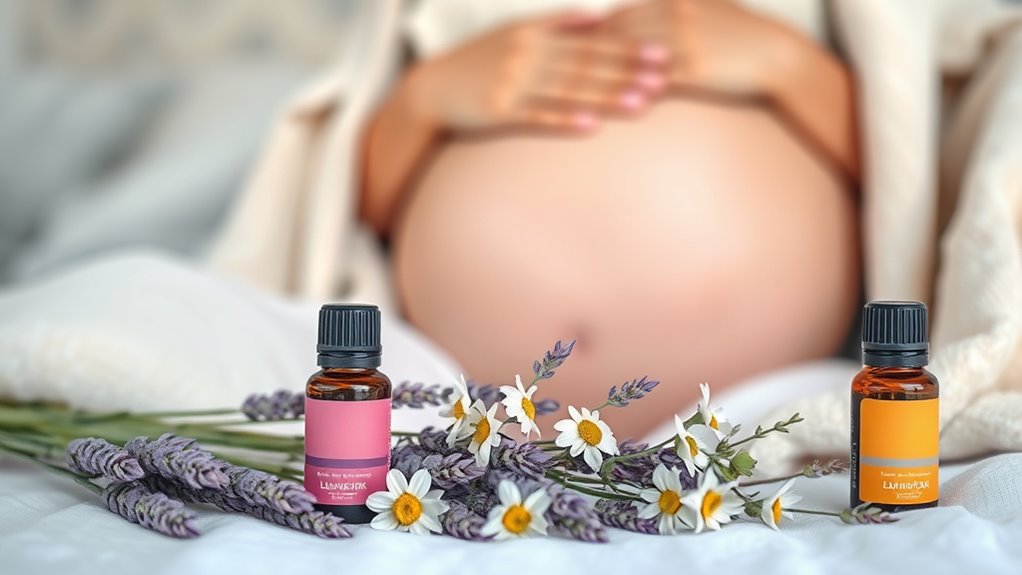
Are you curious about the role of essential oils during pregnancy? You’re not alone. Many expectant mothers are exploring the potential benefits of these natural products, but it’s important to approach their use with caution. Pregnancy is a unique time, and your body experiences various changes that can affect how you respond to essential oils. Understanding the safety guidelines for using these oils is key to guaranteeing both your well-being and that of your developing baby.
First things first, it’s imperative to know that not all essential oils are safe during pregnancy. Some oils can cause unwanted side effects or even harm your baby. That’s why it’s crucial to consult with a healthcare provider before incorporating any essential oils into your routine. They can help you identify which oils are safe for you and your pregnancy stage. When you do decide to use essential oils, remember that essential oil dilution is key. Undiluted oils can be too potent, leading to skin irritation or other adverse reactions. Diluting essential oils with a carrier oil, like coconut or jojoba oil, allows you to enjoy their benefits while minimizing risks. A good rule of thumb is to keep your essential oil dilution to about 1-3% during pregnancy, which typically translates to one drop of essential oil for every tablespoon of carrier oil.
Not all essential oils are safe during pregnancy; consult your healthcare provider and always dilute oils properly.
You might be wondering which essential oils are considered safe. Oils like lavender and chamomile are often recommended for their calming properties, while citrus oils can uplift moods. However, steer clear of oils like sage, rosemary, and wintergreen, as they may pose risks. Always trust your instincts and listen to your body. If something doesn’t feel right, it’s best to stop using the oil immediately.
Additionally, consider your method of application. Inhalation through diffusers is often a safer way to enjoy essential oils without direct skin contact. If you choose to apply oils topically, ensure that you follow the dilution guidelines closely. It’s also a good idea to conduct a patch test first to check for any potential reactions.
pregnancy safe essential oils diffuser
As an affiliate, we earn on qualifying purchases.
As an affiliate, we earn on qualifying purchases.
Frequently Asked Questions
Can I Use Essential Oils During Labor?
Yes, you can use essential oils during labor for comfort, but make sure to prioritize safety. Choose oils known for their calming properties, like lavender or chamomile, and always dilute them properly. It’s best to consult your healthcare provider before using any essential oils to verify they’re safe for your specific situation. Remember, finding the right balance can enhance your labor experience, helping you stay relaxed and focused.
Are All Essential Oils Safe in Pregnancy?
Not all essential oils are safe during pregnancy. You need to be cautious and prioritize essential oil safety. Some oils can cause adverse effects or complications, so it’s crucial to research each one before use. Always consult with your healthcare provider for pregnancy precautions, as they can guide you on which oils might be safe and beneficial, and which should be avoided. Your well-being and your baby’s health come first!
How Should Essential Oils Be Applied?
Applying essential oils can feel like opening a treasure chest of wellness! You can use diffusion therapy by adding a few drops to a diffuser, filling your space with soothing aromas. For topical application, always dilute essential oils with a carrier oil to avoid irritation. Test a small skin area first to make sure you don’t have an adverse reaction. Enjoy the benefits, but remember to choose your oils wisely!
Can Essential Oils Affect Fetal Development?
Yes, essential oils can potentially influence fetal development. They may have hormonal effects that interfere with your body’s natural processes. Additionally, some oils can cross the placenta, leading to placental transfer, which means the fetus could be exposed to these substances. It’s important to be cautious and consult a healthcare professional before using essential oils during pregnancy to ensure both your health and your baby’s development remain safe.
What Are the Signs of Essential Oil Sensitivity?
You might notice a tingling sensation or redness on your skin after using essential oils, like a sudden chill in the air before a storm. These could be signs of essential oil sensitivity. If you experience itching, swelling, or a rash, it’s likely you’re dealing with essential oil allergies. Pay close attention to your body’s reactions; skin sensitivity can manifest quickly, making it essential to identify and avoid triggers to keep your skin healthy.
Conclusion
In summary, when it comes to essential oils and pregnancy, it’s vital to be cautious, to stay informed, and to consult your healthcare provider. By understanding which oils are safe and which to avoid, you can enjoy the benefits of aromatherapy while protecting your growing baby. Remember, your well-being matters just as much as your little one’s, so prioritize safety, embrace knowledge, and let your journey be a fragrant one filled with care and mindfulness.
Fall Picks
fall essentials
As an affiliate, we earn on qualifying purchases.