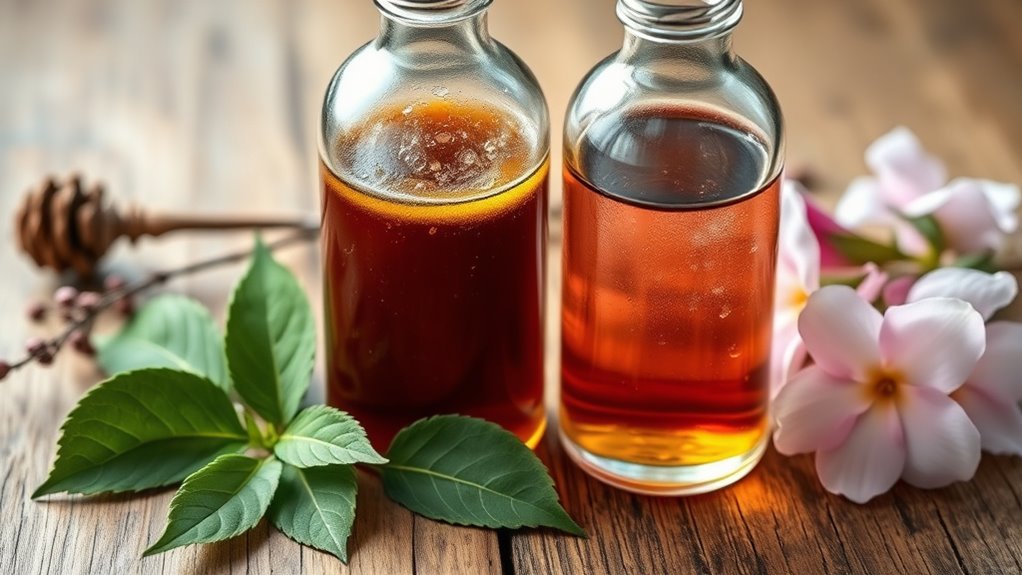

Witch hazel and hydrosols are both natural toners, but they serve different skin needs. Witch hazel, derived from plant bark and leaves, offers strong astringent benefits, helping control oil and tighten pores, making it great for oily or acne-prone skin. Hydrosols, like rose or chamomile waters, are gentle, calming, and hydrating, suitable for sensitive or dry skin. Understanding these differences helps you pick the right product; keep exploring to learn more about their uses and benefits.
Key Takeaways
- Witch hazel is a concentrated extract with astringent properties, while hydrosols are gentle plant waters with soothing effects.
- Witch hazel reduces oil and tightens pores, ideal for oily or acne-prone skin; hydrosols calm and hydrate sensitive or dry skin.
- Hydrosols are produced via steam distillation, containing tiny plant compounds, whereas witch hazel is a distilled extract from bark and leaves.
- Witch hazel can cause dryness if overused, whereas hydrosols are milder and suitable for frequent, gentle application.
- Choose witch hazel for pore control and oil reduction; opt for hydrosols for hydration and calming purposes.

Have you ever wondered how witch hazel and hydrosol differ in their skincare benefits? Both are popular natural toners, but they serve different purposes and offer unique botanical benefits. Understanding these differences can help you choose the right product for your skin type and concerns. Witch hazel, derived from the leaves and bark of the Hamamelis plant, is known for its powerful astringent properties. Its botanical benefits include reducing inflammation, tightening pores, and controlling oil production, making it especially beneficial for acne-prone or oily skin. Hydrosols, on the other hand, are the floral or plant waters produced during steam distillation of botanicals like roses, lavender, or chamomile. They contain tiny amounts of plant compounds dissolved in water, providing gentle, soothing effects suited for sensitive or dry skin. Additionally, the integration of automation technologies in the production of hydrosols ensures the preservation of delicate plant compounds, enhancing their effectiveness and consistency. When it comes to application methods, witch hazel is typically used as a liquid toner applied with a cotton pad after cleansing. You can also find it in sprays or diluted forms for more gentle or targeted use. Because of its concentrated botanical benefits, it’s best to avoid overusing witch hazel if you have sensitive skin, as it might cause dryness or irritation. Hydrosols are incredibly versatile; you can spritz them directly onto your face throughout the day to refresh your skin or incorporate them into DIY facial mists, toners, or even masks. Their light, aromatic nature makes them suitable for multiple application methods, providing a calming experience and hydration without stripping your skin’s natural oils.
Botanical benefits influence how effective each product is for your specific needs. Witch hazel’s astringent qualities make it excellent for tightening pores and reducing excess oil, but it can be too harsh for some skin types if not used carefully. Hydrosols offer a more delicate approach, with soothing and anti-inflammatory properties that can help calm irritated or sensitive skin. They also provide hydration and can balance your skin’s pH, making them ideal for regular use. When choosing between the two, consider your skin’s needs and how you prefer to incorporate your toner into your routine. If you want a product that controls oil and minimizes pores, witch hazel might be the right choice. If you’re after gentle hydration and calming effects, hydrosol could be better.

Majestic Pure Essential Oil with Glass Dropper - 100% Pure and Natural - Essential Oils for Diffuser, Aromatherapy, Soap and Candle Making, Myrrh Essential Oil, Myrrh Oil, 4 Fl Oz
MYRRH OIL - Majestic Pure Blends oils are exactly that! Many oils being sold make that claim but...
As an affiliate, we earn on qualifying purchases.
Frequently Asked Questions
Are Witch Hazel and Hydrosols Suitable for Sensitive Skin?
If you have sensitive skin, you might wonder if witch hazel and hydrosols are suitable. Both can be gentle, but ingredient compatibility varies. Witch hazel’s astringent properties may irritate some, so test first. Hydrosols are usually milder and better suited for sensitive skin. Always check ingredient lists and do a patch test to make sure they won’t cause redness or irritation before incorporating them into your skincare routine.
Can Hydrosols Replace Traditional Skincare Products Entirely?
Imagine your skincare routine as a garden; hydrosols are like gentle rain nourishing your plants. While they’re versatile and hydrating, they can’t entirely replace traditional skincare products because of their limited properties. Natural ingredient comparisons show hydrosols work best when integrated into your routine as a supplemental step, enhancing hydration and soothing. Think of them as a revitalizing breeze, complementing your existing products rather than replacing them altogether.
How Long Do Homemade Hydrosols Typically Last?
You might wonder how long homemade hydrosols last. Typically, their storage duration is about 1 to 2 years if you use proper homemade preservation techniques. To extend their shelf life, keep your hydrosols in airtight, dark glass bottles and store them in a cool, dark place. Regularly check for signs of spoilage, like changes in smell or color, to make certain your homemade hydrosol remains fresh and safe to use.
Are There Any Skin Conditions That Should Avoid Using Witch Hazel?
You might wonder if witch hazel suits everyone, but allergy concerns and skin sensitivity are key. If you have eczema, rosacea, or contact dermatitis, you should avoid witch hazel, as it can cause irritation or flare-ups. Always do a patch test first to check for reactions. People with sensitive or compromised skin should consider gentler options, like hydrosols, to avoid aggravating their conditions.
What Are the Environmental Benefits of Choosing Natural Toners?
Choosing natural toners benefits the environment by supporting sustainable sourcing, which reduces resource depletion and promotes eco-friendly farming practices. You also help minimize waste when you pick products with biodegradable packaging, allowing materials to break down naturally without harming ecosystems. By making these conscious choices, you’re actively reducing your carbon footprint and encouraging brands to prioritize environmental responsibility, ultimately contributing to a healthier planet.

Handcraft Blends Myrrh Essential Oil – 0.33 Fl Oz – 100% Pure and Natural – Premium Grade Essential Oil for Diffuser and Aromatherapy, Skin, Massage, Candle and Soap Making Fragrance
100% PURE & NATURAL MYRRH OIL- Handcraft Blends oils are exactly that! Many oils being sold online make...
As an affiliate, we earn on qualifying purchases.
Conclusion
So, next time you reach for a toner, remember that witch hazel and hydrosol both offer natural options, each with its own charm. Coincidentally, your skin might find relief in one or the other, depending on your needs. Whether you prefer the astringent touch of witch hazel or the gentle refreshment of a hydrosol, it’s all about listening to your skin’s subtle cues. Sometimes, what your skin craves finds you just when you need it most.

US Organic 100% Genuine Myrrh Essential Oil - Sourced from The Horn of Africa, USDA Certified Organic, Extracted by Hydro-Distillation (Myrrh, 5 ml)
Myrrh has been traded on the Arabian Peninsula and in North Africa thoughout history along with Frankincense. It...
As an affiliate, we earn on qualifying purchases.
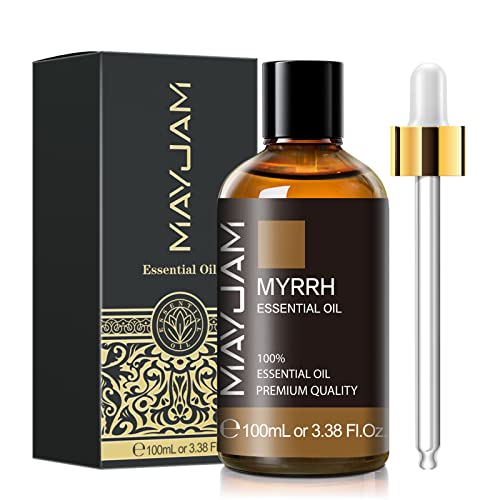
Myrrh Essential Oil 100ML/3.38FL.OZ, MAYJAM Premium Myrrh Oil Essential Oils with Glass Dropper, Great for Diffuser and Candle Making
Wonderful Scent: MAYJAM essential oils are highly concentrated liquid derived from plants' flowers, leaves or other parts, which...
As an affiliate, we earn on qualifying purchases.