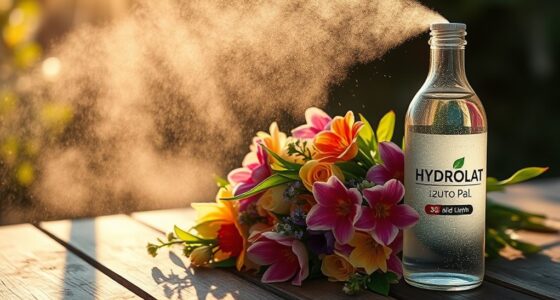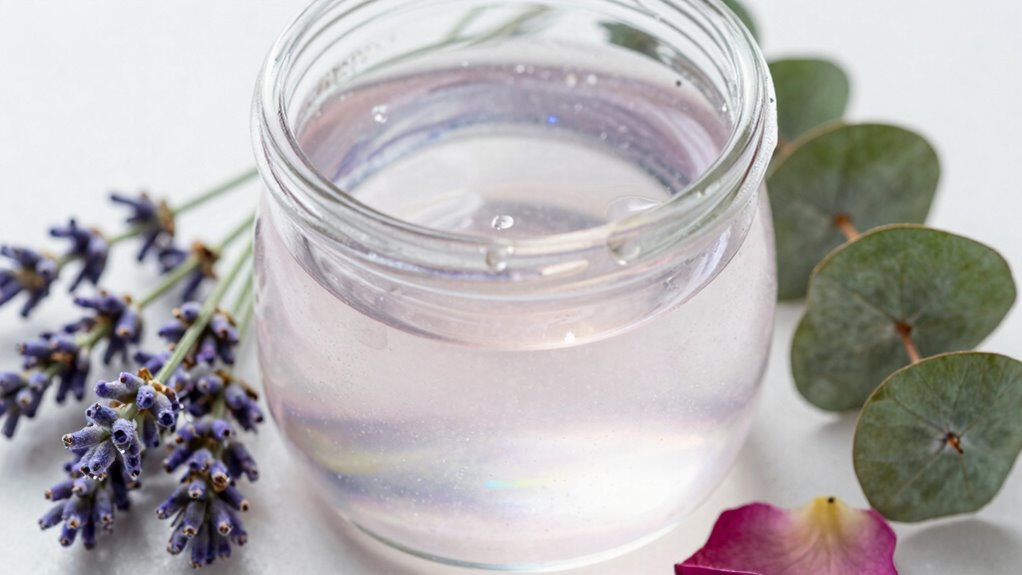
Hydrolats, or hydrosols, are gentle botanical waters created through steam distillation of plants like roses, lavender, and chamomile. They capture the plant’s aromatic essence and therapeutic properties in a diluted form, making them versatile and suitable for sensitive skin and everyday use. Often overlooked compared to essential oils, hydrolats offer a soothing, natural way to promote relaxation, skin balance, and well-being. Keep exploring to discover how these understated plant waters can benefit you.
Key Takeaways
- Hydrolats, or hydrosols, are gentle plant distillation byproducts containing water-soluble compounds and tiny amounts of essential oils.
- They are produced via steam distillation, capturing the plant’s aromatic essence and therapeutic benefits in a diluted form.
- Hydrolats are versatile, suitable for all skin types, and used in skincare, baths, and aromatherapy for relaxation and healing.
- Often overlooked, they offer a subtle, natural remedy that embodies botanical diversity and plant-based wellness.
- Their mild, accessible nature makes hydrolats a valuable, underappreciated alternative to essential oils for daily well-being.
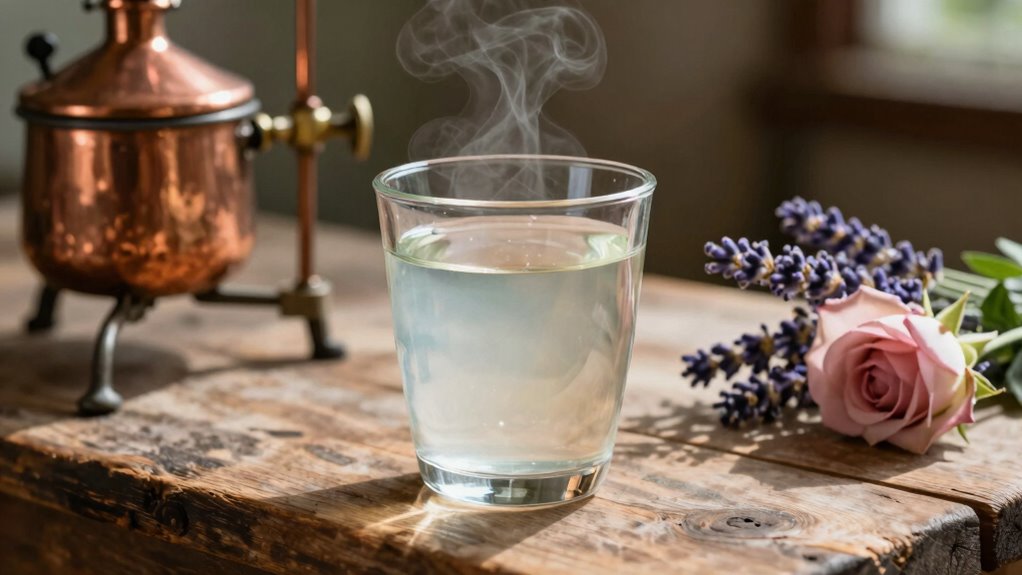
Have you ever overlooked hydrolats when exploring aromatic options? It’s easy to dismiss them as mere byproducts or less potent alternatives to essential oils, but they actually hold a unique place in the world of botanicals. Hydrolats, or hydrosols, are distillation byproducts that capture the aromatic essence and therapeutic properties of plants. They contain tiny amounts of plant oils, water-soluble compounds, and the full spectrum of botanical diversity, making them versatile and gentle. Unlike concentrated essential oils, hydrolats are mild, making them suitable for all skin types and even for children or sensitive individuals. This makes them an attractive choice for those seeking natural remedies or skincare solutions without the risk of irritation.
Hydrolats are gentle, versatile botanical waters rich in therapeutic properties, perfect for sensitive skin and natural remedies.
Understanding what hydrolats are reveals their true potential. During the steam distillation process, plant material is heated, and both volatile oils and water-soluble compounds are released. The resulting hydrosol is the aromatic water that remains after the separation of essential oils. It’s a delicate, fragrant liquid that retains much of the plant’s therapeutic properties, but in a more diluted and accessible form. This botanical diversity means you can find hydrolats made from roses, lavender, chamomile, and countless other plants, each offering specific benefits. For example, rose hydrosol is renowned for its calming and skin-refreshing qualities, while lavender hydrosol provides soothing effects for both skin and mood.
The therapeutic properties of hydrolats extend beyond their gentle aroma. They’re often used in facial mists, toners, or even in baths to promote relaxation, hydration, and healing. Because they’re water-based, hydrolats are easy to incorporate into daily routines. You can spritz them on your face for a quick refresh, add them to your bathwater for a calming soak, or use them as a gentle facial toner to balance your skin’s pH. Their mild nature makes them suitable for sensitive skin, yet they still deliver meaningful benefits rooted in the plant’s original properties. This versatility has kept hydrolats under the radar for many, but once you explore their benefits, you’ll see why they deserve a spot in your aromatherapy toolkit.
Additionally, hydrolats can contain plant oils in very diluted forms, which contributes to their gentle yet effective therapeutic effects. In essence, hydrolats are an underappreciated gem in the aromatic world. They embody botanical diversity and carry potent therapeutic properties in a subtle, accessible form. Whether you’re after relaxation, skin care, or simply want to experience the natural scents of plants, hydrolats offer a gentle yet effective solution. They’re an excellent way to connect with nature’s healing potential without the intensity or complexity of pure essential oils. Once you start incorporating hydrolats into your routine, you’ll discover how they can enhance your overall well-being with their understated charm.
Frequently Asked Questions
Are Hydrolats Safe for All Skin Types?
Yes, hydrolats are generally safe for all skin types, but you should still exercise caution. If you have sensitive skin, test a small patch first to check for allergic reactions or irritation. Hydrolats are gentle, but skin sensitivity varies. If you notice redness, itching, or discomfort, discontinue use immediately. Always choose high-quality, pure hydrolats and consult a dermatologist if you have concerns about allergic reactions.
How Long Do Hydrolats Last Before They Expire?
They say “a stitch in time saves nine,” and that’s true for hydrolats. Typically, their shelf life is about 1 to 2 years when stored properly. Keep them in a cool, dark place, away from direct sunlight, and guarantee the bottles are tightly sealed. Proper storage tips help preserve their freshness and potency longer, so you get the most benefit from your hydrolats before they expire.
Can Hydrolats Be Used Internally?
Yes, you can use hydrolats internally, but only with proper safety considerations. Always verify they are food-grade and consult a healthcare professional before incorporating them into your internal use routine. Some hydrolats are safe for internal use, while others aren’t; so, it’s crucial to know the specific type. Use them in moderation, follow recommended dosages, and be aware of any allergies or sensitivities.
What Is the Best Way to Store Hydrolats?
Did you know hydrolats can last up to two years if stored properly? To maximize shelf life, keep them in dark glass bottles away from direct sunlight, heat, and humidity. Use airtight caps to prevent oxidation, and store in a cool, dark place. Proper storage tips help preserve their delicate aroma and therapeutic properties, ensuring you get the most out of your hydrolats over time.
Are Hydrolats Less Concentrated Than Essential Oils?
Yes, hydrolats are less concentrated than essential oils because of their dilution levels. They come from botanical sources through steam distillation, capturing the water-soluble components of plants. This makes hydrolats milder and gentler, perfect for skincare and aromatherapy. You’ll find they retain many beneficial properties but lack the potency of essential oils, making them safer for sensitive skin and everyday use.
Conclusion
Remember, sometimes the quiet ones are the most powerful. Hydrolats might not get the spotlight like essential oils, but they offer gentle, versatile benefits worth exploring. As the saying goes, “Still waters run deep.” So, don’t overlook these delicate distillates—they could become your new secret weapon in aromatherapy and skincare. Give hydrolats a chance, and you might just discover their hidden potential, proving that sometimes, less is truly more.