To make hydrosols at home with simple distillation, gather fresh, pesticide-free plant material and chop or tear it for better extraction. Use a large pot, place the plant inside, add distilled water, and set a heat-safe bowl on top for collection. Cover the pot with an upside-down lid, boil gently, and let steam carry aromatic compounds into the bowl. Once enough distillate is collected, store it in sterilized bottles. Keep watching to learn detailed tips for optimizing your hydrosol production.
Key Takeaways
- Use fresh or dried, pesticide-free plant material and chop or tear it for better extraction.
- Set up a simple distillation apparatus with a pot, a heat-safe collection bowl, and an upside-down lid.
- Boil water gently to produce steam that carries aromatic compounds through the plant material.
- Collect the condensed hydrosol in sterilized bottles, then store in a cool, dark place.
- Maintain low heat and proper conditions to maximize yield, quality, and preserve the plant’s natural fragrance.
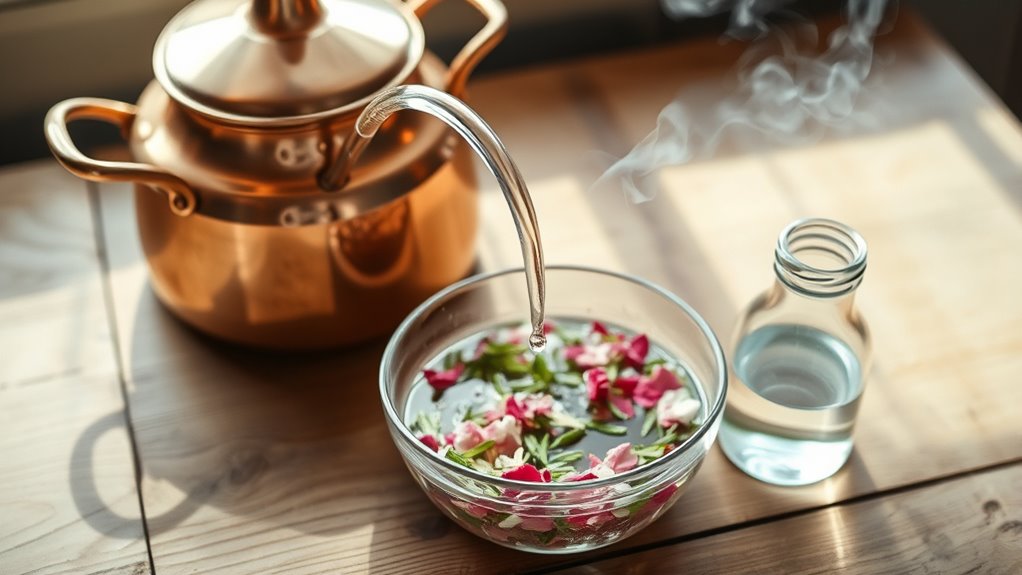
Have you ever wondered how to create your own hydrosols at home? It’s easier than you might think and a rewarding way to harness the natural properties of plants. The key lies in understanding botanical extraction and distillation techniques, which are fundamental to producing high-quality hydrosols. When you set out to make your own, you’re essentially capturing the delicate aromatic and therapeutic compounds from fresh herbs, flowers, or other plant materials through simple distillation.
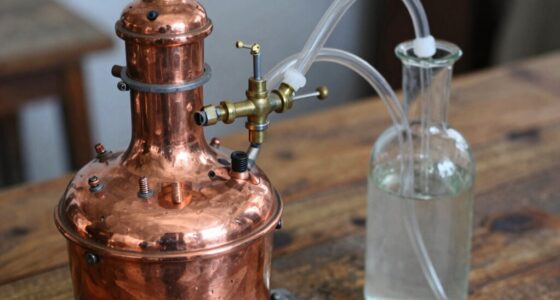
To start, gather your plant material—fresh or dried—and ensure it’s clean and free from dirt or pesticides. The process hinges on botanical extraction, where heat and water work together to release the plant’s essence. You’ll need a large pot, a heat-safe bowl or container that fits inside the pot without touching the bottom, and a lid. Place the plant material in the pot, add enough distilled water to cover the base, and then position the bowl on top of the plant. The goal is for the steam generated during boiling to pass through the plant material, carrying the aromatic compounds with it.
Gather fresh or dried plant material, ensure cleanliness, and prepare for simple steam distillation at home.
Next, cover the pot with the lid upside down or with a sloped cover so that the condensed steam, now infused with plant oils, drips into the bowl. This is a simple distillation technique that relies on heat to extract the essence. Turn on the stove and bring the water to a gentle boil; the steam will rise, pass through the plant, and condense on the lid, then drip into your collection bowl. Keep the temperature low enough to prevent boiling too vigorously, which helps preserve delicate compounds. Simple distillation techniques are essential for home herbal extraction and hydrosol production.
As the water continues to distill, the bowl will collect hydrosol—the aromatic water containing the plant’s soluble compounds. This process can take anywhere from 30 minutes to a couple of hours, depending on the plant material and quantity. Once you see a steady flow of condensed liquid, turn off the heat and carefully remove the lid, making sure not to burn yourself. The hydrosol in the bowl is now ready to be poured into sterilized bottles for storage. Additionally, maintaining proper distillation conditions ensures a more efficient extraction process and higher quality product. Proper temperature control during distillation is crucial for preserving the delicate aromatic compounds and maximizing yield.
Using a proper distillation setup can significantly improve the yield and quality of your hydrosols, making your home distillation more efficient. Making hydrosols at home using this simple distillation method allows you to create pure, natural products without any chemicals or preservatives. The process employs basic botanical extraction principles and distillation techniques that you can adapt based on the plant you’re using. With practice, you’ll refine your technique and be able to produce beautiful, fragrant hydrosols tailored to your preferences. Plus, knowing exactly what’s in your hydrosol gives you peace of mind and a genuine connection to nature’s offerings.
Frequently Asked Questions
Can I Make Hydrosols Without a Traditional Still?
You can make hydrosols without a traditional still by exploring DIY alternatives like a makeshift steam distillation setup using household items. Focus on selecting the right plants, such as lavender or rose, for strong aromatic oils. You’ll need a large pot, a lid, and a way to capture the condensation. While it’s not as precise, this method allows you to create natural hydrosols at home with some patience and careful setup.
How Long Do Homemade Hydrosols Last?
Your homemade hydrosols typically last about 6 to 12 months with proper botanical preservation. To maximize shelf life, store them in dark glass bottles, keep them in a cool, dark place, and avoid temperature fluctuations. Using clean, airtight containers and adding a natural preservative like alcohol can also help preserve their aroma and properties. Regularly check for signs of spoilage, such as changes in smell or appearance.
Are There Safety Concerns With Home Distillation?
Think of home distillation as steering a river—exciting but with hidden currents. Safety precautions are your life jacket against chemical hazards and accidents. You should use proper equipment, work in well-ventilated areas, and avoid direct contact with hot surfaces or chemicals. Always follow instructions carefully, and never underestimate potential risks. Staying cautious ensures your homemade hydrosol journey stays safe and enjoyable, without dangerous surprises lurking behind the currents.
What Plants Are Best for Hydrosol Extraction?
When choosing plants for hydrosol extraction, consider their aromatic properties and oil content. Popular options include lavender, rose, chamomile, and peppermint. Your plant selection impacts the quality and scent of your hydrosol. Use simple extraction methods like steam distillation to preserve delicate oils. Guarantee your plants are fresh and free from pesticides, and chop them into smaller pieces to maximize surface area for better extraction efficiency.
Can I Reuse Plant Material for Multiple Distillations?
Think of your plant material as a treasure chest—once opened, its gems may dwindle, but some remain. You can reuse plant material for multiple distillations, yet each time, distillation efficiency drops. This means you’ll extract less precious essence, just like uncovering fewer gems from the chest. To maximize your harvest, consider fresh plant material for each distillation, ensuring your hydrosols stay vibrant and potent.
Conclusion
Now that you know how to make hydrosols at home, you’re well on your way to capturing nature’s purest scents. Remember, “A journey of a thousand miles begins with a single step,” so don’t be discouraged if it takes a few tries. With patience and practice, you’ll create beautiful, aromatic waters to enjoy or use in your daily routine. Trust the process, and soon you’ll be savoring the simple beauty of homemade hydrosols.