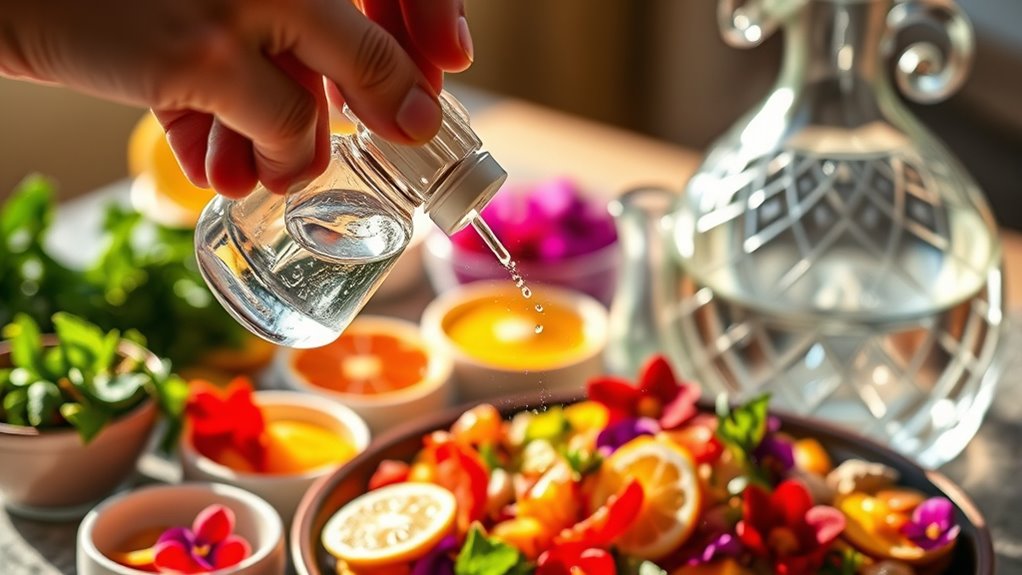

Hydrosols, also known as floral waters, add subtle, fragrant notes to your dishes and drinks. Use them sparingly—just a few drops—to enhance flavors in desserts, beverages, or marinades. They work well with citrus, herbs, and fruits, creating unique flavor layers while maintaining a natural touch. Proper sourcing guarantees safety and quality. If you keep exploring, you’ll discover how these delicate waters can elevate your culinary creations with new, memorable aromas.
Key Takeaways
- Hydrosols add subtle, aromatic notes to dishes, beverages, and desserts, enhancing flavor profiles delicately.
- Use only food-grade hydrosols from reputable sources to ensure safety and optimal flavor.
- Incorporate hydrosols sparingly—just a few drops—to avoid overpowering the dish or drink.
- Pair hydrosols with ingredients like citrus, herbs, and fruits to create innovative culinary combinations.
- Experiment with hydrosols in syrups, whipped creams, and drinks to develop unique, fragrant recipes.
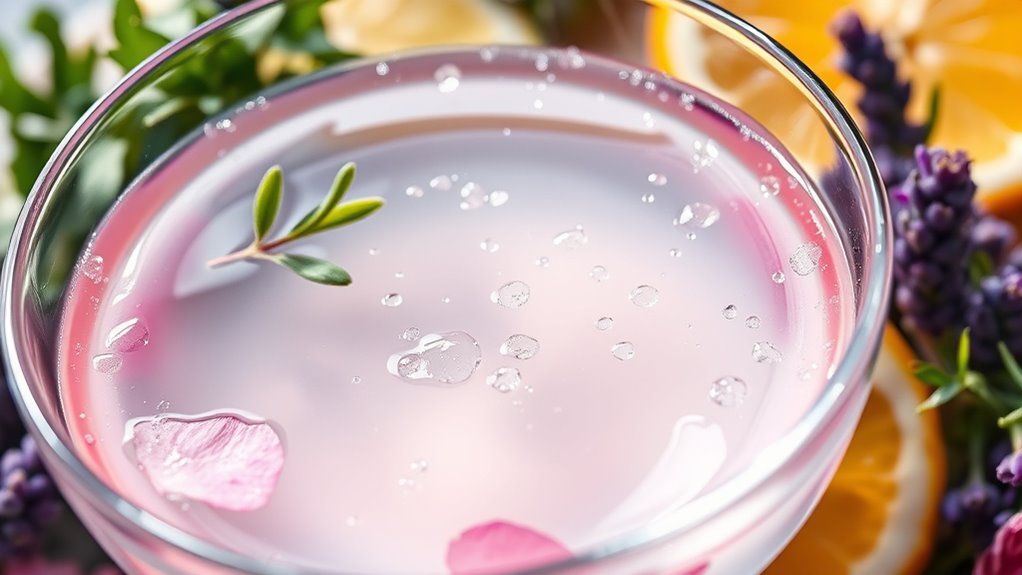
Although commonly known for their aromatic and therapeutic properties, hydrosols are increasingly gaining popularity in the culinary world. These floral waters offer a subtle, fragrant touch to many dishes and beverages, elevating traditional recipes with their delicate flavors. When you experiment with hydrosols, you discover new layers of flavor pairing possibilities that can enhance both sweet and savory dishes. Their gentle aroma complements ingredients like citrus, herbs, and fruits, allowing you to craft more complex and nuanced flavors without overpowering the dish.
Hydrosols add delicate, fragrant layers to dishes, enhancing flavors without overpowering.
In traditional recipes, hydrosols have long been used to add depth and aroma, especially in Middle Eastern, Mediterranean, and Asian cuisines. For example, rose water is a classic ingredient in Middle Eastern desserts like baklava and Turkish delight, providing a floral note that balances richness and sweetness. Similarly, orange blossom water often features in Mediterranean pastries, adding a fresh, citrusy aroma that elevates flavor profiles. When you incorporate hydrosols into such recipes, you’re not only sticking to tradition but also exploring ways to modernize and customize classic flavors. Additionally, understanding the distillation process can help you select the best hydrosols for culinary use, ensuring purity and flavor integrity. Knowing about production methods can also inform your choices, as different techniques may affect flavor quality. Proper sourcing is crucial to ensure you’re using safe and high-quality ingredients in your cooking.
Using hydrosols in cooking requires a light touch. Because they are concentrated, a few drops go a long way. You might add a splash of rose water to whipped cream, infusing it with a floral scent that pairs beautifully with berries or pistachios. Or, you can incorporate a teaspoon of orange blossom water into a syrup for poaching fruit or flavoring cocktails. In drinks, hydrosols can serve as a natural, alcohol-free flavoring agent, offering a revitalizing twist that’s both aromatic and subtle. Their versatility makes them perfect for creating bespoke beverages, from flavored waters to elegant cocktails. To fully appreciate their potential, experimenting with different hydrosols and flavor combinations can open up a world of culinary possibilities.
When you work with hydrosols, it’s essential to remember that quality matters. Always opt for food-grade hydrosols from reputable sources, as some floral waters are intended solely for aromatherapy and may contain additives or impurities. Additionally, understanding the flavor profiles can guide you to choose the most compatible hydrosols for your recipes, enhancing their overall harmony. Moreover, exploring pairing ideas can help you discover innovative ways to incorporate hydrosols into your dishes and drinks. Also, keep in mind that their flavor profile is often delicate, so start with small amounts and adjust to taste. With a little experimentation, you’ll find that hydrosols are a versatile tool in your culinary arsenal, enabling you to craft dishes that are both fragrant and memorable.

Heavenly Pure Frankincense Essential Oil 16 Fl Oz (Pack of 1) Large Bottle for Aromatherapy Diffusers and DIY Blends
Pure Frankincense Aroma derived from the resin of the Boswellia tree and steam distilled to capture its warm...
As an affiliate, we earn on qualifying purchases.
Frequently Asked Questions
Are Hydrosols Safe for Children and Pregnant Women?
You’re wondering if hydrosols are safe for children and pregnant women. It’s important to contemplate pediatric safety and pregnancy precautions, as some hydrosols can be too potent or contain compounds that aren’t suitable during pregnancy or for young kids. Always consult a healthcare professional before using hydrosols in these groups. Stick to reputable sources, use small amounts, and prioritize safety to avoid any adverse effects.
How Long Do Hydrosols Last Once Opened?
Once you open hydrosols, their shelf life varies but generally lasts 6 months to a year with proper storage. To keep them fresh, store hydrosols in a cool, dark place, preferably in airtight bottles away from direct sunlight and heat. Proper storage tips help preserve their aroma and effectiveness, ensuring you get the most out of your floral waters for culinary or aromatic use.
Can Hydrosols Be Used in Savory Dishes?
Imagine adding a splash of floral water to a savory stew—it’s like painting with aroma. You can definitely use hydrosols as savory flavoring, sparking culinary experimentation. They add subtle, unique notes that enhance dishes like roasted vegetables or marinades. Just remember, start with small amounts; hydrosols can be potent. Their delicate aroma balances savory profiles beautifully, opening up new flavor horizons in your kitchen.
What Is the Best Way to Store Floral Waters?
To keep your floral waters fresh, follow these storage tips. Store them in a cool, dark place, ideally in airtight glass bottles to prevent oxidation. Keep the bottles away from direct sunlight and heat sources. Proper storage extends their shelf life, which is typically around 1-2 years. Always check for changes in aroma or appearance before use, and refrigerate if you notice any signs of spoilage.
Are There Any Known Allergies Linked to Hydrosols?
Ever wonder if hydrosols could trigger allergy symptoms? You might be sensitive to certain floral waters, experiencing hydrosol sensitivity or unexpected reactions. While rare, some individuals develop allergic responses, so it’s wise to test a small amount first. Knowing that allergies linked to hydrosols exist keeps you cautious. Stay alert to any adverse effects, and consult a healthcare professional if you suspect a sensitivity—better safe than sorry with these fragrant waters.

Handcraft Blends Frankincense Essential Oil – Huge 4 Fl Oz – 100% Pure and Natural – Premium Grade Essential Oil for Diffuser and Aromatherapy, Skin, Massage, Candle and Soap Making Fragrance
100% PURE & NATURAL FRANKINCENSE OIL - Handcraft Blends oils are exactly that! Many oils being sold make...
As an affiliate, we earn on qualifying purchases.
Conclusion
Think of hydrosols as the hidden gems in your culinary treasure chest, ready to infuse your dishes and drinks with delicate floral whispers. When you incorporate these aromatic waters, you’re revealing a world of subtle, natural flavors that elevate your creations beyond the ordinary. Just like a gentle breeze carries the scent of blooming gardens, hydrosols bring a touch of magic to your kitchen, transforming everyday ingredients into memorable, aromatic experiences.

Majestic Pure Essential Oil with Glass Dropper - 100% Pure and Natural - Essential Oils for Diffuser, Aromatherapy, Soap and Candle Making, Frankincense Essential Oil, Frankincense Oil, 4 Fl Oz
100% PURE & NATURAL FRANKINCENSE OIL - Majestic Pure Blends oils are exactly that! Many oils being sold...
As an affiliate, we earn on qualifying purchases.

Oil of Youth Frankincense Essential Oil – Pure Frankincense Oil for Aromatherapy, Calming, Relaxing, Diffuser (16oz Bulk)
Premium Frankincense Oil: Experience the highest quality Frankincense essential oil in a generous 16-fl Oz bottle. This therapeutic,...
As an affiliate, we earn on qualifying purchases.