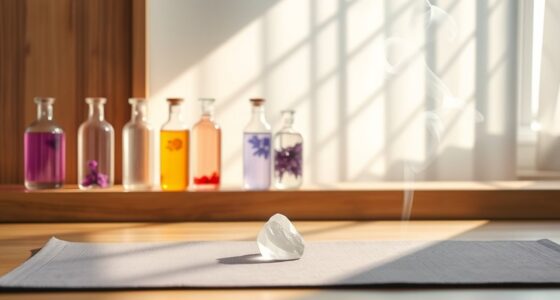
Hydrosols, or floral waters, are natural byproducts of steam distillation that contain tiny amounts of essential oils. Using hydrosols for cleaning lets you avoid harsh chemicals and creates a more eco-friendly home. You can easily DIY cleaners by blending hydrosols with essential oils, making them safe for children and pets. They’re versatile for invigorating linens, surfaces, or air. Keep exploring to discover simple ways to incorporate these sustainable solutions into your routine.
Key Takeaways
- Hydrosols are plant byproducts that serve as natural, gentle cleaners, reducing reliance on harsh chemicals.
- Blending hydrosols with essential oils enhances cleaning effectiveness and adds pleasant fragrances.
- Hydrosols are safe for homes with children and pets, leaving no toxic residues behind.
- They support eco-friendly practices by reusing byproducts and minimizing waste in household cleaning routines.
- Versatile and customizable, hydrosols can be used for freshening linens, air, and various surfaces naturally.

Hydrosols, also known as floral waters, offer a natural and gentle alternative to conventional cleaning products. These aromatic waters are byproducts of steam distillation of plants and contain tiny amounts of essential oils, making them safe and effective for various household tasks. When you incorporate hydrosols into your cleaning routine, you’re not only reducing exposure to harsh chemicals but also embracing a more eco-friendly lifestyle. They can easily be incorporated into DIY recipes, allowing you to customize cleaning solutions to suit your needs while harnessing the natural properties of plants like lavender, eucalyptus, or peppermint. Using hydrosols for cleaning means you get a product that’s gentle on your skin and the environment, yet powerful enough to tackle everyday messes.
Hydrosols provide a gentle, eco-friendly alternative for natural household cleaning.
You might find that blending hydrosols with essential oils enhances their cleaning power and adds a pleasant fragrance. For example, mixing lavender hydrosol with a few drops of tea tree oil makes an excellent all-purpose cleaner that fights bacteria and leaves your home smelling fresh. DIY recipes are simple to create and require minimal ingredients—just a spray bottle, your chosen hydrosol, some essential oils, and water. This blend can be used to disinfect countertops, freshen up upholstery, or even clean glass surfaces. Plus, since hydrosols are naturally derived, they won’t leave behind toxic residues, making them safer for homes with children or pets. Additionally, understanding the nutritional benefits of plant-based ingredients helps in selecting the most effective hydrosols for cleaning. Moreover, awareness of environmental impact encourages the use of sustainable ingredients and practices in your cleaning routine. Incorporating natural preservatives can also extend the shelf life of your homemade cleaning solutions.
When you choose to use hydrosols in your cleaning routine, you’re also supporting sustainable practices. These waters are byproducts of essential oil extraction, so repurposing them for cleaning maximizes resource use and reduces waste. They’re versatile, too—use them to freshen linens, as a facial mist, or even as a natural air freshener. Because hydrosols are gentle yet effective, you can confidently replace many chemical-laden cleaners with these natural alternatives.
Creating your own cleaning solutions with hydrosols and essential oils is not only cost-effective but also empowering. It allows you to control what goes into your home, avoiding synthetic fragrances and harmful additives. Whether you prefer a calming scent like chamomile or a invigorating aroma like peppermint, customizing your DIY recipes is easy. Simply experiment with different combinations to find what works best for your cleaning needs. Overall, integrating hydrosols into your home care routine offers a sustainable, health-conscious way to keep your environment clean and smelling delightful—all while reducing your ecological footprint.
Frequently Asked Questions
Are Hydrosols Safe for Children and Pets?
You’re wondering if hydrosols are safe for children and pets. Generally, they’re gentle and natural, but you should consider pet safety and allergy concerns. Always choose high-quality, pure hydrosols, and avoid those with added chemicals. Test a small area first to check for allergic reactions. Keep hydrosols out of reach of children and pets, and consult a healthcare professional if you have any doubts about specific scents or ingredients.
How Long Do Hydrosols Retain Their Effectiveness?
While the gentle whisper of time might suggest a limit, hydrosols typically retain their potency preservation for about 1 to 2 years with proper storage. To maximize their storage longevity, keep them in cool, dark places away from direct sunlight and heat. Proper storage helps maintain their aromatic qualities and effectiveness, ensuring you enjoy their benefits longer. Regularly check for changes in scent or appearance to gauge freshness.
Can Hydrosols Replace All Traditional Cleaning Products?
You might wonder if hydrosols can replace all traditional cleaning products. While they’re great for DIY recipes and reduce environmental impact, they may not be as potent for heavy-duty cleaning tasks. Hydrosols work well for everyday surfaces and freshening up, but for tough stains or disinfecting, you might need stronger options. Incorporating hydrosols supports eco-friendly home solutions, but understanding their limits helps you choose the right product for each job.
Are There Any Allergic Reactions Associated With Hydrosols?
You might experience allergic sensitivities or skin reactions when using hydrosols, especially if you have sensitive skin or allergies. While generally safe, some people could develop irritation or allergic responses due to natural compounds. It’s wise to do a patch test first and consult with a healthcare professional if you have known sensitivities. Being cautious helps make sure hydrosols are a safe, eco-friendly option for your cleaning routine.
How Should Hydrosols Be Stored to Maintain Freshness?
Think of your hydrosols as delicate whispers of nature that need gentle care. To keep their freshness vibrant, follow proper storage techniques—store them in cool, dark places, like a secret garden’s shade. Seal bottles tightly to preserve their essence and prevent evaporation. By practicing these steps, you safeguard their potency and aroma, ensuring each spritz remains as invigorating as the first, ready to refresh your home naturally.
Conclusion
By choosing hydrosols for cleaning, you embrace sustainability, promote health, and protect your home. You reduce toxins, support eco-friendly practices, and enjoy a fresh, natural space. Hydrosols offer a gentle, effective alternative to harsh chemicals. You nurture your environment, care for your family, and make a positive impact. Embrace hydrosols today—cleanse naturally, live responsibly, and transform your home into a healthier haven.