
Even though hydrolats are gentler than essential oils, they can still pose risks to your pets. They might cause ingestion issues, allergic reactions, or skin irritations if pets lick or come into contact with sprays or spills. To keep your animals safe, use hydrolats in well-ventilated areas and away from their reach. Staying cautious helps prevent accidents, and you’ll find useful tips on how to use hydrolats safely around your pets if you continue.
Key Takeaways
- Hydrolats are milder than essential oils but can still cause gastrointestinal upset or toxicity if ingested by pets.
- Always check ingredient safety and avoid spraying hydrolats directly on pet bedding or toys.
- Keep pets away during and after use to prevent licking or accidental ingestion of droplets.
- Monitor pets for allergic reactions such as itching, sneezing, or skin irritation after hydrolat exposure.
- Consult a veterinarian if your pet shows signs of adverse effects or if uncertain about specific hydrolats.
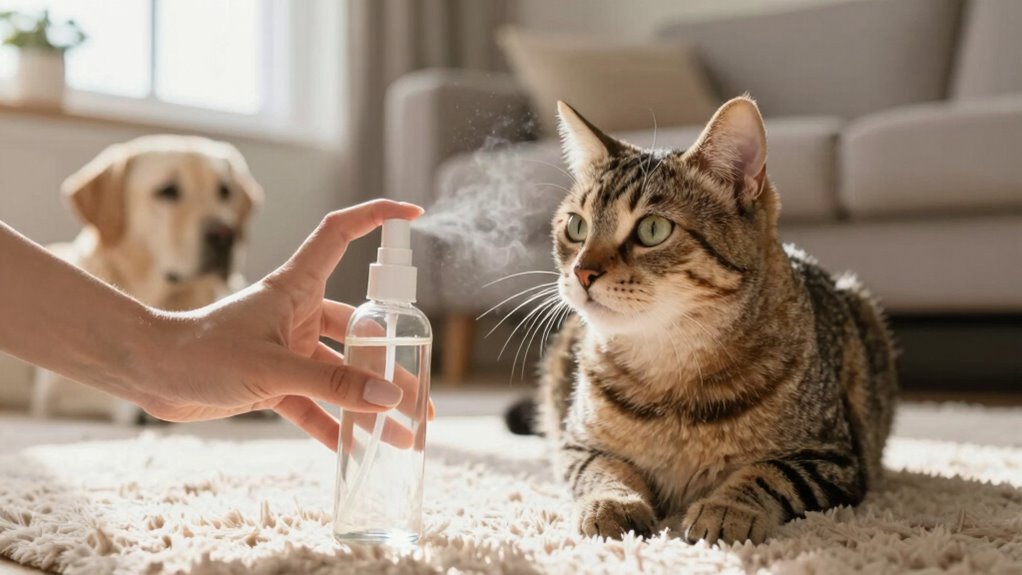
Are hydrolats safe to use around your pets? Many pet owners believe that because hydrolats are natural, they’re automatically safe for animals. However, that’s not always the case. While hydrolats are generally milder than essential oils, they can still pose risks if your pet ingests them or if they trigger allergies. It’s essential to understand that pets have different sensitivities, and what might be safe for you could be harmful to your furry friend.
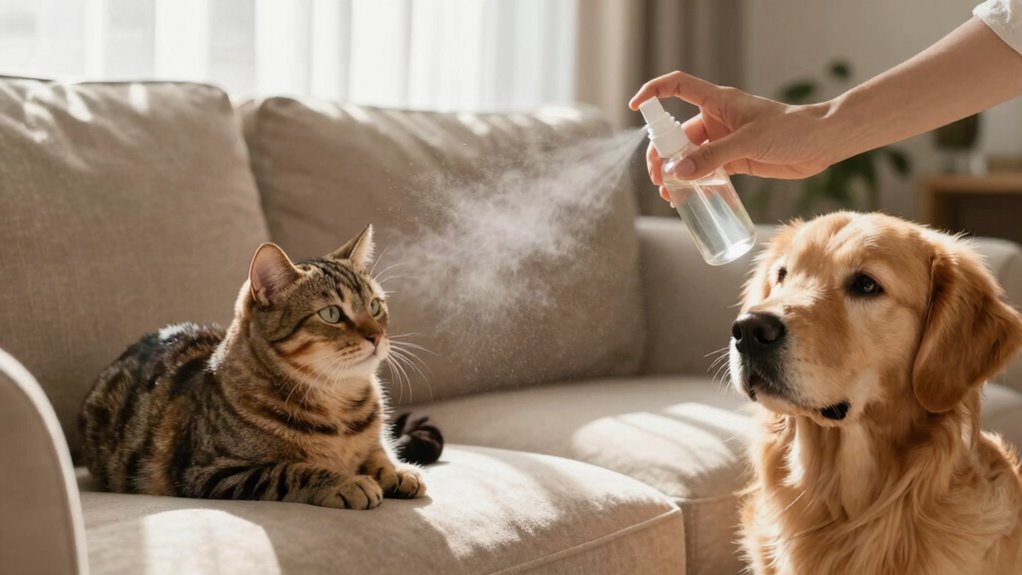
When using hydrolats in your home, you need to be cautious about pet ingestion. Pets, especially curious cats and dogs, might lick surfaces where hydrolats have been sprayed or spilled. Ingesting even small amounts can lead to gastrointestinal upset, including vomiting or diarrhea, particularly if the hydrolat contains certain plant compounds. If you notice your pet nibbling on sprays or ingesting droplets, it’s vital to consult your veterinarian. Some hydrolats may contain constituents that are toxic to pets, so always check the ingredients before use.
Be cautious: pets may lick hydrolat spills, risking ingestion and upset. Always check ingredients to ensure safety.
Pet allergies are another concern. Just like humans, animals can develop allergic reactions to plant-based products. Hydrolats derived from flowers or herbs known to cause allergies in animals, such as chamomile or lavender, can lead to skin irritation, itching, or respiratory issues if your pet is sensitive. Even if your pet has no known allergies, repeated exposure to certain hydrolats might trigger a reaction over time. Be observant for signs of discomfort, such as sneezing, scratching, or redness, and discontinue use if you notice any adverse effects.
It’s wise to use hydrolats in well-ventilated areas and keep your pets away during and immediately after application. Avoid spraying directly onto your pet’s bedding, toys, or areas where they frequently rest. If you’re unsure about a specific hydrolat’s safety, do a patch test on a small area of your pet’s skin first, watching for any reactions over 24 hours. Remember, just because a product is natural doesn’t mean it’s safe for every animal. Some pets are more sensitive than others, and individual reactions can vary. Additionally, understanding the role of color accuracy in product perception can influence how you choose and use pet-safe products, ensuring they appear natural and non-threatening to your furry friends.
pet-safe hydrolat spray
As an affiliate, we earn on qualifying purchases.
As an affiliate, we earn on qualifying purchases.
Frequently Asked Questions
Can Hydrolats Be Used Directly on Pets’ Skin Safely?
You shouldn’t use hydrolats directly on your pet’s skin without caution. While they’re gentler than essential oils, pet skin sensitivity varies, and improper use can cause irritation or allergic reactions. Always follow essential oil safety guidelines, dilute hydrolats properly, and consult your veterinarian before applying any product. Monitoring your pet for any adverse signs is vital, ensuring you keep their health and comfort a top priority.
Are Some Hydrolats Toxic to Cats or Dogs?
Some hydrolats can be toxic to cats and dogs, so you need to tread carefully. Just like a double-edged sword, their safety depends on proper usage. Certain hydrolats, such as tea tree or citrus, pose toxicity concerns for pets. Always research specific hydrolats before use and follow safe usage guidelines. When in doubt, consult your vet to ensure your furry friends stay safe and sound.
How Should I Store Hydrolats to Keep Pets Safe?
You should store hydrolats in pet-safe containers, like glass bottles with secure lids, to prevent leaks and spills. Keep them in a cool, dark place, away from your pets’ reach, such as a high shelf or locked cabinet. Follow storage tips like labeling clearly and avoiding direct sunlight. This guarantees your pets stay safe, and the hydrolats maintain their quality and effectiveness.
Can Hydrolats Be Used Around Pets With Respiratory Issues?
Using hydrolats around pets with respiratory issues is like walking a tightrope—you need to be cautious. While some hydrolats may support pet respiratory health, others could aggravate symptoms or cause irritation. Always prioritize pet inhalation safety by consulting a vet before using hydrolats near pets with breathing problems. Observe your pet carefully and avoid strong scents. Your vigilance helps make certain their respiratory health stays protected and nurtured.
What Are Signs of Pet Sensitivity or Allergic Reactions to Hydrolats?
If your pet shows pet allergy symptoms or hydrolat irritation, you’ll notice signs like sneezing, coughing, itchy skin, or redness around the eyes. Watch for difficulty breathing or unusual behavior, which could indicate a more severe reaction. Always monitor your pet after using hydrolats, and if you see these signs, stop use immediately and consult your veterinarian to guarantee their safety.

Dog Allergy Relief Chews — Anti-Itch Skin & Coat Supplement: No Fillers, Just Flavor – Itchy Skin Relief Treatment w/Omega 3 Fish Oil – Itching&Paw Licking – Dry Skin&Hot Spots – BBQ Chicken
Allergy & Itch Relief: Our dog allergy relief bites provide anti-itch solution for dogs, offering natural aid for…
As an affiliate, we earn on qualifying purchases.
As an affiliate, we earn on qualifying purchases.
Conclusion
Just like a delicate butterfly flitting from flower to flower, your pet’s safety around hydrolats depends on careful handling. While these gentle botanicals seem harmless, they can still pose risks if misused. Always dilute, avoid direct contact with your pet’s eyes or skin, and observe for any reactions. Remember, even the gentlest breeze can carry unseen dangers—so stay vigilant and treat hydrolats with the respect they deserve to keep your furry friend safe.

PURSONIC Pet Friendly Aromatherapy Essential Oils Collection, 6-Count – Safe for Dogs and Cats, Natural Relaxation and Stress Relief
Natural Pet Care: Specially formulated for pets, these essential oils enhance relaxation and stress relief.
As an affiliate, we earn on qualifying purchases.
As an affiliate, we earn on qualifying purchases.

Pet MD Hydrocortisone Spray for Dogs, Cats, Horses – Itch Relief Spray & Hot Spot Treatment for Dogs, Irritated Dry Itchy Skin, Allergies, and Dermatitis – Reduces Topical Inflammation – 4 oz
1% Hydrocortisone spray: For rapid relief from skin irritations caused by bites and other skin conditions.
As an affiliate, we earn on qualifying purchases.
As an affiliate, we earn on qualifying purchases.