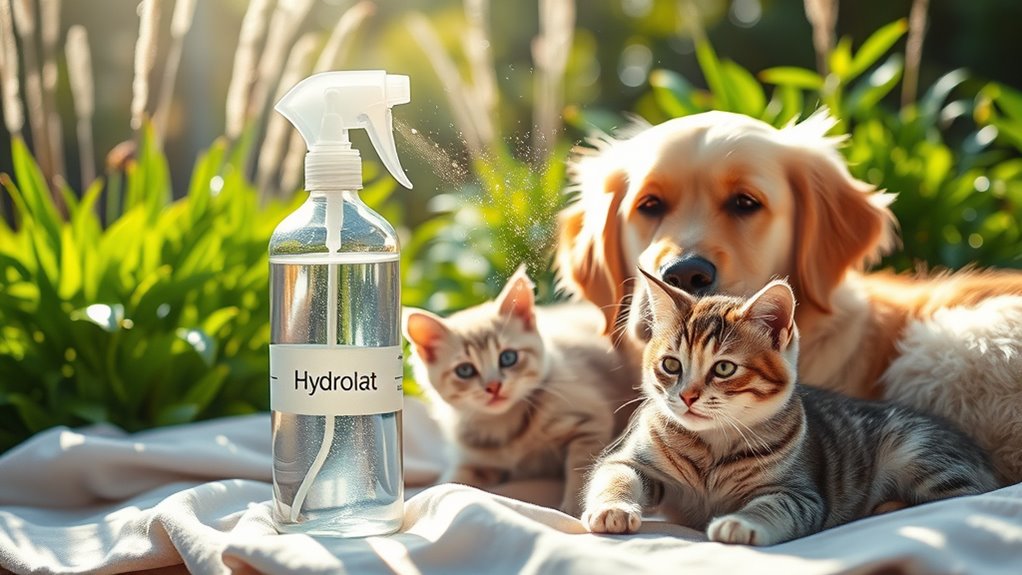

When using hydrolats around pets, you need to be cautious. While they’re generally considered safe, some pets may have sensitivities. Check ingredient safety and watch for signs of discomfort, like sneezing or behavior changes. It’s best to keep pets away from areas where hydrolats are applied, and verify they can’t ingest any by storing them out of reach. Monitoring your pet will help you avoid potential issues, and there’s more to discover about their safe use around your furry friends.
Key Takeaways
- Hydrolats are generally safe for pets, but caution is needed due to potential sensitivities and toxin risks.
- Monitor pets for signs of discomfort, such as sneezing or behavioral changes, when using hydrolats indoors.
- Avoid applying hydrolats in areas accessible to pets to prevent ingestion, which can lead to toxicity.
- Always check ingredient safety before use and ensure hydrolats are stored out of pets’ reach.
- Consult a veterinarian immediately if you notice any adverse reactions in your pets after hydrolat exposure.
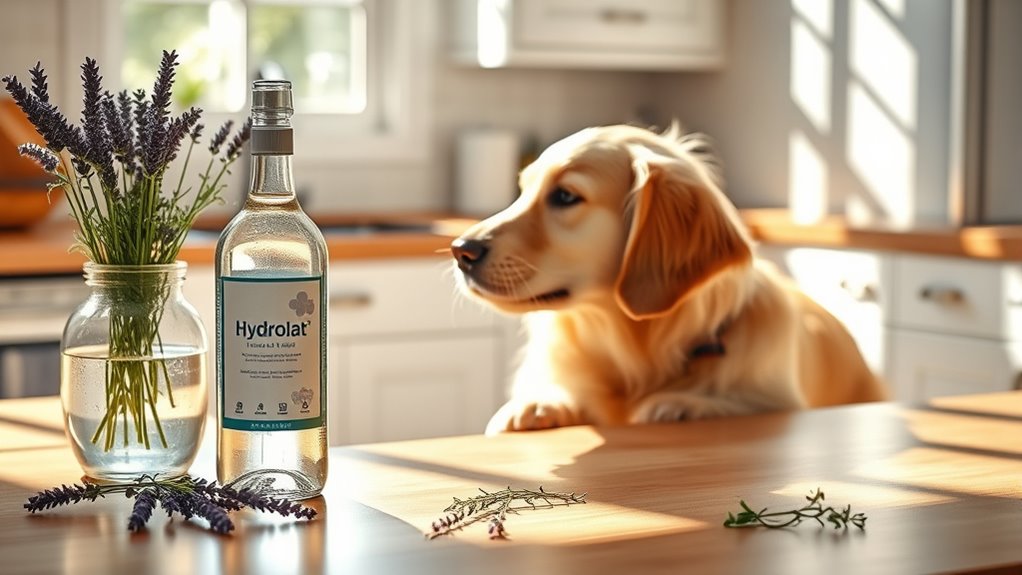
Have you ever wondered how safe hydrolats are for your furry friends? These aromatic waters, often used for their soothing properties in human wellness, can raise concerns when it comes to pets. While hydrolats are generally considered gentle and safe for many uses, you need to be cautious about pet exposure and the potential toxin risks involved.
Wondering about the safety of hydrolats for pets? While gentle, caution is essential due to potential toxin risks.
When you’re using hydrolats in your home, it’s vital to recognize that pets have different sensitivities than humans. What might be mild for you could be irritating or even harmful to your dog or cat. For example, certain essential oils can cause adverse reactions in pets, and while hydrolats are less concentrated, they can still pose risks if the wrong ones are used or if the dosage is inappropriate. Always check the ingredients of any hydrolat, and guarantee they’re pet-friendly before introducing them into your environment.
Consider how your pet interacts with their surroundings. If you’re diffusing a hydrolat or spraying it in your living space, your furry friend might come into direct contact with it. Cats are particularly sensitive to various compounds, and even small amounts of certain plants can lead to digestive issues or skin irritations. So, if you plan to use hydrolats around your home, keep your pets in mind and monitor their reactions. If you notice any signs of discomfort, like excessive grooming, sneezing, or changes in behavior, it’s best to discontinue use and consult your veterinarian.
There’s also the matter of ingestion. Pets, especially dogs, might be curious and inclined to taste or lick surfaces where hydrolats have been applied. This could lead to unintended exposure to substances that could be toxic to them. Always keep hydrolats stored safely out of their reach and avoid using them in areas where your pets frequently roam.
pet-safe hydrolat spray
As an affiliate, we earn on qualifying purchases.
As an affiliate, we earn on qualifying purchases.
Frequently Asked Questions
Can Hydrolats Be Used on Pet Bedding?
You can use hydrolats on pet bedding, but you should make certain pet bedding safety first. When applying hydrolats, opt for those that are safe for pets, like lavender or chamomile. Always dilute them and test a small area to check for any adverse reactions. Avoid using strong scents or hydrolats that might irritate your pet. Regularly observe your pet’s behavior after application to ensure they’re comfortable and unaffected.
Are Hydrolats Safe for Birds and Reptiles?
Yes, hydrolats can be safe for birds and reptiles, but you need to be cautious. When using them, always guarantee good ventilation and avoid direct exposure. Bird safety is paramount; some hydrolats can irritate their sensitive respiratory systems. Likewise, reptile exposure should be limited, as they can be sensitive to certain scents. If you notice any adverse reactions, it’s best to discontinue use and consult a vet for guidance.
How Should I Store Hydrolats Around Pets?
To store hydrolats safely around pets, keep them in a cool, dark place, out of reach of curious paws. Use sealed containers to prevent spills and guarantee they’re in designated pet-safe zones. Avoid areas where your pets frequently roam, like living rooms or kitchens. Regularly check for leaks or damage to the containers, and always supervise your pets when they’re near any potentially hazardous items. Your pets will appreciate your caution!
Can Hydrolats Cause Allergic Reactions in Pets?
Can hydrolats cause allergic reactions in pets? Absolutely! Just like humans, pets can have allergic responses or skin sensitivities to various substances, including hydrolats. You should always observe your furry friend for any signs of discomfort or irritation after introducing a new hydrolat. If you notice excessive scratching, redness, or swelling, it’s wise to consult your vet. After all, keeping your pet safe and comfortable is what matters most.
What Are the Signs of Hydrolat Toxicity in Pets?
If you suspect your pet might be experiencing hydrolat toxicity, watch for signs of poisoning like vomiting, diarrhea, or excessive drooling. You might also notice behavioral changes such as lethargy, agitation, or difficulty breathing. Keep an eye on their appetite; a sudden loss of interest in food can also indicate a problem. If you observe any of these symptoms, it’s vital to consult your veterinarian immediately for guidance and support.

PURSONIC Pet Friendly Aromatherapy Essential Oils Collection, 6-Count – Safe for Dogs and Cats, Natural Relaxation and Stress Relief
Natural Pet Care: Specially formulated for pets, these essential oils enhance relaxation and stress relief.
As an affiliate, we earn on qualifying purchases.
As an affiliate, we earn on qualifying purchases.
Conclusion
Ultimately, keeping your pets safe around hydrolats is like tending to a garden; a little caution goes a long way. Always research the ingredients and choose pet-friendly options to guarantee a harmonious home. When you use hydrolats thoughtfully, you create a safe and fragrant environment for both you and your furry companions. By staying informed and observant, you can enjoy the benefits of hydrolats while safeguarding your pets’ well-being.

Pursonic Pet-Friendly Aromatherapy Oil Blends, 6-Piece Set with Eucalyptus, Sweet Orange, Peppermint, Clary Sage, Tea Tree, Ginger – Vet-Approved, Pet-Safe Aromatherapy, 10 ML
Pet-Safe Oil Blends: Pursonic Pet-Friendly Aromatherapy Oil Blends are vet-approved and toxin-free. These blends are specially formulated to…
As an affiliate, we earn on qualifying purchases.
As an affiliate, we earn on qualifying purchases.

Gamma2 Vittles Vault Outback Airtight Pet Food Container, 40 Pounds
Airtight Food Storage Container: This pest-proof pet food container for dry food keeps food fresh with our patented…
As an affiliate, we earn on qualifying purchases.
As an affiliate, we earn on qualifying purchases.