If you’re starting with a copper alembic still for hydrosols, focus on safety first. Make sure your equipment is well-maintained, properly assembled, and used in a well-ventilated area. Understand the distillation process, including maintaining the right temperature to preserve delicate herbs. Use fresh plant material and monitor the entire process closely. With proper setup and care, you’ll discover how simple it can be to produce pure herbal waters—explore further to learn the full details.
Key Takeaways
- Understand how a copper alembic still uses heat and condensation to extract herbal hydrosols and essential oils.
- Gather quality herbs, water, and ensure proper assembly of the still for safe operation.
- Maintain controlled temperature and ventilation to prevent fumes and preserve delicate aromatic compounds.
- Regularly monitor the process to optimize extraction, prevent equipment damage, and ensure safety.
- Recognize the benefits of DIY distillation for personalized, natural hydrosols and herbal extracts at home.
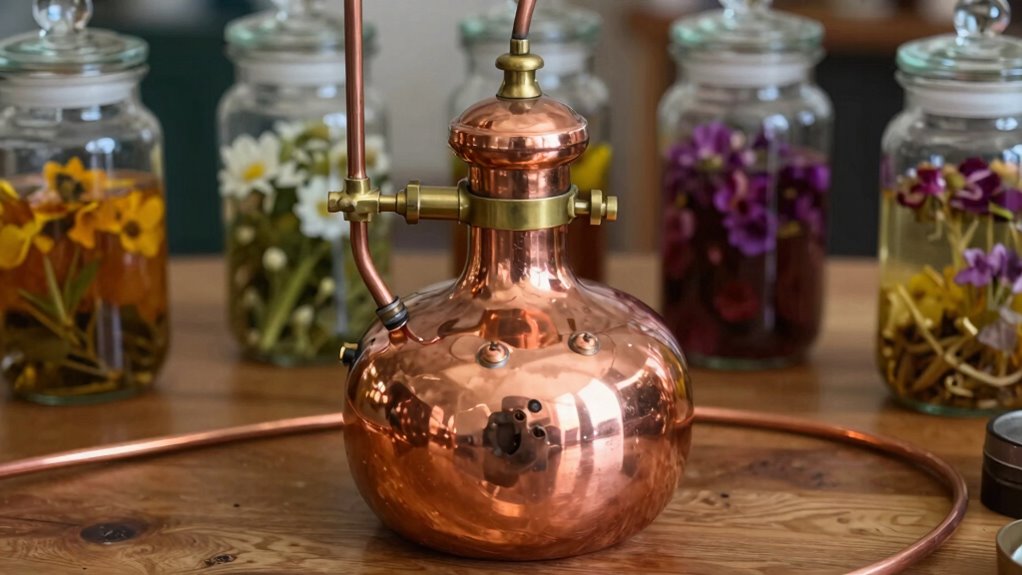
Have you ever wondered how distillation works and whether you can try it yourself? If you’re curious about creating your own herbal extracts or essential oils, a copper alembic still offers an authentic way to do it. Distillation is a process that separates components based on their boiling points, allowing you to extract the pure essence of herbs and plants. When you use a copper still, especially a traditional alembic design, you’re tapping into a centuries-old method that produces high-quality hydrosols and essential oils.
Starting with a copper alembic still is a great choice because copper conducts heat evenly and reacts with sulfur compounds in herbs, which can improve the flavor and aroma of your distillates. If you’re interested in herbal extraction, this process lets you capture the true essence of your favorite plants. You can distill flowers like roses or lavender to make fragrant hydrosols, or extract essential oils from herbs such as mint, thyme, or eucalyptus. These oils and hydrosols have numerous uses, from natural skincare to aromatic home remedies.
Before you begin, it’s important to understand what you’re working with. A copper still requires careful assembly and knowledge of the distillation process. You’ll need fresh herbs or plant material, water, and a heat source. The plant material is placed in the still’s boiler, where heat causes the volatile compounds—like essential oils—to vaporize. The vapor travels through a condenser, cooling down into liquid form, which then separates into essential oils and hydrosols depending on their properties.
Safety is key when working with a still. Make sure your equipment is well-maintained and that you operate it in a well-ventilated area. Monitoring temperature is vital because it ensures you’re distilling at the right heat—too high, and you risk damaging delicate compounds; too low, and you may not extract enough essential oils. Patience is indispensable, as the process can take several hours depending on the quantity and type of herbs. Additionally, understanding the energy efficiency of your setup can help you reduce waste and optimize your distillation process.
As you get more experienced, you’ll learn how different herbs yield different quantities and qualities of essential oils. DIY distillation with a copper alembic still is rewarding, especially when you see how your herbal extraction results in pure, aromatic oils. Whether you’re making a calming lavender hydrosol or a invigorating peppermint oil, this traditional method connects you to a natural process that has been refined over centuries. Just remember, knowledge and safety come first, and soon you’ll be creating your own high-quality herbal extracts right at home.
Frequently Asked Questions
Can I Distill Alcohol With a Copper Alembic Still?
You can distill alcohol with a copper alembic still, but you need to be cautious. The alembic design is excellent for flavor, but copper purity matters; impurities can affect your final product. Make sure your still is intended for alcohol distillation and that you follow safety regulations. Proper cleaning and maintenance are essential to prevent contamination, ensuring a safe and effective distillation process.
How Long Does It Take to Produce Hydrosols?
Producing hydrosols is like brewing a gentle stream, taking about 1 to 3 hours, depending on factors like botanical selection and distillation timings. If you choose delicate herbs, it might be quicker, while denser plants need more time. You’ll notice the process varies with your setup and plant material, but patience pays off for a fragrant, pure hydrosol. Keep an eye on your distillation to guarantee quality.
Is Copper Safe for Distilling Edible Oils?
Copper is generally safe for edible oil distillation when properly cleaned and maintained, as it can react with certain compounds and cause contamination if neglected. Regularly scrub and rinse your copper still to prevent buildup. Copper’s excellent heat conduction helps produce high-quality oils, but always guarantee no residual copper particles remain in your final product. Proper care ensures safe, efficient distillation of your edible oils.
What Are Common Mistakes Beginners Make?
You might overlook proper distillation safety or rush the process, leading to mistakes. Beginners often neglect thorough cleaning, resulting in contamination, or underestimate the importance of temperature control, causing poor quality or unsafe products. Troubleshoot issues like leaks or inconsistent distillate by checking seals and gauges carefully. Always prioritize safety, follow instructions closely, and stay attentive to detail to avoid common beginner errors and ensure a successful, safe distillation.
How Do I Clean and Maintain the Still?
To keep your copper alembic still in top shape, regularly use gentle cleaning techniques like warm water and a soft brush to remove residues. Avoid harsh chemicals that can damage the copper. Maintenance tips include drying thoroughly after each use, checking for any corrosion, and polishing the copper to prevent tarnish. Proper cleaning and maintenance make certain your still remains efficient and lasts longer, giving you better hydrosols every time.
Conclusion
Starting your DIY distillation journey can be quite the adventure, full of gentle surprises and learning curves. With a copper alembic still, you’re gently tapping into age-old traditions, discovering your craft step by step. Just remember, patience and care turn this curiosity into a fulfilling hobby. Trust your instincts, enjoy the process, and soon you’ll find yourself delighting in the subtle magic of your homemade hydrosols—like a quiet whisper from nature itself.