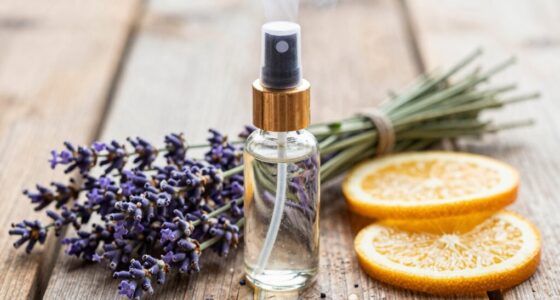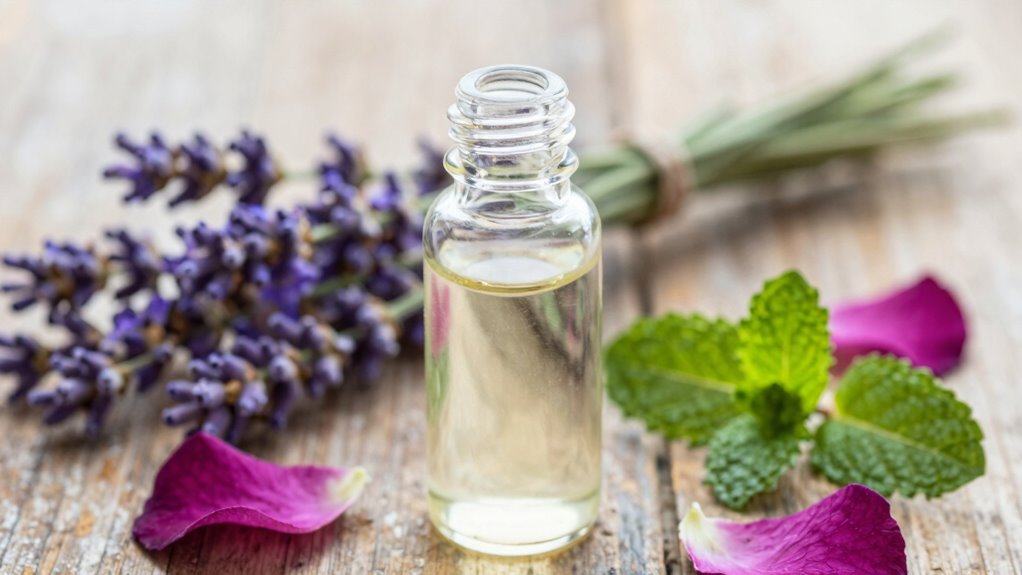

Yes, hydrolats can often replace essential oils in gentle skincare and aromatherapy. They are less concentrated, making them safer for sensitive skin and children, and contain water-soluble plant compounds for a mild aroma. Hydrolats work well in facial toners, calming sprays, and soothing baths. However, for deep or targeted therapeutic effects, essential oils are more effective. If you want to understand when each is best, there’s more to discover below.

Get oils, diffusers and self-care delivered free with Prime
- Fast, free delivery on millions of items
- Prime Video, Amazon Music and more included
- Member-only deals all year
Key Takeaways
- Hydrolats are milder and less concentrated, making them suitable substitutes for essential oils in gentle applications like facial toners.
- They effectively promote relaxation and calmness, serving as a mild alternative in aromatherapy.
- Hydrolats are ideal for sensitive skin and children, reducing the risk of irritation compared to essential oils.
- They can replace essential oils in skincare routines aimed at hydration and environmental protection.
- Hydrolats are less effective for targeted therapeutic effects requiring high potency, limiting their use as full replacements in such cases.

Have you ever wondered how hydrolats compare to essential oils? While both are derived from plants and used in similar ways, they serve different purposes due to their unique properties. Hydrolats, also known as floral waters or hydrosols, are the byproduct of steam distillation, the same extraction method used to produce essential oils. During this process, steam passes through plant material, capturing both the volatile oils and the plant’s water-soluble compounds. The result is a fragrant, slightly aqueous liquid containing tiny amounts of essential oils dissolved in water. This extraction method preserves more of the plant’s gentle, soothing components, making hydrolats particularly valued for their mild aromatherapy benefits.
Hydrolats are gentle, water-based plant extracts, capturing soothing water-soluble compounds through steam distillation.
In terms of aromatherapy benefits, hydrolats are often appreciated for their gentleness and suitability for sensitive skin or children. They offer a calming, subtle scent that can promote relaxation, reduce stress, or uplift your mood. Since they contain water-soluble constituents, hydrolats tend to be less concentrated than essential oils, which means they’re less likely to cause irritation or adverse reactions. This makes them ideal for topical use, facial sprays, or even as a soothing addition to baths. You can also use hydrolats in aromatherapy diffusers, though their scent intensity is weaker than that of essential oils. So, if you’re seeking a gentle, accessible way to enjoy aromatic benefits, hydrolats could be a good alternative or complement to essential oils. Additionally, hydrolats are often considered a plant extract byproduct, highlighting their more gentle and water-soluble nature compared to concentrated essential oils.
Furthermore, hydrolats are often used in natural skincare for their hydrating and calming properties, making them a versatile addition to daily routines. They are also valued for their antioxidant content, which can help protect the skin from environmental stressors. Hydrolats can also act as a mild antimicrobial agent, providing additional skin benefits without the harsh effects sometimes associated with concentrated oils. However, whether hydrolats can fully replace essential oils depends on what you’re aiming for. Essential oils are highly concentrated and potent, making them more suitable for targeted therapeutic applications like deep tissue massage, inhalation for respiratory issues, or creating potent blends. Their extraction methods—steam distillation, cold pressing, or solvent extraction—yield concentrated oils with a full spectrum of plant compounds. Hydrolats, by contrast, are milder and contain only a fraction of these compounds, meaning they’re not always a direct substitute for the more intense effects of essential oils.
In some uses, though, hydrolats can indeed stand in for essential oils. For instance, if you’re looking for a refreshing facial toner, a hydrolat can do the trick without the risk of over-concentration. For calming or mild aromatherapy, hydrolats offer a safer, more accessible alternative. Still, for applications requiring strong therapeutic properties, essential oils remain unmatched. Ultimately, understanding both their extraction methods and aromatic benefits helps you decide when hydrolats can serve as a suitable substitute, and when you might still prefer the potency of essential oils.
As an affiliate, we earn on qualifying purchases.
Frequently Asked Questions
Are Hydrolats Suitable for All Skin Types?
Yes, hydrolats are suitable for many skin types, including sensitive skin, because they promote skin hydration and help with pH balancing. You’ll find them gentle and revitalizing, making them great for daily use. However, it’s wise to patch-test first, especially if you have very reactive skin. Hydrolats can soothe and hydrate, but for certain skin conditions, consulting a dermatologist is always a good idea.
How Long Do Hydrolats Last Compared to Essential Oils?
Hydrolats generally last longer than essential oils, with a shelf life of about 1 to 2 years when stored properly. To maximize their freshness, keep them in dark glass bottles, away from direct sunlight and heat. Proper storage methods, like refrigeration, can extend their usability. Essential oils, however, tend to have a shorter shelf life, usually around 1 to 3 years, depending on the oil.
Can Hydrolats Be Used Internally Like Essential Oils?
Like gentle whispers from a breezy garden, hydrolats aren’t meant for internal use like essential oils. You should prioritize internal safety and always follow dilution guidelines if you consider ingesting them, as some hydrolats may contain trace residues. Unlike essential oils, which are potent and concentrated, hydrolats are milder and better suited for external applications or culinary uses, not internal consumption without expert guidance.
Are Hydrolats More Affordable Than Essential Oils?
Hydrolats are generally more affordable than essential oils, mainly due to their milder extraction process and lower concentration. When you compare the cost, you’ll find hydrolats are often budget-friendly, making them accessible for more users. Market availability also plays a role; hydrolats are widely accessible in health stores and online, providing an economical alternative for those seeking gentle, versatile options without spending much.
Do Hydrolats Contain the Same Therapeutic Properties as Essential Oils?
Hydrolats don’t have the same therapeutic potency as essential oils because their chemical composition is more diluted. While they do contain some beneficial compounds, they generally lack the concentrated properties that make essential oils highly effective in therapy. You might find hydrolats useful for gentle applications or skin care, but for potent therapeutic effects, essential oils are usually more suitable due to their richer chemical profile.
Conclusion
So, can hydrolats truly replace essential oils in certain uses? While they’re gentler and more hydrating, they might not pack the same potency for every application. Think about your specific needs—are you seeking a delicate spritz or a concentrated scent? Hydrolats offer a versatile alternative for skincare and soothing purposes, but for intense aromatherapy or therapeutic effects, essential oils still hold their ground. Isn’t it all about choosing the right tool for the right purpose?
Fall Picks
fall essentials
As an affiliate, we earn on qualifying purchases.