To prevent bulk hydrosols from spoiling quickly, store them in dark glass bottles or BPA-free containers with tight-fitting lids. Keep them in a cool, dark place between 50-70°F, away from sunlight and temperature fluctuations. Avoid overfilling containers, leaving some headspace for expansion. Regularly check for signs of spoilage like cloudiness or off-odor. Proper storage techniques help preserve aroma and therapeutic qualities, and more tips await to guarantee your hydrosols stay fresh longer.
Key Takeaways
- Use dark glass or BPA-free plastic containers to protect hydrosols from light exposure.
- Store in a cool, dark place at 50-70°F to slow deterioration and microbial growth.
- Ensure containers are airtight with tight-fitting lids to prevent oxygen and contamination.
- Leave some headspace to accommodate expansion and avoid container stress.
- Regularly check for signs of spoilage like cloudiness, off-odor, or discoloration.

Storing bulk hydrosols properly is essential to maintaining their freshness and potency. When you’re working with large quantities, like gallons, understanding how to maximize their hydrosol shelf life is crucial. Hydrosols are delicate and can spoil quickly if not stored correctly, so knowing your storage container choices makes all the difference. The right containers help preserve the aromatic qualities, therapeutic benefits, and microbial stability of your hydrosols, ensuring they last as long as possible.
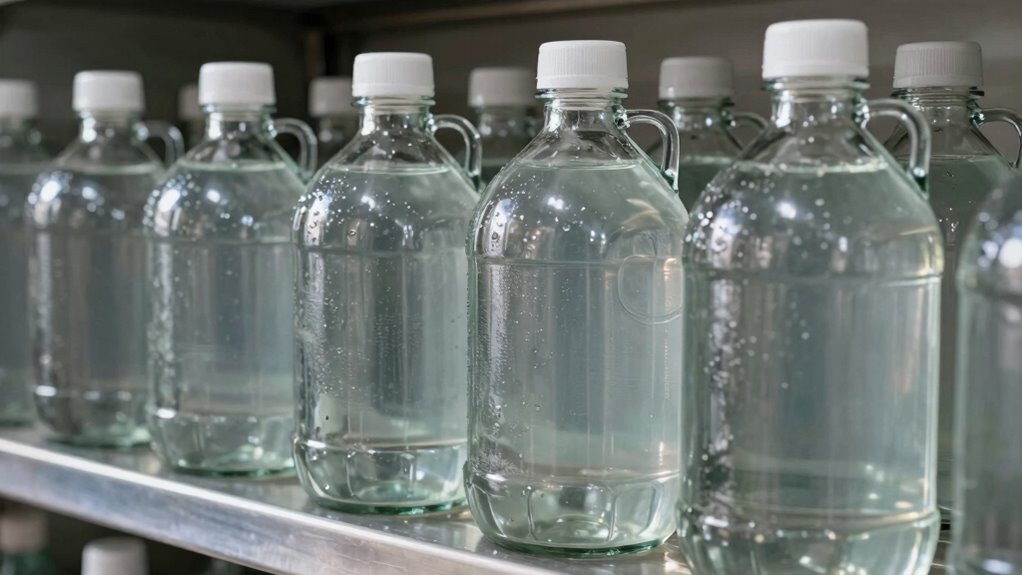
First, choose your storage containers carefully. Glass is the preferred material because it’s non-reactive, doesn’t leach chemicals, and provides a good barrier against air and light. Dark-colored glass bottles or gallon jugs with tight-fitting lids are ideal because they protect hydrosols from UV rays and minimize oxidation. Avoid clear plastics or containers, which can degrade over time and potentially contaminate your hydrosol. If you must use plastic, opt for food-grade, BPA-free options, but remember they generally don’t offer the same level of protection as glass.
Once you’ve selected your containers, proper sealing is key. Make sure lids are airtight to prevent oxygen exposure, which accelerates spoilage. Oxygen can cause oxidation, leading to scent loss, discoloration, and microbial growth. After filling, leave some headspace to allow for expansion if temperature fluctuations occur, but avoid overfilling. Tight seals keep contaminants out and maintain the hydrosol’s integrity longer. Additionally, labeling your containers with the date of storage helps monitor their freshness over time.
Temperature control is another vital factor. Store your bulk hydrosols in a cool, dark place—ideally between 50-70°F (10-21°C). High temperatures speed up deterioration, while light exposure can degrade the delicate aromatic compounds. If you have a refrigerator or a cellar, these are excellent options for extending the hydrosol shelf life. Just ensure the containers are tightly sealed before refrigeration to prevent absorption of moisture or odors from other stored items.
Lastly, keep your storage area clean and organized. Regularly check your hydrosols for any signs of spoilage, such as cloudiness, off-odor, or discoloration. Proper storage practices, including using the right container choices and controlling environmental factors, substantially prolong the usability of your bulk hydrosols. Proper aerosol storage helps prevent microbial growth and maintains their quality over time. In doing so, you preserve their quality, extend their shelf life, and get the most value from your investment while ensuring safe, effective use.
Frequently Asked Questions
How Long Do Bulk Hydrosols Typically Last?
You can expect bulk hydrosols to last about 1 to 2 years if stored properly. Proper storage methods, like keeping them in a cool, dark place and tightly sealed, help slow down hydrosol aging. Regularly check for changes in scent or appearance, as these indicate spoilage. To maximize shelf life, avoid exposure to light and heat, ensuring your hydrosols stay fresh and effective longer.
Can I Reuse Old Hydrosols Safely?
You should avoid reusing old hydrosols because hydrosol reusability is limited, and expired hydrosols may pose safety concerns. Always check hydrosol expiration dates before reuse, as they indicate freshness and safety. If your hydrosol has been stored properly and shows no signs of spoilage, it might be safe for limited use, but it’s best to err on the side of caution and replace it regularly to guarantee quality and safety.
What Signs Indicate Hydrosol Spoilage?
You’ll notice spoilage when your hydrosol’s aroma deteriorates or you see signs of bacterial growth, like cloudy liquid or sediment. Don’t ignore these clues; they could mean harmful bacteria are thriving. If the scent changes unexpectedly or a strange film appears on the surface, it’s time to discard it. Trust your senses—these subtle cues are your best warning that your hydrosol may no longer be safe to use.
Are There Specific Storage Containers Recommended?
You should store your bulk hydrosols in airtight containers to prevent oxidation and contamination. Opt for UV resistant bottles, as they protect the delicate oils from light exposure, which can degrade quality. Make sure the containers are clean and tightly sealed after each use. Proper storage helps extend the shelf life, maintains potency, and reduces the risk of spoilage, ensuring your hydrosols stay fresh and effective longer.
Does Temperature Affect Hydrosol Shelf Life?
Temperature effects markedly impact hydrosol shelf life. You should store your hydrosols in cool, stable conditions to prevent spoilage. High temperatures accelerate microbial growth and evaporation, shortening shelf life. Keep containers away from heat sources and direct sunlight, ideally between 50-70°F (10-21°C). Proper storage conditions help maintain hydrosol quality, ensuring you get the most out of your product without risking spoilage or degradation.
Conclusion
So, as you carefully store your bulk hydrosols, remember that even small changes can make a big difference—like a forgotten lid or a warm spot. Sometimes, it’s the little details that unexpectedly keep your hydrosols fresh longer, almost as if they’re whispering secrets of preservation. By paying close attention and staying vigilant, you might find that what seems like a coincidence can actually be your best safeguard against spoilage, ensuring your hydrosols stay potent and pure.