
Vetiver oil, often called the “oil of tranquility,” has a rich, earthy aroma that calms the mind. You can use it in your aromatherapy routines to create a relaxing atmosphere or mix it with carrier oils for soothing massages. It’s also a fantastic addition to your skincare for hydration and nourishment. Its versatility makes it a favorite in holistic practices. If you’re curious about its sustainability and traditional uses, there’s more to discover!
Key Takeaways
- Vetiver oil, known as the “oil of tranquility,” is prized for its calming effects, reducing anxiety, and promoting relaxation.
- The oil has a rich, earthy aroma, making it popular in aromatherapy and enhancing relaxation in spaces when diffused.
- It is commonly used in skincare routines for its hydrating properties and to promote healthy, glowing skin.
- Vetiver oil can be blended with carrier oils for massages, effectively easing muscle tension and stress.
- Its traditional uses span cultures, including Ayurvedic medicine and ancient Egyptian rituals, showcasing its versatility in holistic practices.

Vetiver oil, often referred to as the “oil of tranquility,” has gained popularity for its soothing properties and versatile uses. You might find it in aromatherapy, skincare, and even holistic healing practices. Its rich, earthy aroma isn’t just pleasing; it’s also deeply rooted in history, with traditional uses spanning centuries across various cultures. People have turned to vetiver for its calming effects, often using it to alleviate anxiety and promote relaxation.
Vetiver oil, known as the “oil of tranquility,” offers soothing benefits and a rich historical legacy across cultures.
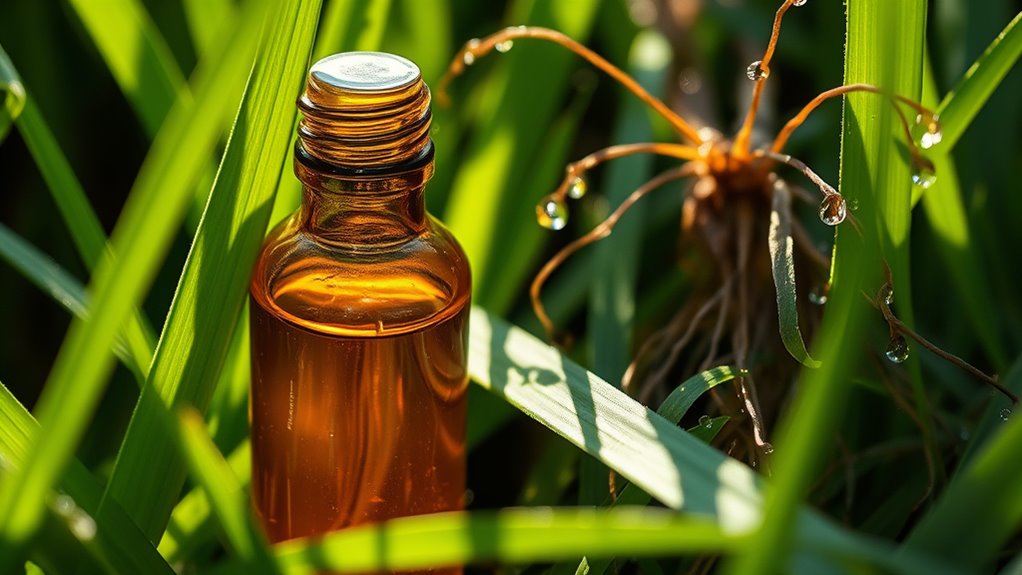
When you explore vetiver oil, you’ll discover that sustainable sourcing is a key aspect of its production. The vetiver plant, native to India, thrives in tropical climates and is known for its robust root system. This makes it a sustainable choice since the plant can grow in poor soil and withstand drought conditions. By choosing vetiver oil from suppliers who focus on sustainable practices, you’re not only benefiting from its calming properties but also supporting environmentally friendly farming methods. This conscious choice contributes to the preservation of ecosystems while ensuring that local farmers earn a fair wage for their labor.
You might be surprised to learn that vetiver oil’s traditional uses are as varied as the cultures that embrace it. In India, for example, the oil has long been utilized in Ayurvedic medicine. It’s believed to balance the body and mind, making it a popular choice for those seeking holistic well-being. Similarly, in ancient Egypt, vetiver was used in perfumes and incense, highlighting its value in both beauty and spiritual practices. This rich history lends depth to the oil’s appeal and showcases its versatility.
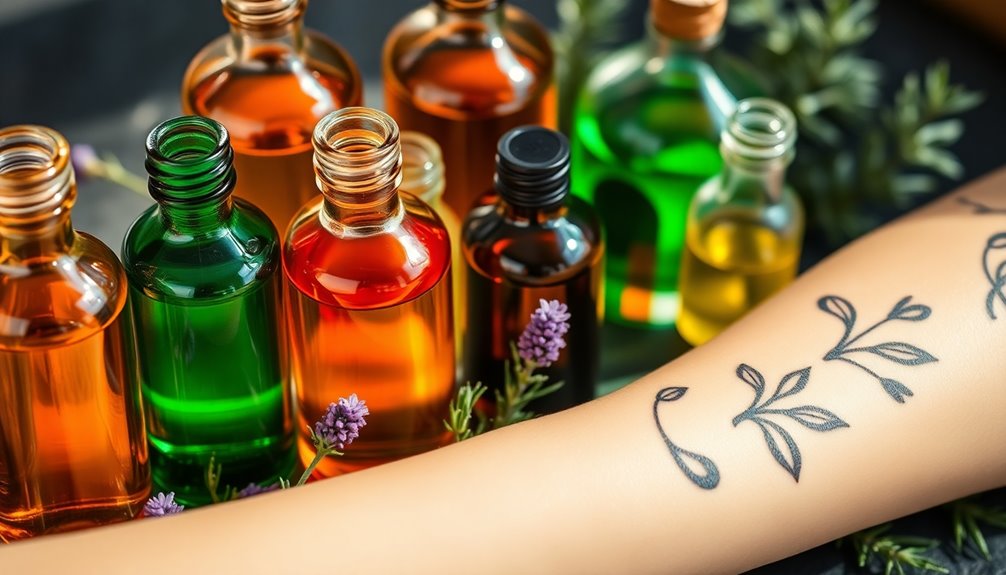
In your daily life, you can easily incorporate vetiver oil in several ways. Diffusing it in your home creates a calming atmosphere, perfect for unwinding after a long day. You can also blend it with carrier oils for a soothing massage, helping to ease tension in your muscles. Additionally, adding a few drops to your skincare routine can enhance hydration and promote a healthy complexion.
Frequently Asked Questions
Is Vetiver Oil Safe for Children and Pets?
Vetiver oil isn’t generally recommended for children and pets due to potential skin sensitivities and reactions. For child safety, it’s best to consult with a pediatrician before using any essential oils. Similarly, pet safety should be a priority; some essential oils can be toxic to animals. If you do choose to use vetiver oil, always dilute it properly and keep it out of reach of both kids and pets.
How Long Does the Aroma of Vetiver Oil Last?
The aroma of vetiver oil can last anywhere from several hours to a few days, depending on how you use it. When you apply it directly to your skin or diffuse it, you’ll notice a strong scent duration that gradually fades. If you mix it with a carrier oil, the aroma longevity might extend even further. Just remember, factors like environment and application method can influence how long you enjoy that earthy scent.
Can Vetiver Oil Be Ingested?
You shouldn’t ingest vetiver oil. It’s like a beautiful flower that’s best admired from a distance. While it boasts some potential for flavoring in culinary applications, it’s not typically considered safe for consumption. Its concentrated properties can be overwhelming and may cause adverse reactions. Instead, enjoy its aromatic qualities through diffusers or topical applications. Always prioritize safety and consult with a professional before trying edible applications of essential oils.
What Are the Best Carriers for Mixing With Vetiver Oil?
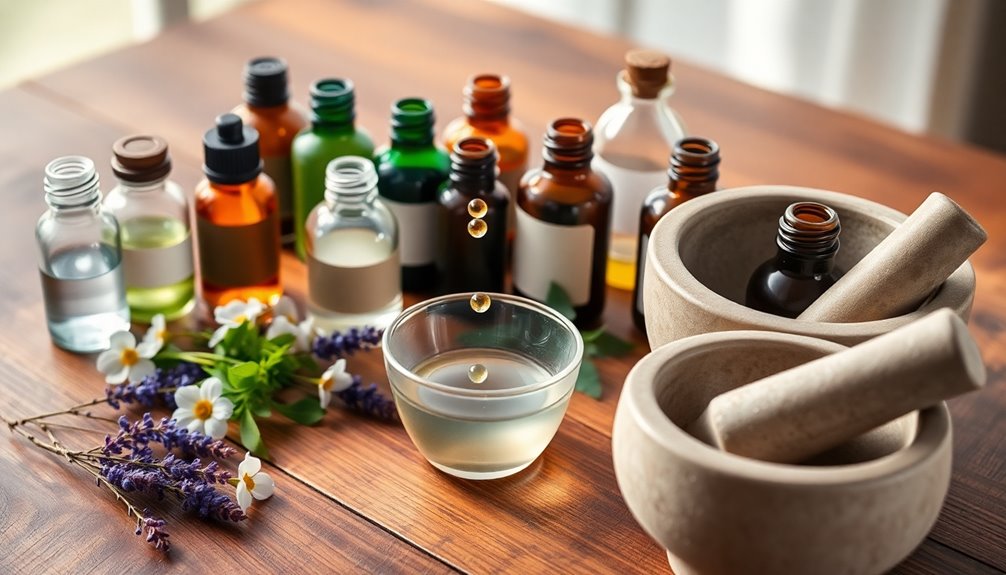
The best carrier oils for mixing with vetiver oil include jojoba, sweet almond, and coconut oil. These oils not only dilute the potency but also enhance the aroma and benefits. When using blending techniques, start with a 2-3% dilution, which means about 12 drops of vetiver oil per ounce of carrier. This ratio helps you enjoy the soothing properties of vetiver while ensuring it’s safe for your skin.
Does Vetiver Oil Have Any Contraindications With Medications?
Vetiver oil can interact with certain medications, so you need to be cautious. While it offers calming benefits, the potential for drug interactions shouldn’t be ignored. If you’re on medications, check with a healthcare provider before using it. Additionally, some people may have allergy risks, which adds another layer of complexity. Balancing its therapeutic properties with these concerns is essential for safe use, ensuring you reap the benefits without unintended consequences.
Conclusion
In the world of essential oils, vetiver oil stands out like a quiet guardian of tranquility. Its earthy aroma wraps around you, conjuring images of lush fields swaying gently in the breeze. As you breathe in its rich, grounding scent, you might find yourself transported to a serene sanctuary, where stress melts away. Whether you’re seeking balance or simply a moment of calm, vetiver oil invites you to explore its soothing depths, revealing nature’s hidden treasures.