Sandalwood oil’s calming aroma is a treasure you can enjoy in various ways. It’s perfect for relaxation and meditation, often used to relieve stress. You can incorporate it into your skincare routine for its anti-inflammatory and antiseptic benefits. The oil’s creamy, sweet scent enchants the senses and promotes overall well-being. With its rich history and cultural significance, there’s much more to discover about this versatile natural resource and its applications.
Key Takeaways
- Sandalwood oil is prized for its calming and stress-relieving aroma, making it popular in meditation and relaxation practices.
- The oil has anti-inflammatory and antiseptic properties, beneficial for skincare and promoting overall well-being.
- Its aroma profile is characterized by a creamy, soft scent with sweet undertones, indicating high-quality oil from older trees.
- Sandalwood is integral to religious ceremonies, traditional medicine, and perfumery, reflecting its rich cultural significance.
- The oil continues to be favored in aromatherapy and holistic health for its therapeutic effects and enduring appeal.
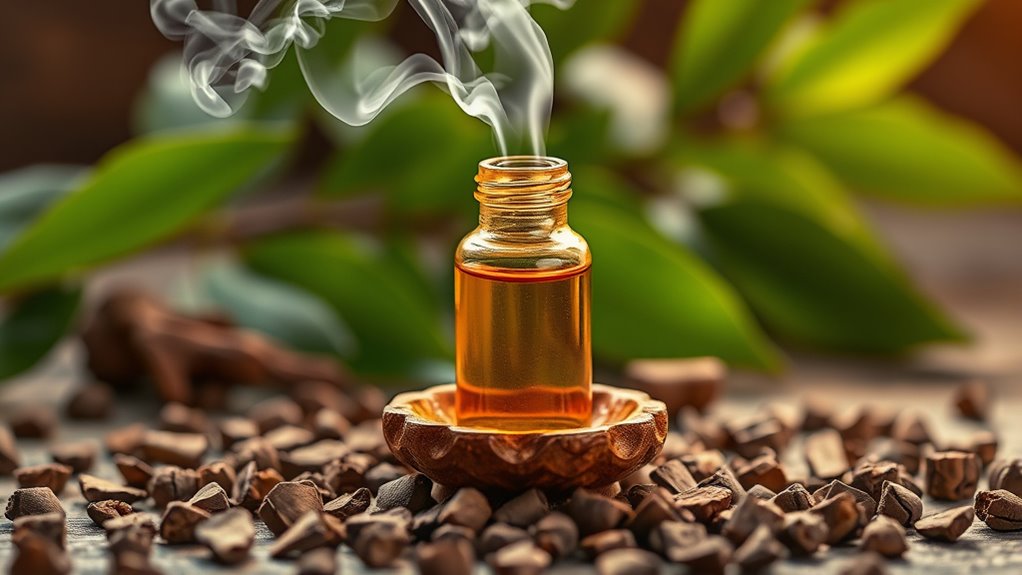
Have you ever wondered why sandalwood oil has been cherished for centuries? Its historical significance stretches back to ancient civilizations, where it was revered not just for its enchanting fragrance but also for its medicinal properties. You might be surprised to learn that cultures from India to Egypt have used sandalwood in various rituals and practices. The oil has played a crucial role in religious ceremonies, traditional medicine, and even in the crafting of perfumes. This deep-rooted appreciation highlights the enduring connection humans have with this remarkable oil.
Sandalwood oil has captivated civilizations for centuries, valued for its fragrance and healing properties across cultures.
When it comes to extraction methods, you’ll find that sandalwood oil is obtained primarily from the heartwood of the sandalwood tree, particularly Santalum album. The process isn’t quick; it often takes years for the trees to mature before they can be harvested. You’ll typically encounter two main extraction techniques: steam distillation and solvent extraction. Steam distillation is the most common method, where steam passes through the wood, vaporizing the essential oils. The vapor is then condensed back into liquid form, resulting in pure sandalwood oil. On the other hand, solvent extraction, while less common, involves using chemical solvents to extract the oil, producing a more concentrated product.
The quality of sandalwood oil you get can vary markedly based on these extraction methods and the age of the wood used. Younger trees often yield inferior oil, both in fragrance and therapeutic properties, so it’s essential to choose quality sources. You might find that the best sandalwood oil has a creamy, soft aroma with a hint of sweetness, making it a popular choice in aromatherapy and perfumery. Its calming scent is known to promote relaxation and ease stress, which is likely why it’s a staple in meditation practices. Additionally, just as with dental care for dogs, incorporating sandalwood oil into your routine can have beneficial effects on overall well-being.
Moreover, the oil’s versatility doesn’t stop there. You can use it in skincare routines for its anti-inflammatory and antiseptic properties, making it ideal for soothing irritated skin. So, whether you’re incorporating it into your daily life or simply enjoying its scent, sandalwood oil’s rich history and unique extraction methods contribute to its timeless allure. You’ll find that this treasured oil continues to enchant minds and elevate spirits, proving that some treasures truly stand the test of time.

Dreo Humidifiers for Bedroom, 4L Top Fill for Large Room, 36H Runtime, 28 dB Quiet Supersized Cool Mist Air Humidifier for Baby Nursery, Plants, Indoor, Night Light, Easy to Clean & Fill, White
𝟰𝗟 𝗟𝗮𝗿𝗴𝗲 𝗧𝗮𝗻𝗸 𝗳𝗼𝗿 𝗖𝗼𝗻𝘁𝗶𝗻𝘂𝗼𝘂𝘀 𝗖𝗼𝗺𝗳𝗼𝗿𝘁: Enjoy quiet sleep without congestion, coughing, or dry mouth, DREO baby humidifier's...
As an affiliate, we earn on qualifying purchases.
Frequently Asked Questions
Is Sandalwood Oil Safe for Pregnant Women?
Sandalwood oil isn’t generally recommended for pregnant women due to potential pregnancy safety concerns. If you’re considering its use, it’s best to consult a healthcare professional first. Topical application can sometimes lead to skin sensitivities, especially during pregnancy. Your body undergoes many changes, and what’s safe for you might not be safe for your baby. Always prioritize safety and opt for alternatives that are known to be safe during this special time.
Can Sandalwood Oil Help With Anxiety or Stress Relief?
Studies show that aromatherapy can reduce stress levels by up to 30%. When you use sandalwood oil, you tap into these aromatherapy benefits, helping to calm your mind and ease anxiety. It’s often included in stress reduction techniques, promoting relaxation and emotional balance. Just a few drops in a diffuser or mixed with a carrier oil for massage can create a soothing atmosphere that helps you unwind after a hectic day.
What Is the Shelf Life of Sandalwood Oil?
The shelf life of sandalwood oil typically ranges from 5 to 15 years when stored properly. To guarantee oil preservation, keep it in a cool, dark place, away from sunlight and heat, which can degrade its quality. Proper storage longevity can considerably extend its effectiveness, so always check for changes in smell or consistency. If you notice anything unusual, it might be time to replace it, even if it hasn’t reached the expected shelf life.
How Is Sandalwood Oil Extracted From the Wood?
You might think extracting sandalwood oil is as simple as squeezing a fruit, but it’s actually a complex process! The primary method is sandalwood distillation, where steam distills the oil from the wood. This technique guarantees purity and captures the fragrant compounds. Some oil extraction methods involve solvent extraction, but that can compromise the essence. So, if you’re after quality, stick to the traditional distillation for the best results!
Are There Any Known Side Effects of Using Sandalwood Oil?
Yes, there are some known side effects of using sandalwood oil. You might experience allergic reactions, especially if you have sensitive skin. Skin irritation can also occur, leading to redness or a rash. It’s a good idea to perform a patch test before using it widely. If you notice any adverse effects, stop using the oil immediately and consult a healthcare professional. Always prioritize your skin’s health and safety!

LEVOIT Humidifiers for Bedroom Large Room Home, (6L) Cool Mist Top Fill Essential Oil Diffuser for Baby & Plants, Smart App & Voice Control, Rapid Humidification & Auto Mode - Quiet Sleep Mode, Gray
𝙀𝙛𝙛𝙤𝙧𝙩𝙡𝙚𝙨𝙨 𝙍𝙚𝙡𝙞𝙚𝙛 𝙁𝙧𝙤𝙢 𝘿𝙧𝙮 𝘼𝙞𝙧: Designed for ultimate comfort, this humidifier effectively covers rooms up to 505 ft²...
As an affiliate, we earn on qualifying purchases.
Conclusion
In the end, sandalwood oil isn’t just a fragrant addition to your routine; it’s a bridge to tranquility and connection. As you breathe in its soothing aroma, you might find yourself recalling cherished memories or feeling a sense of calm you didn’t expect. It’s funny how a simple scent can evoke such profound feelings, reminding us that sometimes, the smallest things can lead to the biggest discoveries about ourselves and the world around us.

Sun Essential Oils - Lemon Essential Oil 16 oz for Cleaning, Diffuser, Humidifier & Aromatherapy Body Massage, Lemon Fragrance Scent for Home Candle Making
Refreshing Citrus Scent: Experience the invigorating lemon aroma of our Lemon Essential Oil, perfect for adding a splash...
As an affiliate, we earn on qualifying purchases.

DREO HM735S 11L Smart Humidifier Large Room 700 ft², 100H Cool Mist Air Humidifiers for Bedroom, Top-Fill, Clean Tank Technology, 26dB, Auto Mode, Aroma Box, RGB, Remote & APP Control, Baby, White
100-𝙝𝙤𝙪𝙧 𝙍𝙪𝙣𝙩𝙞𝙢𝙚, 𝙇𝙖𝙨𝙩𝙞𝙣𝙜 𝘾𝙤𝙢𝙛𝙤𝙧𝙩: Enjoy uninterrupted comfort with our DREO air humidifier’s impressive 4-day runtime and 2.9-gallon tank....
As an affiliate, we earn on qualifying purchases.