Patchouli oil boasts a rich, earthy aroma that many find grounding and soothing. You can use it in aromatherapy to enhance relaxation or incorporate it into your skincare routine for its aromatic qualities. This oil comes with a fascinating history, once symbolizing luxury in ancient trade and cultural practices. Its unique scent profile varies depending on cultivation and processing methods. Stick around to uncover more about its historical significance and benefits.
Key Takeaways
- Patchouli oil has a rich, earthy aroma, often described as musky and sweet, enhancing relaxation in aromatherapy.
- It is commonly used in skincare for its moisturizing properties and fragrant profile, promoting overall well-being.
- The oil’s grounding scent connects users to its historical significance, enhancing sensory experiences in various applications.
- Patchouli oil is also used in perfumery, known for its ability to blend well with other scents and enhance longevity.
- High-quality patchouli oil is produced through careful harvesting and fermentation processes, influencing its distinctive aroma and benefits.
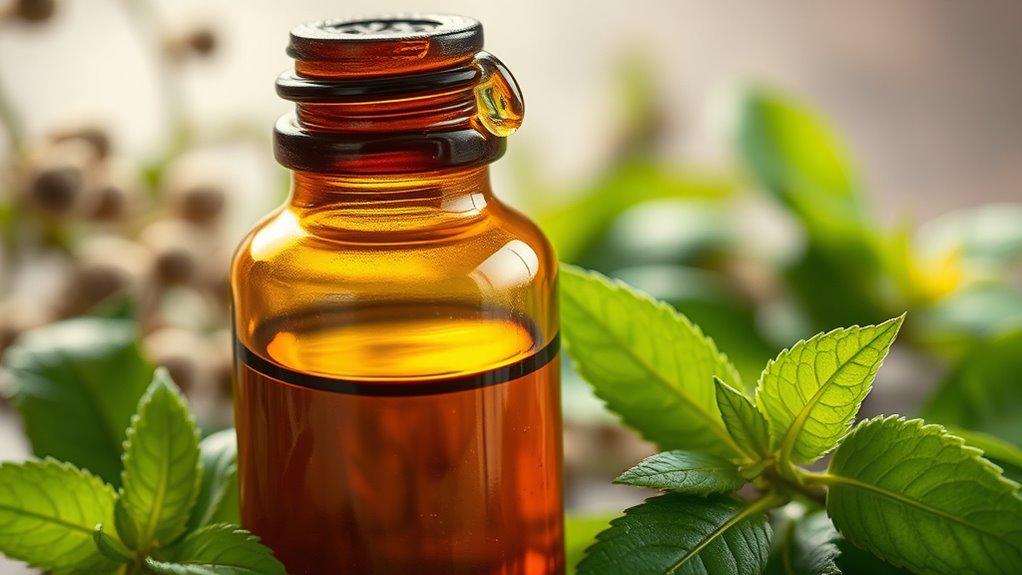
Have you ever wondered why patchouli oil captivates so many with its earthy aroma? This distinctive scent has an allure that transcends time and culture, drawing you in with its rich, grounding qualities. Patchouli oil, extracted from the leaves of the Pogostemon cablin plant, has a deep historical significance that stretches back centuries. Its origins can be traced to Southeast Asia, where it was once a key trade commodity. The oil was prized not just for its fragrance but also for its supposed medicinal properties, making it an integral part of traditional practices in various cultures.
Patchouli oil’s earthy aroma captivates with its rich history, rooted in Southeast Asia and steeped in cultural significance.
When you explore patchouli’s historical significance, you’ll find that it played an essential role in trade routes across Asia and Europe. In the 19th century, it was often used to scent fabrics, especially silk, during transport. This practice helped to mask the musty odors of stored goods, ensuring that they arrived in pristine condition. The scent became synonymous with luxury and was favored by the upper class in Europe. As you can see, patchouli oil’s appeal isn’t just in its scent but in the history woven into its very essence.
Understanding cultivation methods is equally important in appreciating patchouli oil. The plant thrives in warm, humid climates, typically found in countries like Indonesia and India. Cultivators often use sustainable practices to grow patchouli, ensuring that the delicate balance of nature is maintained. The leaves are harvested several times a year, and the timing of the harvest is critical for achieving the oil’s unique scent profile. If you’ve ever seen a patchouli plant, you’d notice its broad, green leaves, which are essential for extracting the oil.
Once harvested, the leaves undergo a process of drying and fermentation, which intensifies the aroma. This meticulous process is what sets high-quality patchouli oil apart from lower-grade alternatives. As you explore different brands or types of patchouli oil, you might notice variations in scent, which can often be attributed to the specific cultivation methods used. Merchant account credit processing can also enhance the purchasing experience for those looking to buy high-quality patchouli oil online.
Incorporating patchouli oil into your daily routine can provide not just a delightful aroma but also a touch of history. Whether you’re using it in aromatherapy, skincare, or simply enjoying its scent, you’re partaking in a tradition that connects cultures and centuries. As you breathe in that earthy fragrance, you’re experiencing a rich tapestry of history and nature, all encapsulated in a single drop of oil.
100% pure patchouli essential oil
As an affiliate, we earn on qualifying purchases.
As an affiliate, we earn on qualifying purchases.
Frequently Asked Questions
Is Patchouli Oil Safe for Topical Use on Sensitive Skin?
Yes, patchouli oil can be safe for topical use on sensitive skin, but you need to be cautious. You should always dilute it with a carrier oil to minimize skin sensitivity and reduce allergy risk. Before applying it widely, do a patch test on a small area. If you notice any irritation or allergic reaction, stop using it immediately. Always consult a dermatologist if you’re unsure about its use on your skin.
Can Patchouli Oil Be Ingested or Used Internally?
While patchouli oil might smell like a fragrant garden after rain, it’s not safe for internal consumption. Its strong compounds can irritate your digestive system, leading to discomfort. Although some advocate for its medicinal use in aromatherapy, ingesting it can be risky. Always consult a healthcare professional before considering any internal use, as safety should be your top priority when it comes to essential oils. Stick to topical or aromatic applications instead!
What Are the Best Ways to Store Patchouli Oil?
To store patchouli oil effectively, keep it in a cool, dark place away from direct sunlight and heat. Use dark glass bottles to protect it from light, which can degrade its quality. Make sure the cap’s tightly sealed to prevent air exposure, which shortens its shelf life. Following these storage tips will help maintain the oil’s potency and aroma for a longer time, so you can enjoy its benefits whenever you need.
How Does Patchouli Oil Interact With Other Essential Oils?
Patchouli oil interacts beautifully with other essential oils when you use effective blending techniques. It complements rich, earthy scents like sandalwood or cedarwood, enhancing their depth. You’ll also find that floral oils, such as lavender or geranium, create a balanced aroma when mixed with patchouli. Experimenting with citrus oils like bergamot can add a invigorating twist. Just remember to test small amounts first to find your perfect blend of complementary scents!
Is Patchouli Oil Suitable for Use Around Pets?
Patchouli oil isn’t generally considered safe around pets. Essential oil precautions are vital, as many oils can be toxic to animals. Cats, in particular, are sensitive to essential oils like patchouli, which can lead to adverse reactions. If you want to use it in your home, make sure your pets have a safe, separate area. Always consult your veterinarian before introducing any essential oil into your environment to guarantee your pets’ safety.
patchouli oil for aromatherapy
As an affiliate, we earn on qualifying purchases.
As an affiliate, we earn on qualifying purchases.
Conclusion
In summary, patchouli oil isn’t just a fragrant addition to your home; it offers a range of benefits too. Did you know that 88% of people find patchouli’s earthy aroma soothing and grounding? By incorporating this oil into your routine—whether through aromatherapy or skincare—you can harness its calming properties. So, why not give patchouli a try? You might just discover a new favorite scent that enhances your well-being and environment.
patchouli oil skincare products
As an affiliate, we earn on qualifying purchases.
As an affiliate, we earn on qualifying purchases.
patchouli perfume oil
As an affiliate, we earn on qualifying purchases.
As an affiliate, we earn on qualifying purchases.