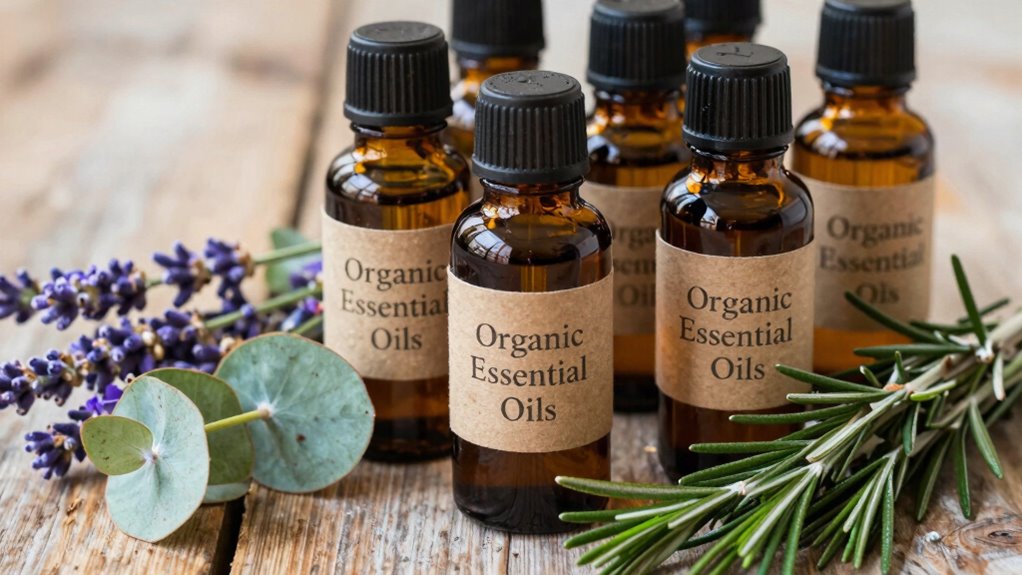
Organic essential oils aren’t a scent but a classification for oils made from plants grown without pesticides, GMOs, or synthetic fertilizers. Certification and labels guarantee the oils meet strict standards for purity and transparency, allowing you to trust their natural quality. Look for official symbols like USDA Organic to confirm their authenticity. To understand more about how labeling works and what to look for, keep exploring the details behind organic claims.
Key Takeaways
- “Organic” refers to how the plants are grown, not the scent; the scent depends on the plant species and extraction process.
- Organic essential oils are produced from plants cultivated without synthetic chemicals, ensuring purity and natural origin.
- Labels with certification symbols (like USDA Organic) confirm compliance with strict organic standards, not the scent profile.
- The aroma of essential oils varies by plant species and distillation, regardless of whether they are labeled organic.
- Proper labeling and certification ensure the oil’s organic integrity, but do not influence or guarantee its scent.

Have you ever wondered what makes an essential oil truly organic? It’s a good question, especially since the term “organic” gets thrown around a lot in the wellness world. To understand what sets organic essential oils apart, you need to look at two key factors: sourcing standards and labeling regulations. These elements work together to guarantee that what you’re buying is genuinely natural and free from synthetic chemicals.
When it comes to sourcing standards, reputable producers follow strict guidelines to select and harvest their plants. Organic essential oils come from plants grown without the use of pesticides, synthetic fertilizers, or genetically modified organisms. The sourcing process often involves careful farm practices, maintaining soil health, and avoiding chemical inputs that could compromise the purity of the plants. This attention to detail ensures that the oils extracted preserve the plant’s natural properties and that they’re free from contaminants. If a company claims their oils are organic, they should be able to trace their supply chain back to farms that meet these high standards. This transparency is vital because it guarantees you’re getting a product that truly aligns with organic principles, not just marketing hype. Additionally, sourcing standards ensure the integrity and quality of the final product, giving consumers confidence in their purchase.
Labeling regulations also play an important role in the integrity of organic essential oils. In many countries, there are specific rules about how products can be labeled as “organic.” These regulations require companies to provide clear, truthful information on their labels, indicating whether the product is certified organic by a recognized authority. Certified organic labels mean the product has undergone rigorous inspections and meets set standards for organic production. Without proper labeling, it’s difficult to verify a product’s authenticity, and some brands might use vague or misleading terms to appeal to consumers. By understanding labeling regulations, you can better evaluate whether an essential oil’s organic claim is legitimate or just a marketing ploy. Always look for certification symbols from trusted organizations, like USDA Organic or Ecocert, as evidence that the product adheres to strict standards.

Cliganic Organic Essential Oils Set (Top 5 – The Classics) – 100% Pure Natural – Aromatherapy, Candle Making – Peppermint, Lavender, Eucalyptus, Lemongrass & Orange
Included in this Gift Set: Peppermint, lavender, eucalyptus, lemongrass & orange. essential oils gift set for aromatherapy diffuser.
As an affiliate, we earn on qualifying purchases.
As an affiliate, we earn on qualifying purchases.
Frequently Asked Questions
Can Organic Essential Oils Cause Allergies?
Yes, organic essential oils can cause allergies. Even if they come from organic farming, your skin or respiratory system might react to certain plant compounds. To stay safe, consider allergy testing before using new oils, especially if you have sensitivities. Organic farming reduces chemical residues but doesn’t eliminate allergens. Always patch test and consult a healthcare professional if you experience any reactions.
Are Organic Essential Oils More Effective Than Synthetic Ones?
Think of organic essential oils as a pure symphony of botanical potency, delivering scent authenticity that synthetic oils can’t match. You’ll often find they’re more effective because they contain higher concentrations of natural compounds, making them more potent for your wellness. While synthetics mimic aromas, organic oils offer genuine therapeutic benefits, so if you seek true efficacy, organic options are your best bet for a more authentic, impactful experience.
How Long Do Organic Essential Oils Typically Last?
Organic essential oils typically last 1 to 3 years, depending on the type. To maximize shelf life, store them in a cool, dark place away from sunlight and heat. Keep bottles tightly sealed to prevent oxidation and evaporation. Proper storage tips, like using dark glass bottles and avoiding contamination, help maintain their potency and fragrance, ensuring you get the most out of your oils for as long as possible.
Do Organic Certifications Guarantee Purity?
Organic certifications don’t guarantee absolute purity, but they do guarantee compliance with strict certification standards that focus on quality assurance. When you see an organic label, you can trust that the product has been tested for contaminants and grown without synthetic chemicals. However, it’s essential to remember that purity also depends on proper distillation and storage. Always buy from reputable sources to ensure you’re getting the best quality organic essential oils.
Are Organic Essential Oils Safe for Children and Pets?
Organic essential oils can be safe for children and pets if used properly, but you should always prioritize child safety and pet health. Dilute oils thoroughly and avoid applying directly to skin or near sensitive areas. Keep oils out of reach, and consult a healthcare professional before use. Remember, some oils can be toxic or cause allergic reactions, so it’s essential to be cautious and informed to protect your loved ones.
Cliganic Organic Essential Oils Set (Top 5 – The Classics) – 100% Pure Natural – Aromatherapy, Candle Making – Peppermint, Lavender, Eucalyptus, Lemongrass & Orange
Included in this Gift Set: Peppermint, lavender, eucalyptus, lemongrass & orange. essential oils gift set for aromatherapy diffuser.
As an affiliate, we earn on qualifying purchases.
As an affiliate, we earn on qualifying purchases.
Conclusion
Understanding that “organic” isn’t just a scent helps you make smarter choices when selecting essential oils. Remember, labels can be tricky—always check for certifications to verify quality. Did you know that nearly 70% of consumers say they prefer organic products, yet only about 20% fully understand what “organic” truly means? By knowing what to look for, you can confidently choose pure, ethical oils that support your wellness and the environment.

PURA D'OR Organic Sweet16 Essential Oils Set – 16x 10mL Wood Box Aromatherapy Gift Set – 100% Pure Therapeutic Grade for Relaxation and Wellness (Lavender, Rosemary, Turmeric, Ylang Ylang & More)
TAKE A BREAK: Daily stress can take a toll on your physical and mental health. Use aromatherapy to…
As an affiliate, we earn on qualifying purchases.
As an affiliate, we earn on qualifying purchases.
Cliganic Organic Essential Oils Set (Top 5 – The Classics) – 100% Pure Natural – Aromatherapy, Candle Making – Peppermint, Lavender, Eucalyptus, Lemongrass & Orange
Included in this Gift Set: Peppermint, lavender, eucalyptus, lemongrass & orange. essential oils gift set for aromatherapy diffuser.
As an affiliate, we earn on qualifying purchases.
As an affiliate, we earn on qualifying purchases.