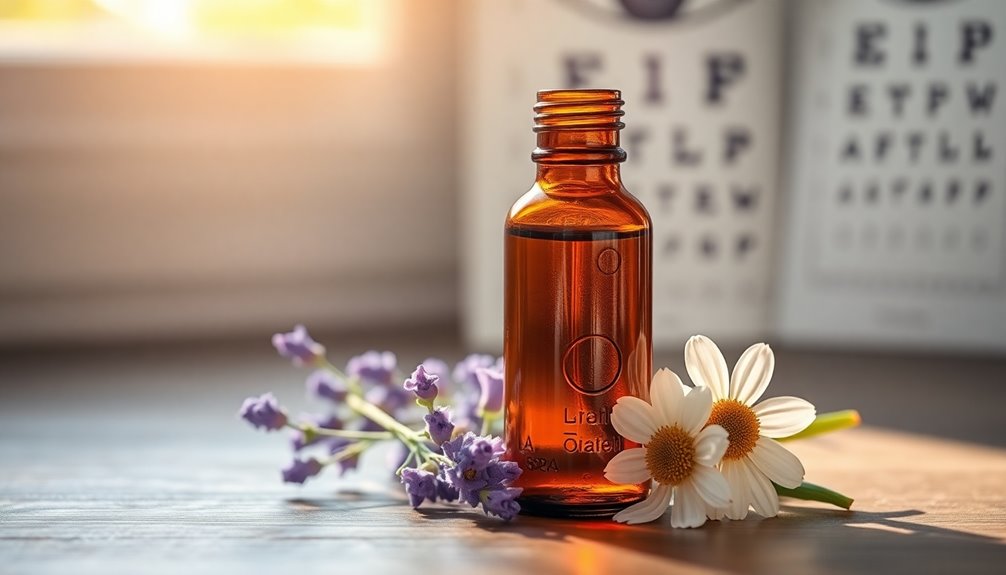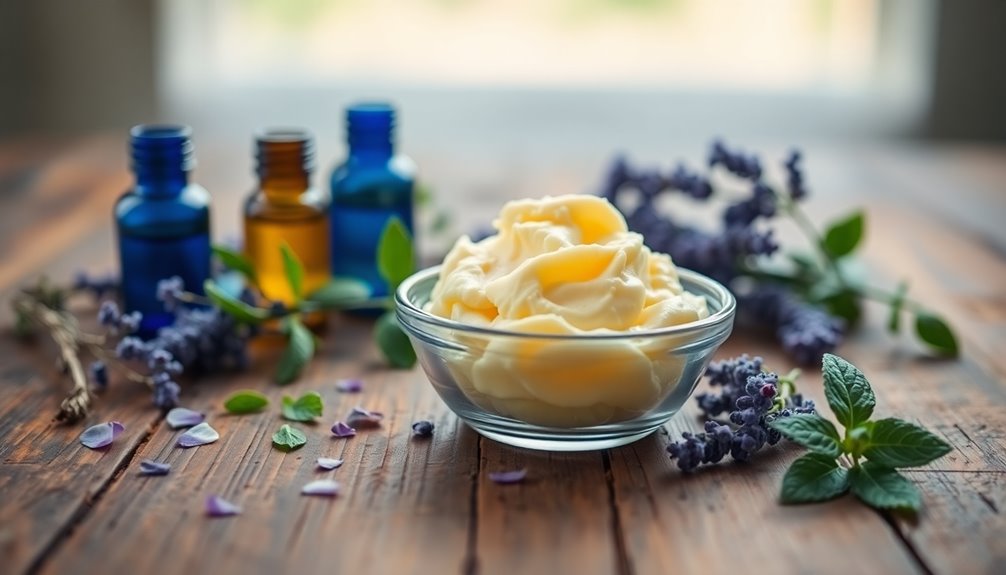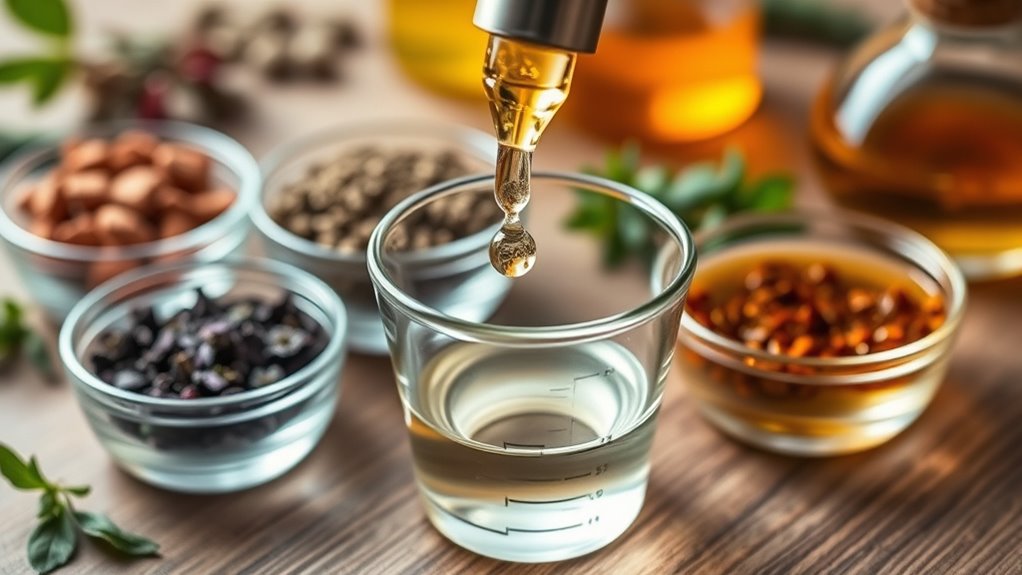

To safely dilute essential oils, start by choosing a carrier oil like jojoba or coconut, based on your skin type. For adults, aim for a 2-3% dilution, which means about 12 drops of essential oil per ounce of carrier oil. Use a dropper or measuring tool for accuracy, mix thoroughly, and always do a patch test first. If you’d like more detailed steps and tips, there’s more to discover below.
Key Takeaways
- Use carrier oils like jojoba, coconut, or almond oil to dilute essential oils safely.
- For adults, aim for a 2-3% dilution, roughly 12 drops per ounce of carrier oil.
- Measure essential oils accurately with a dropper and mix thoroughly with the carrier oil.
- Perform a patch test before full application to check for skin sensitivity.
- Adjust dilution ratios for children or sensitive skin, generally around 1% or less.

Ever wondered why diluting essential oils is so significant? It’s because these potent plant extracts are highly concentrated, and using them undiluted can cause skin irritation, allergic reactions, or even more serious health issues. To guarantee safety, you need to understand how to properly dilute your essential oils before applying or diffusing them. This is where carrier oils and dilution ratios come into play. Carrier oils, such as jojoba, coconut, or almond oil, act as diluents that reduce the potency of essential oils, making them safe for topical use. Choosing the right carrier oil depends on your skin type and personal preference, but the key is to always mix essential oils thoroughly with a suitable carrier to prevent skin sensitivity. Additionally, understanding AI’s role in business intelligence can help streamline your process of creating and managing your blends efficiently.
Knowing the correct dilution ratios is vital. These ratios tell you how much essential oil to add to a given amount of carrier oil. For beginners, a common guideline is a 2-3% dilution for adults, which typically translates to about 12 drops of essential oil per ounce of carrier oil. This ratio is strong enough to provide therapeutic benefits without risking irritation. For more sensitive skin or for children, you should use a lower dilution ratio, around 1% or even less. Conversely, for specific therapeutic applications like massage or targeted pain relief, a slightly higher dilution may be appropriate, but it’s always best to err on the side of caution.
To dilute essential oils properly, start by measuring your carrier oil with a clean dropper or measuring device. Then, add the recommended number of drops of essential oil based on your dilution ratio. For example, if you’re making a massage blend with a 2% dilution, add 10-12 drops of essential oil to one ounce of carrier oil. Mix thoroughly to ensure the essential oils are evenly distributed throughout the carrier. This step helps prevent concentrated spots that could cause skin irritation. Always perform a patch test on a small skin area before applying a larger amount, especially if you’re trying a new oil or blend.

Dreo Humidifiers for Bedroom, 4L Top Fill for Large Room, 36H Runtime, 28 dB Quiet Supersized Cool Mist Air Humidifier for Baby Nursery, Plants, Indoor, Night Light, Easy to Clean & Fill, White
𝟰𝗟 𝗟𝗮𝗿𝗴𝗲 𝗧𝗮𝗻𝗸 𝗳𝗼𝗿 𝗖𝗼𝗻𝘁𝗶𝗻𝘂𝗼𝘂𝘀 𝗖𝗼𝗺𝗳𝗼𝗿𝘁: Enjoy quiet sleep without congestion, coughing, or dry mouth, DREO baby humidifier's...
As an affiliate, we earn on qualifying purchases.
Frequently Asked Questions
Can I Mix Multiple Essential Oils in One Dilution?
Yes, you can mix multiple essential oils in one dilution. When doing so, focus on oil synergy to enhance scent blending and therapeutic effects. Keep in mind that combining oils may intensify or alter scents, so start with small amounts and adjust gradually. Always consider each oil’s potency and safety guidelines. This approach guarantees a balanced, harmonious blend that maximizes benefits while minimizing risks.
How Long Does a Diluted Essential Oil Blend Last?
Your diluted essential oil blend typically lasts about 6 months to a year if stored properly. Keep in mind, the shelf life depends on factors like storage conditions and ingredients used. To prevent oxidation concerns, store your blend in a dark, airtight container away from heat and sunlight. Regularly check for changes in scent or appearance, and discard if you notice any deterioration to guarantee safety and effectiveness.
Are There Specific Storage Tips for Diluted Oils?
Did you know that improper storage can reduce essential oil potency by up to 30% in just a few months? To guarantee storage safety, always choose dark glass containers like amber or cobalt, which protect oils from light exposure. Keep your diluted oils in a cool, dry place, away from direct sunlight and heat. Proper container choices and storage conditions help maintain their quality and extend shelf life effectively.
Can Children or Pets Use Diluted Essential Oils Safely?
You should be very cautious with children and pets around diluted essential oils. For child safety, always keep oils out of reach and use very low concentrations, avoiding ingestion or direct skin contact. Pet safety requires consulting a veterinarian first, as some oils can be toxic to animals. Never assume dilution makes oils completely safe; always prioritize safety, and when in doubt, opt for alternatives or professional guidance.
Is It Necessary to Dilute Essential Oils for Topical Application?
Think of essential oils as powerful rivers; without a proper channel, they can cause damage. You need carrier oils and the right dilution ratios to safely navigate topical use. Diluting guarantees the oils flow gently onto your skin, preventing irritation. Always mix essential oils with carrier oils like jojoba or coconut, following recommended dilution ratios, so you enjoy their benefits without risking discomfort or harm.
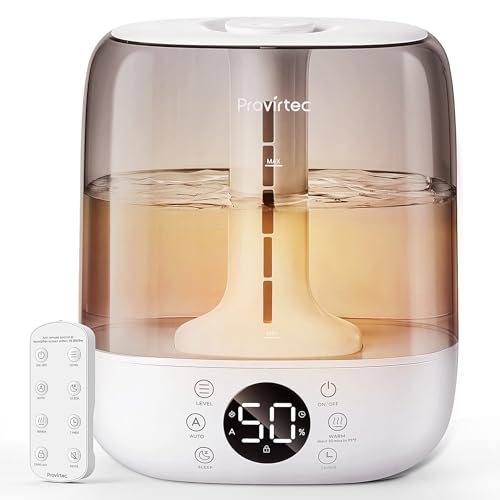
Provirtec 6L Self-Cleaning Humidifier for Large Room, CleanCare Warm & Cool Mist, No-Leak Design & Top Fill, 60 Hour Runtime, Quiet Ultrasonic Auto Mode with Remote Control for Bedroom & Home
Dual Self-Cleaning Technology for Your Family: Our advanced humidifiers for bedroom use a professional-grade water tank and constant-temperature...
As an affiliate, we earn on qualifying purchases.
Conclusion
As you master the art of dilution, remember that safety is your guiding star, much like a seasoned sailor steering calm and storm. With each drop, you harness nature’s power responsibly, ensuring your blends are both effective and gentle. Think of it as a dance—balance and respect lead the way. By following these simple steps, you’ll craft your aromatic symphony with confidence, turning essential oils into a safe, soothing escape just like a peaceful harbor after a long voyage.

BREEZOME 6L Humidifiers for Bedroom, Cool Mist Top Fill Humidifier with Aroma Diffuser, Humidistat, Night Light, 50H Runtime, Quiet Ultrasonic Humidifiers for Home Large Room, Baby Nursery, Plants
【Never Refill Daily】With a large 6L water capacity and convenient top-fill design, our humidifier for large room runs...
As an affiliate, we earn on qualifying purchases.

DREO HM735S 11L Smart Humidifier Large Room 700 ft², 100H Cool Mist Air Humidifiers for Bedroom, Top-Fill, Clean Tank Technology, 26dB, Auto Mode, Aroma Box, RGB, Remote & APP Control, Baby, White
100-𝙝𝙤𝙪𝙧 𝙍𝙪𝙣𝙩𝙞𝙢𝙚, 𝙇𝙖𝙨𝙩𝙞𝙣𝙜 𝘾𝙤𝙢𝙛𝙤𝙧𝙩: Enjoy uninterrupted comfort with our DREO air humidifier’s impressive 4-day runtime and 2.9-gallon tank....
As an affiliate, we earn on qualifying purchases.