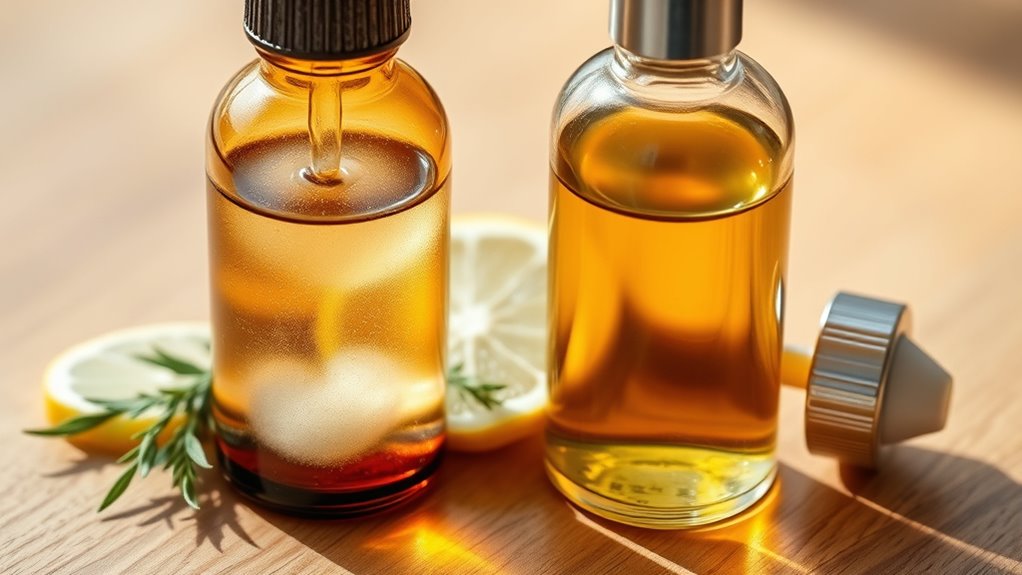

Essential oils come directly from plants through natural methods like steam distillation, capturing their complex, pure scents and therapeutic benefits. Fragrance oils are usually synthetic or blended in labs, offering consistent scents but often lack the natural compounds and wellness properties. While essential oils tend to last longer and support health, fragrance oils prioritize stability and variety. To discover more about their differences, keep exploring this helpful guide.
Key Takeaways
- Essential oils are derived from plants through natural extraction methods, while fragrance oils are synthetically manufactured in labs.
- Essential oils retain the plant’s natural compounds and therapeutic properties, unlike fragrance oils which often contain synthetic ingredients.
- Essential oils have a complex, layered scent with longer-lasting aroma, whereas fragrance oils tend to have a simpler scent that fades faster.
- Essential oils support wellness and aromatherapy benefits, making them a healthier choice, unlike fragrance oils that prioritize scent stability.
- Essential oils undergo minimal processing, preserving natural compounds; fragrance oils are chemically formulated for consistency and longevity.
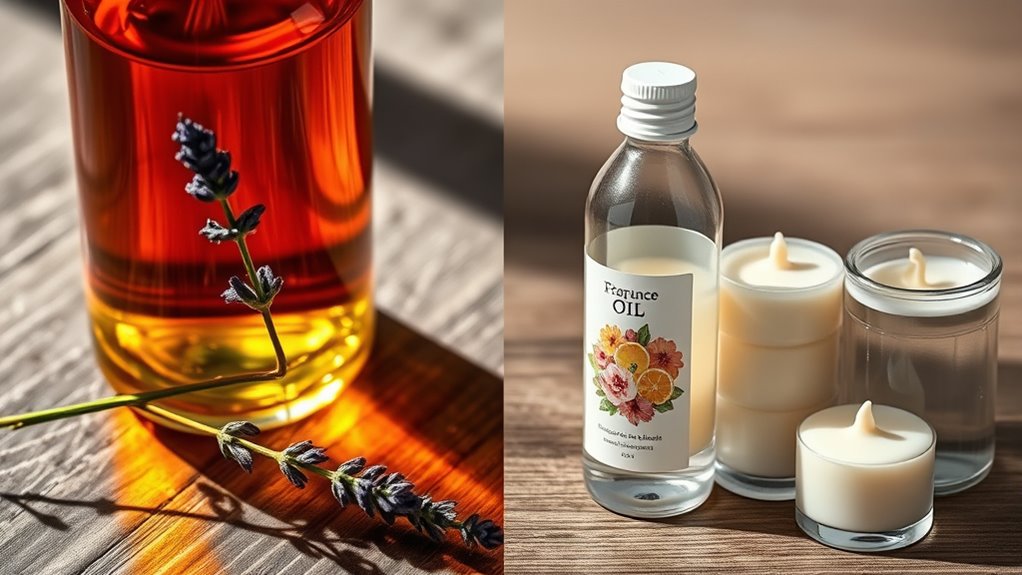
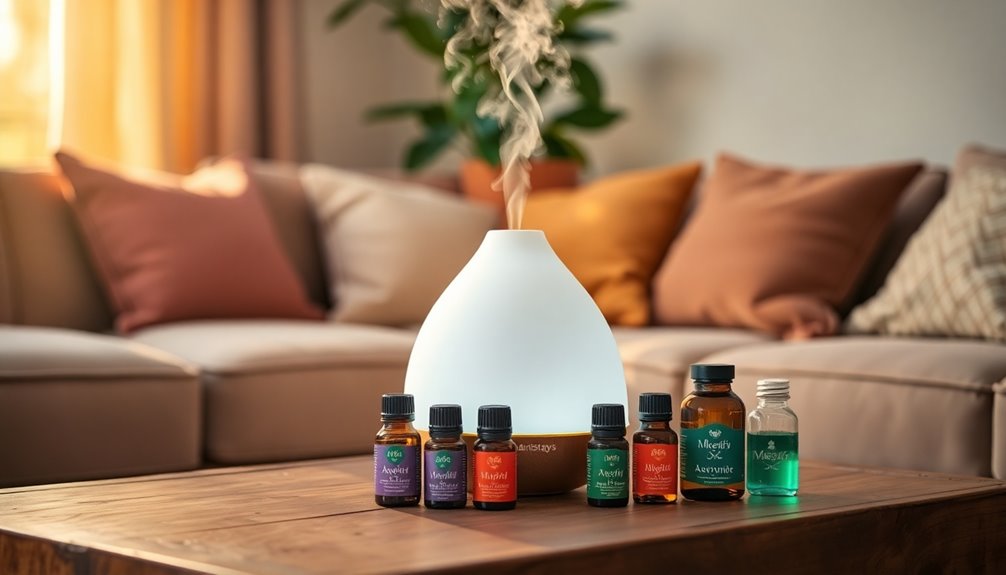
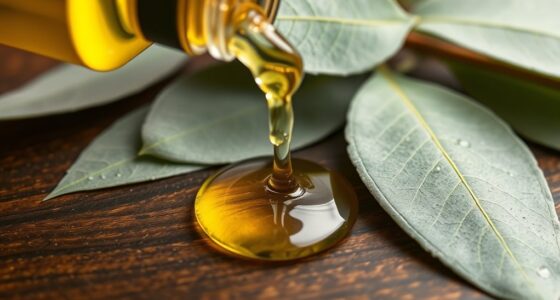
Have you ever wondered what sets essential oils apart from fragrance oils? It all boils down to their origin and how they’re made. Essential oils are derived from plants through natural extraction methods, such as steam distillation or cold pressing. This process captures the plant’s aromatic compounds directly from its leaves, flowers, or roots, ensuring the oil retains its natural essence. Because of this, essential oils tend to have a more complex, pure scent profile, which often results in a longer-lasting aroma—what we call aroma longevity. When you use an essential oil, you’re experiencing the scent as it exists in nature, with all its nuanced layers. Additionally, the natural extraction process helps preserve the therapeutic properties of the oil, making them popular for aromatherapy and wellness practices. The natural origins of essential oils contribute to their reputation as safer and more healthful options for many users. This natural process also minimizes the use of synthetic chemicals, further enhancing their appeal for health-conscious consumers. Moreover, because they are minimally processed, essential oils often retain more of the plant’s original compounds, which can be beneficial for health and wellness purposes. In fact, many users find that the holistic benefits of pure essential oils extend beyond just scent, supporting overall wellbeing.
Essential oils are derived naturally from plants, offering a complex, long-lasting aroma true to nature.
In contrast, fragrance oils are typically synthetic or a blend of synthetic and natural ingredients. These are manufactured in labs, where chemists create scents that mimic natural aromas or craft entirely new ones. Because fragrance oils don’t rely solely on natural extraction, they’re often more stable and consistent in scent. However, this synthetic creation process usually results in a less nuanced aroma that doesn’t last as long when compared to essential oils. The aroma longevity of fragrance oils tends to be shorter, meaning the scent may fade faster after application. This is partly because fragrance oils are designed to have a uniform scent profile that can be mass-produced, rather than capturing the subtle complexity found in nature.
100% pure essential oils
As an affiliate, we earn on qualifying purchases.
As an affiliate, we earn on qualifying purchases.
Frequently Asked Questions
Are Essential Oils Safe for Children and Pets?
You should be cautious about using essential oils around children and pets, as their safety isn’t guaranteed. Children and pets are more sensitive to the potent compounds in essential oils, so accidental ingestion or skin contact can cause adverse reactions. Always prioritize child safety and pet safety by consulting a healthcare professional or veterinarian before using essential oils in your home. Keep oils out of reach and dilute properly to minimize risks.
Can Fragrance Oils Cause Allergic Reactions?
Imagine you notice skin sensitivity and redness after using a scented candle. Fragrance oils can cause allergic reactions, especially for sensitive individuals. These synthetic scents often contain chemicals that irritate the skin or respiratory system. If you have allergies or asthma, you’re more prone to such reactions. Always check labels and test a small area first to avoid unexpected allergic responses from fragrance oils.
How Long Do Essential Oils Last Compared to Fragrance Oils?
You might wonder how long essential oils last compared to fragrance oils. Generally, essential oils have a shelf life of 1 to 3 years, but proper storage can extend their freshness. Store them in dark, airtight bottles away from heat and sunlight. Fragrance oils often last longer, around 3 to 5 years, due to their synthetic nature. Follow storage tips to keep both oils potent and effective for as long as possible.
Are Synthetic Fragrances Used in Fragrance Oils?
Hold the phone, you’re wondering if synthetic fragrances use artificial scents? Absolutely! Fragrance oils often contain synthetic ingredients, which mimic natural smells but are created in labs. These artificial scents are popular because they’re affordable and long-lasting. Unlike essential oils, fragrance oils rely heavily on synthetic components, making them a different ballgame altogether. So, yes, most fragrance oils do include artificial scents, crafted from synthetic ingredients for consistency and durability.
Can I Mix Essential Oils With Carrier Oils Safely?
You can safely mix essential oils with carrier oils using proper blending techniques. Always choose a suitable carrier oil like coconut or jojoba, which won’t interfere with the essential oils. Start with small amounts, typically a few drops of essential oil per teaspoon of carrier oil, and test for skin sensitivity. Proper blending guarantees safe, effective application, allowing you to enjoy the benefits without irritation.
synthetic fragrance oils for aromatherapy
As an affiliate, we earn on qualifying purchases.
As an affiliate, we earn on qualifying purchases.
Conclusion
Now that you’ve uncovered the differences, think of essential oils as the soul of nature’s symphony—pure, vibrant, and bursting with life. Fragrance oils, on the other hand, are like a beautifully crafted perfume, layered with artistic craftsmanship. Choosing between them is like picking your favorite melody; both have their charm. Whichever you choose, let your senses lead the way, turning your space into a fragrant garden where each scent tells its own story.

ASAKUKI Essential Oil Diffuser for Home, 500ML Aromatherapy Diffuser Humidifier with Remote Control, 7 Color LED Lights, Quiet Cool Mist Diffuser for Bedroom, Living Room, Office (Yellow)
5-IN-1 AROMATHERAPY DEVICE: This ultrasonic essential oil diffuser is an amazing multi-functional aromatherapy device unlike any other you've…
As an affiliate, we earn on qualifying purchases.
As an affiliate, we earn on qualifying purchases.
fragrance oil set
As an affiliate, we earn on qualifying purchases.
As an affiliate, we earn on qualifying purchases.