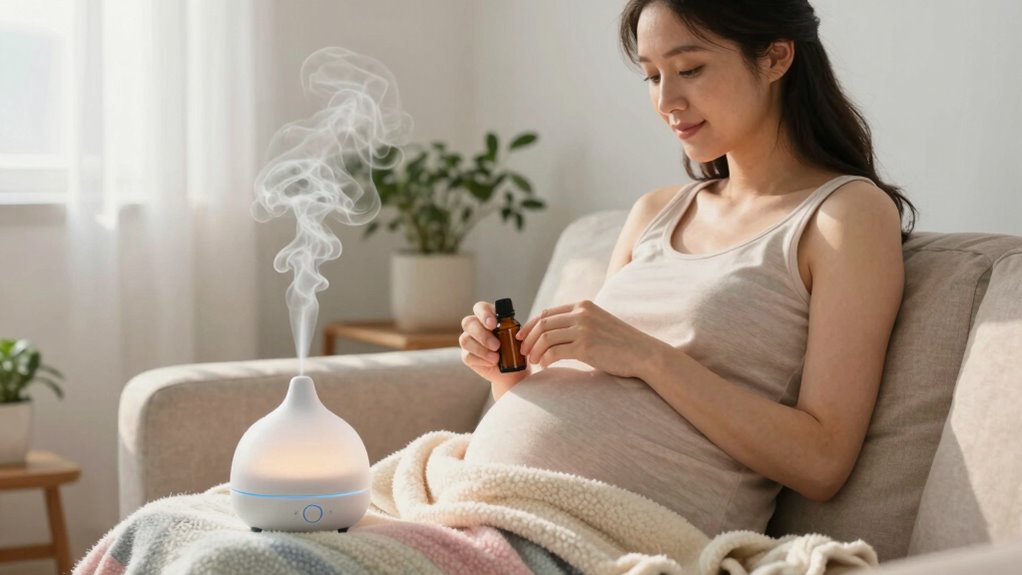

If you’re diffusing essential oils while pregnant, it’s important to choose gentle, safe options like lavender or lemon, and avoid strong or potentially harmful oils like rosemary, peppermint, or clary sage. Use them in moderation and guarantee proper dilution, keeping diffusers in well-ventilated areas. Monitor how you feel and stop immediately if you experience any adverse symptoms. To protect your health and that of your baby, understanding what to avoid is vital—learn more about safe diffusing tips ahead.
Key Takeaways
- Use only pregnancy-safe, pure essential oils like lavender, lemon, and chamomile, avoiding potentially risky oils such as rosemary, peppermint, and clary sage.
- Limit diffusion duration and frequency, following manufacturer guidelines, to prevent respiratory irritation and overwhelming scent exposure.
- Always dilute essential oils properly and diffuse in well-ventilated areas to minimize inhalation risks and adverse reactions.
- Monitor your body’s response during and after diffusing; cease use immediately if you experience headaches, nausea, or dizziness.
- Consult your healthcare provider before diffusing essential oils during pregnancy for personalized safety advice.

Diffusing essential oils while pregnant can be a safe way to enjoy aromatherapy benefits, but it’s important to do so carefully. Your safety concerns should always come first, especially during pregnancy when your body is more sensitive to external influences. One of the key aspects to consider is essential oil selection. Not all oils are safe to diffuse when pregnant, as some can trigger adverse reactions or pose risks to your developing baby. Before you start, it’s vital to do thorough research and consult with your healthcare provider to ensure the oils you choose are safe for pregnancy.
Diffusing essential oils during pregnancy requires careful selection and consultation for safety.
When selecting essential oils, prioritize those that are known to be safe and gentle. Oils like lavender, lemon, and chamomile are generally considered safe in moderation, but even these should be used with caution and in proper dilution. Avoid oils that are known to be potentially harmful, such as rosemary, clary sage, and peppermint, especially during the first trimester. These can cause contractions or other complications. The quality of your essential oils also matters; opt for pure, therapeutic-grade oils from reputable sources to minimize the risk of contamination or adulteration.
Your safety concerns extend beyond just avoiding harmful oils. Proper diffuser use is equally important. Always follow the manufacturer’s instructions regarding how much oil to use and how long to diffuse. Overuse can lead to overwhelming scents or respiratory irritation, which can be problematic during pregnancy. Keep the diffuser in a well-ventilated area, and don’t diffuse oils continuously for long periods—moderation is key. If you notice any symptoms like headaches, nausea, or dizziness, turn off the diffuser immediately and step into fresh air.
Another safety tip involves monitoring your body’s response. Every pregnancy is different, so even oils that are generally safe might cause sensitivities or allergic reactions in you. Start with short diffusion sessions, and pay attention to how you feel. If you experience any adverse effects, stop immediately and discuss it with your healthcare provider. Remember, what’s safe for others might not be safe for you, so personalized advice is essential.

Cliganic Organic Essential Oils Set (Top 5 – The Classics) – 100% Pure Natural – Aromatherapy, Candle Making – Peppermint, Lavender, Eucalyptus, Lemongrass & Orange
Included in this Gift Set: Peppermint, lavender, eucalyptus, lemongrass & orange. essential oils gift set for aromatherapy diffuser.
As an affiliate, we earn on qualifying purchases.
As an affiliate, we earn on qualifying purchases.
Frequently Asked Questions
Can I Diffuse Essential Oils During Labor?
You can diffuse essential oils during labor if you prioritize diffusing safety and choose labor aromas carefully. Make certain the oils are well-diluted, and use a diffuser in a well-ventilated space. Avoid strong or potentially irritating scents, and always consult your healthcare provider beforehand. Properly selected labor aromas can help create a calming environment, but overdoing it or using unsafe oils could cause discomfort or adverse reactions.
Are There Specific Oils Safe for Breastfeeding Mothers?
Yes, there are safe essential oils for breastfeeding mothers, but you should always prioritize breastfeeding safety. Oils like lavender, chamomile, and ginger are generally considered safe when diffused in moderation. However, avoid strong or irritating oils such as peppermint or eucalyptus, which can affect your baby. Always dilute oils properly, and consult with a healthcare professional before diffusing to guarantee you’re using safe essential oils during this sensitive time.
How Long Should I Diffuse Essential Oils Daily?
Research shows people typically diffuse essential oils for about 30 to 60 minutes daily. For safe diffusion times during pregnancy, limit your sessions to around 30 minutes at a time, ensuring good ventilation. You should avoid continuous diffusion, as extended exposure might cause sensitivity or adverse effects. Always listen to your body and consult your healthcare provider. Moderation and proper diffusion duration help you enjoy the benefits safely.
Can Essential Oils Cause Allergic Reactions in Pregnancy?
Yes, essential oils can cause allergic reactions in pregnancy, especially if you have essential oil sensitivity. You might notice symptoms like skin irritation, sneezing, or breathing issues. To minimize risks, perform a patch test before diffusing or applying oils, and select high-quality, pure oils. If you experience any allergic reactions, stop use immediately and consult your healthcare provider to ensure safety for you and your baby.
Are There Natural Alternatives to Diffusing Essential Oils?
Yes, you can explore natural alternatives to diffusing essential oils by focusing on holistic health and herbal remedies. You might consider using herbal teas, infusions, or topical applications of safe herbs like chamomile or ginger, which can promote relaxation and wellness without the risks associated with diffusing essential oils during pregnancy. Always consult your healthcare provider before trying new remedies to verify they’re safe for you and your baby.

Essence Nasal Diffuser New Mommy Bundle – Essential Oil Silicone Nose Rings for Morning Sickness & Motion Sickness Support – Wearable Blends Pack for Pregnancy & Travel
MORNING SICKNESS & NAUSEA RELIEF FOR NEW MOMS – The Mommy Bundle features Peppermint, Lemon, Lavender, Breathe Easy,…
As an affiliate, we earn on qualifying purchases.
As an affiliate, we earn on qualifying purchases.
Conclusion
Remember, your safety matters as much as your baby’s. By avoiding harmful oils, ensuring proper ventilation, and listening to your body, you protect yourself and your little one. Stay informed, stay cautious, and stay attentive. Your wellness is your best gift—so choose wisely, breathe safely, and enjoy the journey. Because when you care for yourself, you care for your baby. Embrace safe diffusing, embrace peace, and nurture your pregnancy with confidence.

Majestic Pure Essential Oil with Glass Dropper – 100% Pure and Natural – Essential Oils for Diffuser, Aromatherapy, Soap and Candle Making, Lavender Essential Oil, Lavender Oil, 4 Fl Oz
100% PURE & NATURAL LAVENDER OIL – Majestic Pure Blends oils are exactly that! Many oils being sold…
As an affiliate, we earn on qualifying purchases.
As an affiliate, we earn on qualifying purchases.

HealthSmart 500ML Essential Oil Diffuser for Large Rooms, Cool Mist Humidifier and Aromatherapy Diffuser, Adjustable Timer, Mist Mode and 7 LED Light Colors, White (Pack of 1)
Oil diffuser will automatically and safety shut off once the water runs out so the unit doesn't overheat….
As an affiliate, we earn on qualifying purchases.
As an affiliate, we earn on qualifying purchases.