Essential oils are distilled from plants to preserve their pure, volatile compounds, making them natural and often safe for topical use. Absolutes are extracted with solvents, capturing richer, more complex scents but may contain residual chemicals. When you need a light, pure aroma or therapeutic qualities, essential oils are ideal. For deep, luxurious fragrances in perfumery, absolutes are preferred. Continue exploring to understand how these differences impact your choices and uses.
Key Takeaways
- Essential oils are steam-distilled or cold-pressed, maintaining natural purity; absolutes are solvent-extracted, richer but may contain residual solvents.
- Absolutes have a deeper, more complex aroma, ideal for perfumery; essential oils have a lighter scent suitable for aromatherapy.
- Essential oils are generally purer and safer for topical use, while absolutes require dilution due to potential solvent residues.
- Use essential oils for therapeutic applications; choose absolutes when a full-bodied scent or complex aroma is desired in fragrances.
- Extraction methods influence safety and chemical composition, impacting suitability based on intended use and safety considerations.
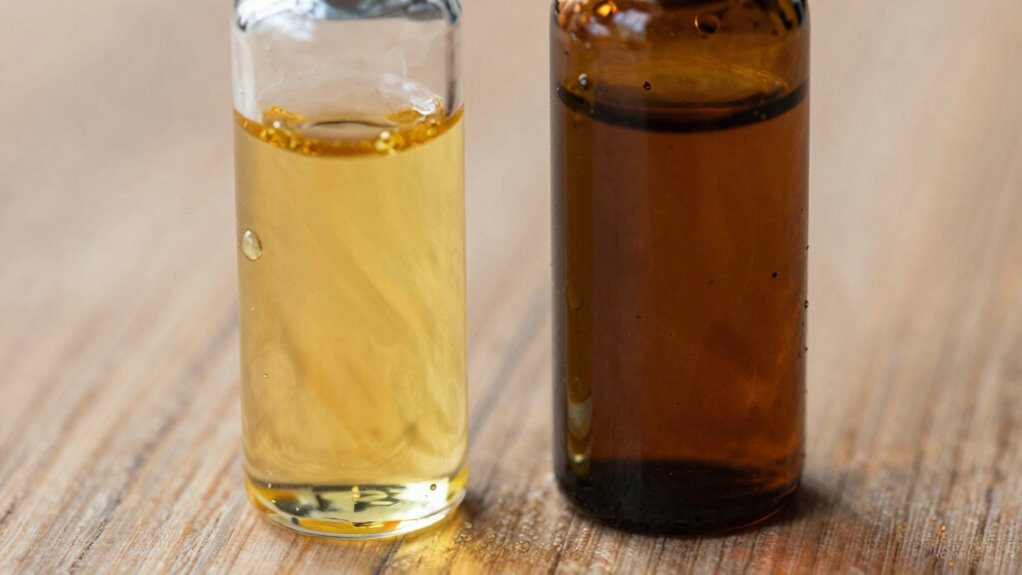
When choosing between absolute and essential oils, understanding their differences can help you make informed decisions for your aromatherapy or cosmetic needs. Both oils carry unique qualities, but grasping how they’re produced and what aroma profile they offer is key. Essential oils are typically obtained through steam distillation or cold pressing, which involves capturing the volatile compounds from plant materials. This process preserves the natural scent and therapeutic properties of the plant, resulting in a pure, concentrated oil with a distinct aroma profile. Absolute oils, on the other hand, are created using a solvent extraction method. This process dissolves the plant’s aromatic compounds in a solvent like hexane or ethanol, which is then removed to leave behind a thick, fragrant substance known as an absolute. Because of this extraction process, absolutes often contain additional plant components, such as waxes or resins, that aren’t present in essential oils.
Essential oils are steam-distilled for purity, while absolutes use solvent extraction for richer, more complex aromas.
The aroma profile of absolutes tends to be richer, deeper, and sometimes more complex than that of essential oils. This is because the solvent extraction captures a broader range of plant compounds, including those that are heat-sensitive or non-volatile, which may be lost during distillation. As a result, absolutes often have a more intense scent, making them especially desirable in perfumery and luxury cosmetics. However, this complexity can also mean they carry a slightly different character from the essential oil version, sometimes with subtle nuances that appeal to certain senses or preferences. Additionally, extraction methods significantly influence the chemical composition and safety considerations of each oil type.
While essential oils are generally considered more natural and pure, absolutes are valued for their full-bodied aroma and ability to extract delicate or resinous plant parts that are difficult to distill. When it comes to safety, essential oils usually contain fewer residual solvents, making them preferable for topical applications, especially when used undiluted. Absolutes may require more caution, as traces of solvents could remain, and their thicker consistency might necessitate dilution before use.
Knowing when to choose an absolute over an essential oil depends on your end goal. If you want a pure, straightforward scent with minimal additives, essential oils are often your best bet. But if you seek a richer, more complex aroma with a luxurious feel, absolutes might be the better option. Both have their place, and understanding their extraction processes and resulting aroma profiles ensures you select the right one for your personal or professional projects.
Frequently Asked Questions
Are Absolute Oils Safer Than Essential Oils for Skin Application?
Absolute oils aren’t necessarily safer than essential oils for your skin. They often have a more complex chemical composition, which can increase the risk of skin sensitivity or irritation. Because absolutes contain solvents or other chemicals used during extraction, they might be harsher on sensitive skin. Always patch-test any new oil, and consult a professional if you have concerns about skin reactions or chemical sensitivities before applying.
Do Absolute Oils Have Stronger Therapeutic Properties Than Essential Oils?
Absolutely, absolutes boast a boost in therapeutic potency because their oil concentration is higher, making their effects more intense. You’ll notice that their concentrated compounds deliver stronger therapeutic benefits, but this also means they can be more potent and potentially irritating. So, if you’re seeking potent therapeutic properties, absolutes might outperform essential oils, but always handle them carefully, respecting their strength and your skin’s sensitivity.
Can Absolute Oils Be Used Directly Without Dilution?
You shouldn’t use absolute oils directly on your skin without proper dilution, as they can cause skin sensitivity or irritation. Absolute oils are potent and contain concentrated aromatic compounds, so diluting them with a carrier oil enhances safety and reduces the risk of adverse reactions. Always prioritize dilution safety, especially if you have sensitive skin, and consult guidelines or a professional before applying absolute oils directly.
Are Absolute Oils More Environmentally Sustainable Than Essential Oils?
Absolute oils are generally less environmentally sustainable than essential oils because their extraction process involves solvents, which can harm ecosystems. Eco-friendly harvesting methods are easier with essential oils, as they often use steam distillation. If sustainability matters to you, opt for essential oils from responsibly sourced plants. Absolute oils may have a higher environmental impact due to chemical extraction, making them less eco-friendly overall.
How Do the Extraction Costs of Absolute and Essential Oils Compare?
Extraction costs for absolute and essential oils differ mainly due to their production methods. Absolute oils often require solvent extraction, which can be more expensive because of additional steps and solvents used. Essential oils typically involve steam distillation or cold pressing, which are generally less costly. If you’re considering production costs, expect absolute oils to be pricier due to the complex extraction process, while essential oils tend to be more budget-friendly.
Conclusion
Now that you know the differences between absolute and essential oils, you can make informed choices based on your needs. Remember, sometimes the devil is in the details, and understanding these nuances can make all the difference in your aromatherapy experience. Whether you opt for an absolute or an essential oil, trusting quality and knowing when each is appropriate will help you get the most out of your oils. After all, knowledge is power—don’t let it slip through your fingers.