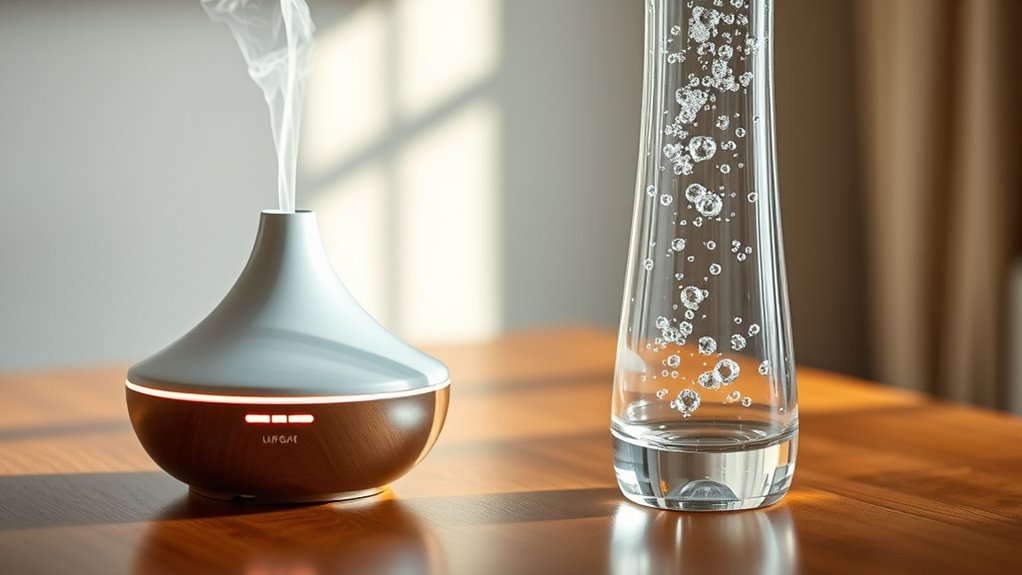

Ultrasonic and nebulizing diffusers serve different purposes in aromatherapy. Ultrasonic models use water to create a mist, offering a subtle aroma and humidifying benefits, perfect for relaxation. On the other hand, nebulizing diffusers operate without water, delivering a potent aroma quickly, ideal for therapeutic effects. Maintenance varies too; ultrasonic diffusers are simpler to clean, while nebulizers require more effort. Discover how these differences can impact your aromatherapy choices and what fits best for you.
Prime for Young Adults — start your free trial
Fast free delivery, streaming and member deals for eligible 18–24 year olds.
As an affiliate, we earn on qualifying purchases.
Key Takeaways
- Ultrasonic diffusers mix water with essential oils, creating a humidifying mist, while nebulizing diffusers operate without water, delivering concentrated aroma directly.
- The scent intensity of ultrasonic diffusers is subtle and calming, whereas nebulizing diffusers provide a stronger, more immediate aroma.
- Ultrasonic diffusers are easier to maintain, requiring simple cleaning of the water tank, while nebulizing diffusers need thorough disassembly and cleaning.
- Nebulizing diffusers tend to be more expensive than ultrasonic models, which are simpler and offer both aroma and humidifying benefits.
- Choice between diffusers depends on desired scent strength, intended use, and willingness to maintain the device regularly.
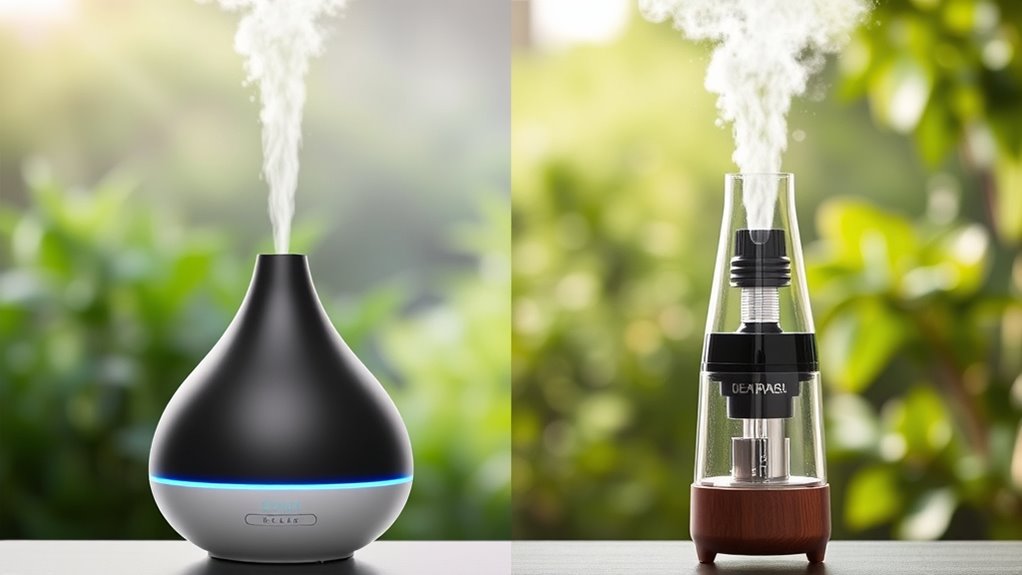
When you’re looking to enhance your space with essential oils, choosing between ultrasonic and nebulizing diffusers can be a bit overwhelming. Both types offer distinct benefits, but understanding how each one works can help you make a better decision. Ultrasonic diffusers use water to disperse essential oils, creating a fine mist that fills the air with aroma. This method not only humidifies your space but also allows for a more subtle scent experience. You can easily adjust the intensity of the aroma dispersion by changing the amount of water you add.
Choosing between ultrasonic and nebulizing diffusers can enhance your space with essential oils and create a unique aroma experience.
On the other hand, nebulizing diffusers work without water. They use pressurized air to break down the essential oils into tiny particles, delivering a more concentrated aroma. If you want a stronger scent that fills the room quickly, a nebulizing diffuser is your best bet. However, it’s essential to note that this type of diffuser can be more expensive and may require more device maintenance than ultrasonic diffusers. Since there’s no water involved, cleaning the nebulizing device can be tricky, but regular maintenance is vital to guarantee maximum performance.
When it comes to aroma dispersion, both diffusers have their strengths. Ultrasonic diffusers create a soothing, gentle mist, which is perfect for creating a calming atmosphere. If you’re looking to use essential oils for relaxation or sleep, this might be the ideal choice for you. On the flip side, if you’re interested in therapeutic benefits or creating a vibrant, energizing environment, nebulizing diffusers excel in delivering potent scents quickly.
Device maintenance varies considerably between the two. Ultrasonic diffusers require you to clean the water tank and replace the water regularly, but the process is quite simple. Just rinse the tank and wipe it down occasionally to prevent oil buildup. Nebulizing diffusers demand a bit more attention. You’ll need to disassemble parts and clean them thoroughly to remove any residue from the oils. If you neglect this maintenance, you risk clogging the device, which can hinder its performance. Additionally, using high-quality essential oils can enhance the overall experience, as commitment to quality ingredients is essential for achieving the desired aroma and therapeutic effects.
ultrasonic essential oil diffuser
As an affiliate, we earn on qualifying purchases.
As an affiliate, we earn on qualifying purchases.
Frequently Asked Questions
Can I Use Essential Oils in Both Diffusers?
Yes, you can use essential oils in both types of diffusers, but oil compatibility is vital. Make certain the oils you choose are safe for your specific diffuser model. Ultrasonic diffusers typically work well with most essential oils, while nebulizing diffusers may require oils that are thicker. Always check the manufacturer’s guidelines to guarantee diffuser safety and avoid damaging your device. Enjoy the benefits of your chosen oils while diffusing them properly!
Which Diffuser Type Is Quieter During Operation?
If you’re seeking a serene atmosphere, ultrasonic diffusers are your best bet. They hum softly, like a gentle breeze rustling through leaves, maintaining low noise levels during operation. In contrast, nebulizing diffusers can be a bit more noticeable, emitting a sharper sound as they disperse oils. So, if operational quietness is your priority, go for an ultrasonic model. You’ll create a peaceful sanctuary while enjoying the soothing aromas of your essential oils.
How Often Should I Clean My Diffuser?
You should clean your diffuser after every use, especially if you’re switching oils. For regular maintenance, a deep clean every one to two weeks is ideal. This helps prevent buildup and guarantees your diffuser operates effectively. Just empty the water, wipe it down with a soft cloth, and use a mixture of water and vinegar for a thorough clean. Regular cleaning keeps your diffuser in top shape and enhances your aromatherapy experience!
Are Nebulizing Diffusers More Expensive Than Ultrasonic Ones?
You might feel like you’re in a sci-fi movie when choosing between diffusers! Generally, nebulizing diffusers are more expensive upfront than ultrasonic ones. However, consider the cost comparison over time. While nebulizers often have higher maintenance costs due to more intricate parts, they don’t require water and can be more efficient. So, while the initial investment is steeper, weigh that against how much you’ll spend on upkeep in the long run.
Do Diffusers Affect Air Quality in My Home?
Yes, diffusers can affect air quality in your home. By enhancing air circulation, they help disperse scents more evenly throughout the space, creating a pleasant atmosphere. However, it’s essential to use high-quality essential oils, as some lower-grade oils might introduce harmful compounds. You’ll want to keep your diffuser clean to avoid mold and bacteria buildup, ensuring that the scent dispersion remains fresh and beneficial for your indoor air quality.
Conclusion
In the end, choosing between ultrasonic and nebulizing diffusers really comes down to your personal preferences and needs. Ultrasonic diffusers are great for creating a soothing atmosphere with a bit of moisture, while nebulizing diffusers pack a powerful punch with pure essential oils. It’s like picking between a gentle breeze and a strong gust—both have their charm! So, think about what you want to achieve and embrace the benefits of either option for your space.
Fall yard work Picks
leaf blowers
As an affiliate, we earn on qualifying purchases.