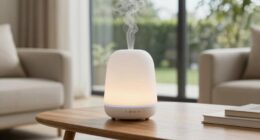
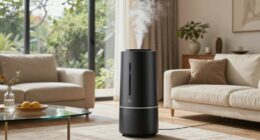
To prevent mold and biofilm buildup in your humidifier, you need to clean it thoroughly each week. Start by unplugging the device, emptying leftover water, and disassembling parts. Wash everything with warm water and mild soap, scrub corners with a soft brush, then rinse and dry completely. Using vinegar for a soak helps dissolve mineral deposits and kills mold spores. Keep your humidifier clean, and you’ll guarantee healthier air and fewer risks—learn how to master this process now.
Key Takeaways
- Unplug and empty the humidifier’s water tank weekly to prevent microbial growth.
- Disassemble all parts and wash with warm water and mild soap to remove dirt and residues.
- Soak the tank in a vinegar-water mixture for 30 minutes to dissolve mineral deposits and eliminate mold spores.
- Thoroughly dry all components after cleaning to prevent residual moisture that promotes biofilm formation.
- Regularly check and maintain filters per manufacturer instructions to ensure optimal air quality and device hygiene.

A humidifier can help improve your home’s air quality, but if not cleaned regularly, it becomes a breeding ground for mold and bacteria. When you neglect proper maintenance, you risk dispersing harmful microbes into the air you breathe. This not only compromises your indoor air quality but also diminishes the health benefits that a humidifier offers. Mold spores and bacteria can cause respiratory issues, worsen allergies, and lead to infections, especially if you or your family members have weakened immune systems. That’s why regular cleaning isn’t just about keeping your device looking new; it’s essential for maintaining a healthy living environment.
To prevent these issues, you should clean your humidifier at least once a week. Start by unplugging the device and emptying any remaining water. Disassemble the components, including the tank and the diffuser, and wash them thoroughly with warm water and mild soap. Avoid harsh chemicals, which can leave residues and potentially release fumes into the air. Use a soft brush or cloth to scrub all surfaces, paying close attention to corners and crevices where mold and bacteria are most likely to hide. Rinse everything well and dry each part completely before reassembling. This step is vital because residual moisture fosters microbial growth. Regular cleaning also helps prevent biofilm formation, which can shield microbes from cleaning efforts and make eradication more difficult.
In addition to manual cleaning, consider using a vinegar soak once a week. Fill the tank with a mixture of water and white vinegar, letting it sit for about 30 minutes. Vinegar’s natural acidity helps dissolve mineral deposits and kills mold spores, enhancing the overall cleanliness of your humidifier. After soaking, scrub the interior with a brush and rinse thoroughly. If your humidifier has a filter, check the manufacturer’s instructions for cleaning or replacing it regularly, as filters trap microbes and debris that can compromise your air quality.
Frequently Asked Questions
Can I Use Vinegar Instead of Commercial Cleaning Solutions?
Yes, you can use vinegar instead of commercial cleaning solutions for humidifier cleaning. Vinegar cleaning is an effective natural disinfectant that helps break down mineral deposits, mold, and biofilm buildup. Simply fill the humidifier with white vinegar, let it sit for about 30 minutes, then scrub and rinse thoroughly. This eco-friendly method keeps your humidifier clean without harsh chemicals, ensuring better air quality and device longevity.
How Do I Remove Stubborn Mold From My Humidifier?
To remove stubborn mold from your humidifier, start by unplugging it and disassembling the parts. Use a mixture of white vinegar and water to soak the affected areas, then scrub gently with a soft brush. Rinse thoroughly and dry completely. Regular humidifier maintenance and mold prevention are key—clean weekly and ensure your device stays dry when not in use to avoid mold buildup.
Are There Specific Cleaners Safe for All Humidifier Types?
Imagine your humidifier as a delicate garden needing gentle care; yes, there are cleaners safe for all humidifier materials. Look for gentle, non-abrasive solutions that specify cleaning compatibility with your device’s materials, like plastic, metal, or ceramic. Always check manufacturer instructions first. Using the right cleaner prevents damage, preserves functionality, and keeps mold and biofilm at bay, ensuring your humidifier stays safe and effective.
How Often Should I Replace the Humidifier Filter?
You should replace the humidifier filter every 1 to 3 months to maintain peak performance and prevent mold buildup. Regular filter replacement extends your humidifier’s lifespan and ensures clean, healthy mist. Check the manufacturer’s guidelines, as some filters may need more frequent changes based on usage. Staying consistent with filter replacement helps you avoid mold and biofilm growth, keeping your humidifier running efficiently and your air quality high.
What Are Signs My Humidifier Needs Immediate Cleaning?
If you notice a musty smell, visible mold, or mineral buildup, your humidifier needs immediate cleaning. These signs indicate that humidifier maintenance is overdue and mold prevention measures are necessary. Stop using it until you thoroughly clean and disinfect all parts. Regular cleaning helps prevent mold growth and biofilm formation, ensuring healthy air quality and efficient operation. Don’t ignore these signs to keep your humidifier safe and effective.
Conclusion
Think of your humidifier as a garden pond—without regular care, algae and mold can overrun it. By cleaning it weekly, you’re like a diligent gardener, keeping the water clear and healthy. Neglect allows the growth to spread, just as weeds choke a pond’s beauty. Stay consistent with your cleaning routine, and your humidifier will stay a pristine, safe oasis—bringing comfort rather than chaos to your home. Your vigilance keeps the hidden waters fresh and inviting.