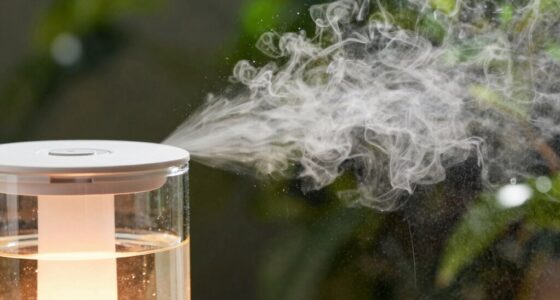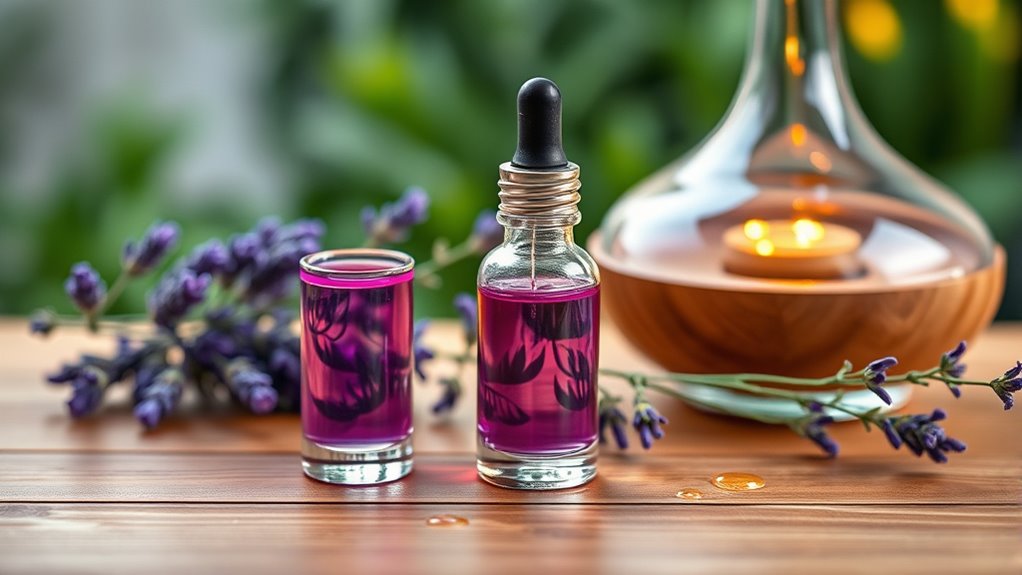

To dilute essential oils for diffusers, use 3-5 drops of oil per 100 ml of water. If you’re new, start with fewer drops and adjust based on your desired scent strength. Be mindful that some oils are more intense, so research their properties to guarantee safety. Always avoid using oils undiluted to prevent irritation. Proper dilution makes for a pleasant aroma. You’ll find even more tips to enhance your diffusion experience ahead.
Key Takeaways
- Use 3-5 drops of essential oil per 100 ml of water in diffusers for optimal dilution.
- Start with fewer drops for beginners and adjust based on desired aroma strength.
- Always dilute essential oils to prevent skin irritation or allergic reactions.
- Research the safety of oils, especially around pets and children, before use.
- Regularly clean your diffuser to ensure efficient scent diffusion and avoid residue buildup.

When you’re ready to fill your space with the soothing scents of essential oils, understanding proper dilution is key. Essential oils are potent and can be overwhelming if used incorrectly. To create a pleasant aroma without overpowering your senses, you need to dilute them effectively. This is especially true when you’re using a diffuser.
Start by knowing the appropriate dilution rates. For most diffusers, a typical guideline is to use about 3-5 drops of essential oil per 100 ml of water. If you’re new to essential oils, you might want to start at the lower end of that range and gradually increase until you find what works best for you. Remember, every oil has its own strength; some, like peppermint or eucalyptus, are particularly intense, while others, like lavender, are milder.
When it comes to blending techniques, you’ve got plenty of options to explore. You can mix various essential oils to create unique combinations that suit your mood or the atmosphere you want to cultivate. Think about pairing citrus oils with floral scents for a revitalizing blend, or try woodsy oils with spices for a grounding aroma. Just be sure to stick to the recommended dilution rates for each oil in your combination.
Safety precautions are also vital. Some essential oils can cause skin irritation or allergic reactions, especially if applied undiluted. While you won’t be applying these oils directly to your skin when using a diffuser, it’s still important to choose high-quality oils and know their properties. Some oils, like cinnamon or clove, may not be suitable for use in a diffuser due to their potency. Always do your research and consult reliable sources or professionals if you’re unsure about an oil.
Lastly, if you’re using a diffuser in a room with pets or children, be cautious. Certain oils can be harmful to them, so it’s best to check which essential oils are safe to use around them. Always ventilate the space adequately and observe any reactions from your loved ones.
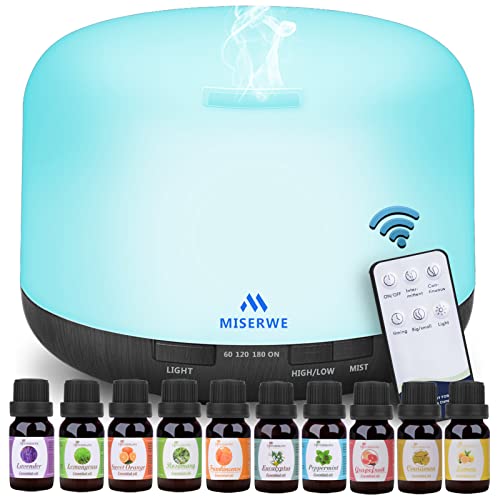
Miserwe Diffuser 500ML Essential Oil Diffuser with Adjustable Mist Mode and 4 Timer Setting Diffuser for Essential Oils Waterless Auto Shut-Off for Home Office Yoga Spa
- Quiet Operation: Deep Sleep mode ≤ 20dB for quietness
- Large Capacity: 500ml water capacity for up to 10 hours
- Remote Control: Easy control from bed or sofa
As an affiliate, we earn on qualifying purchases.
As an affiliate, we earn on qualifying purchases.
Frequently Asked Questions
Can I Mix Different Essential Oils in My Diffuser?
Yes, you can mix different essential oils in your diffuser! Oil blending is a fantastic way to create unique aromas that suit your mood. Start by choosing complementary scents, and don’t be afraid to experiment. Scent layering can enhance your experience, allowing you to enjoy various notes. Just remember to use proper dilution ratios for each oil to guarantee a pleasant and safe diffusion. Have fun discovering your favorite combinations!
How Often Should I Clean My Diffuser?
You should clean your diffuser every three to four uses, or whenever it starts looking like a science experiment gone wrong. Don’t let your precious oils mingle with gunk; that’s not the aromatic bliss you’re after! Establishing a cleaning schedule guarantees your diffuser remains at peak performance and keeps your space smelling divine. So, grab some vinegar and water, and give your diffuser the TLC it deserves—after all, it works hard for you!
Are There Any Oils to Avoid in Diffusers?
Yes, there are oils you should avoid in diffusers. For safety precautions, steer clear of oils like cinnamon, clove, and eucalyptus, especially around pets or children, as they can be irritating. When making your oil selection, consider any allergies or sensitivities you or your loved ones might have. Always opt for high-quality oils and do your research to guarantee a safe and pleasant experience while diffusing.
Can Essential Oils Expire or Go Bad?
Yes, essential oils can expire or go bad. Think about how long your favorite scent has been sitting in the cabinet—does it still smell fresh? Proper essential oil storage extends shelf life, so keep them in dark glass bottles, away from heat and sunlight. Typically, most oils last 1-3 years, but citrus oils might expire sooner. Always check for changes in scent or consistency before using them.
What Are the Benefits of Using a Diffuser?
Using a diffuser offers numerous benefits, especially in aromatherapy. You can enhance your mood and create a calming atmosphere, making it easier to relax or focus. The gentle mist disperses essential oils, allowing you to enjoy their therapeutic properties throughout your space. Whether you’re looking to uplift your spirits or unwind after a long day, diffusing essential oils can markedly improve your overall well-being and transform your environment into a soothing retreat.
Conclusion
In conclusion, diluting essential oils for your diffuser is vital for both safety and effectiveness. Did you know that using undiluted oils can increase the risk of skin irritation by up to 80%? By mixing your favorite essential oils with a carrier oil, you can enjoy their benefits without the worry. So, take a moment to measure and mix; your senses—and skin—will thank you for it! Happy diffusing!