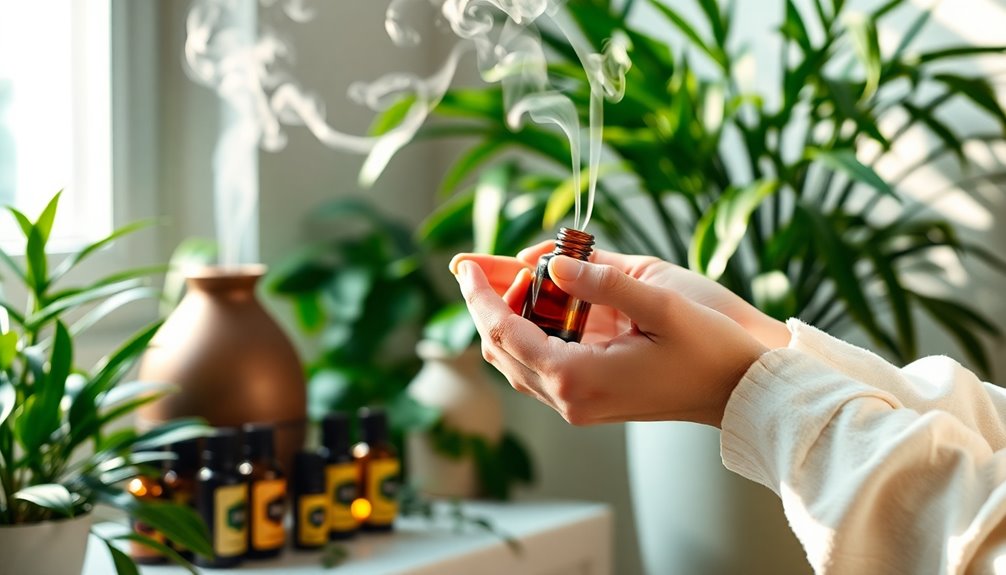
You might believe that all essential oils are the same, but that’s a common myth. Quality varies, and synthetic oils can be ineffective or even harmful. Another misconception is that more oil means better results; overusing can cause irritation. Plus, not all diffusers suit every oil type—heat can reduce benefits. Remember, essential oils aren’t miracle cures; they’re supportive tools. If you want to uncover more truths about diffusers, there’s plenty more to explore.
Key Takeaways
- Not all diffusers are compatible with every essential oil; choose one that matches the oil type for best results.
- Heat from some diffusers can diminish essential oil properties, reducing their therapeutic benefits.
- Essential oils in diffusers do not cure medical ailments; they support relaxation and mood, not replace medical treatment.
- Overusing essential oils in diffusers can lead to adverse reactions like headaches and respiratory issues; moderation is key.
- Quality matters; synthetic or diluted essential oils can be unsafe and less effective compared to therapeutic-grade oils from reputable brands.

Have you ever wondered what’s true and what’s just noise when it comes to essential oil diffusers? With so much information floating around, it’s easy to get confused about what you should know for effective and safe use. One common myth is that all essential oils are safe for everyone, but that’s not quite the case. While essential oils can offer incredible benefits, they also come with specific safety precautions you need to consider. For instance, some oils can be irritating to the skin or respiratory system, especially for young children, pregnant women, or pets. Always read the labels and do your research before using a new oil.
Another prevalent misconception is that using essential oils in a diffuser can cure ailments, which leads to a false sense of security. While aromatherapy can promote relaxation and improve your mood, it’s not a substitute for medical treatment. Think of essential oils as a supportive tool in your wellness routine rather than a miracle cure. It’s essential to maintain a balanced perspective on what essential oils can do without placing unrealistic expectations on them.
Using essential oils can enhance well-being, but they should never replace medical treatment or be viewed as miracle cures.
When it comes to aromatherapy safety, you might hear that more is better, but that’s not true with essential oils. Overusing oils can lead to adverse reactions, headaches, or even respiratory issues. It’s crucial to follow recommended guidelines for dilution and usage. Usually, a few drops of essential oil in water is sufficient for a pleasant aroma. Always err on the side of caution and start with lower concentrations to see how your body reacts.
You might also be led to believe that any type of diffuser is fine for every essential oil, but that’s not the case either. Different diffusers operate in various ways—some use heat, while others use ultrasonic technology. Heat can alter the properties of essential oils, diminishing their therapeutic benefits. Opt for a diffuser that suits the type of essential oil you’re using to get the best results.
Lastly, don’t fall for the myth that all essential oils are created equal. Quality matters. There’s a significant difference between therapeutic-grade oils and those that are synthetic or diluted. Always choose high-quality oils from reputable brands to ensure you’re getting the most benefits while keeping safety in mind. By debunking these myths, you can confidently enjoy the wonderful world of essential oils and their aromatic benefits. Additionally, understanding the importance of color accuracy in other home products can enhance your overall sensory experience.

Pure Daily Care Aromatherapy Top 10 Essential Oil Set – Therapeutic Grade Single Ingredient Oils – Uplift Mind, Body and Spirit – 10 x 10 Ml Bottles – No Fillers & No Additives
- Premium Essential Oils Set: Includes 10 high-quality single-note oils
- Versatile Aromatherapy Use: Suitable for diffusers, humidifiers, and steamers
- Dark Amber Glass Bottles: Protects oils from light to maintain freshness
As an affiliate, we earn on qualifying purchases.
As an affiliate, we earn on qualifying purchases.
Frequently Asked Questions
Can I Use Any Essential Oil in My Diffuser?
You can’t use just any essential oil in your diffuser. It’s vital to guarantee essential oil compatibility with your diffuser type. Some oils can degrade materials, especially plastics, leading to safety concerns. Stick to high-quality, pure essential oils that are safe for your specific diffuser material. Always check the manufacturer’s guidelines to avoid damaging your device or compromising your health, while enjoying the benefits of aromatherapy.
How Often Should I Clean My Diffuser?
Think of your diffuser as a delicate flower; it needs regular care to bloom beautifully. You should clean your diffuser every three to four uses, or at least once a week, to maintain its performance and fragrance quality. For maintenance, rinse it with warm water after each use, and perform a deeper clean with vinegar and water monthly. Following these cleaning frequency tips ensures your diffuser always delivers a revitalizing aroma.
Is It Safe to Leave a Diffuser on Overnight?
Yes, it’s generally safe to leave a diffuser on overnight, but you should consider a few safety concerns. Make sure your diffuser has an automatic shut-off feature, which many modern models do. This can enhance your sleep by filling the room with calming scents without the worry of running out of water. Just remember to clean it regularly to maintain its effectiveness and safety while you enjoy a restful night.
Can Diffusers Help With Allergies and Respiratory Issues?
Yes, diffusers can help with allergies and respiratory issues. By dispersing essential oils like eucalyptus or lavender, you can improve air quality and promote allergy symptom relief. These oils may reduce inflammation and open up airways, making it easier for you to breathe. Just make sure to choose high-quality oils and consult a healthcare professional if you have specific concerns. You’ll likely notice a positive difference in your environment and wellbeing.
What Is the Best Type of Water to Use in a Diffuser?
The best type of water to use in a diffuser is distilled water. Did you know that 85% of people don’t realize that water quality can affect essential oil diffusion? Distilled water has low mineral content, preventing buildup that can damage your diffuser. Tap water, on the other hand, often contains minerals and impurities that can hinder performance. So, stick with distilled water for a cleaner, more effective diffusion experience!
Conclusion
Now that you know the truth behind these common diffuser myths, you can breathe easy and enjoy your essential oils without any doubts. Don’t let misinformation cloud your judgment; it’s time to embrace the benefits of diffusing oils in your space. Remember, knowledge is power—by separating fact from fiction, you’re setting yourself up for a fragrant journey. So go ahead, fill your home with the scents that uplift your spirit and bring a little sunshine into your day!