
The bright blue light from diffuser LEDs can mess with your sleep by tricking your brain into thinking it’s daytime, which suppresses melatonin and makes it harder to fall asleep. To protect your sleep, try limiting blue light exposure in the evening, switch to warmer, dimmer lighting, or use blue light filters and glasses. Managing your light environment is key. Keep going to discover simple ways to create a more sleep-friendly space and improve your rest.
Key Takeaways
- Blue light from diffuser LEDs signals daytime to the brain, disrupting melatonin production and delaying sleep onset.
- Reduce evening diffuser LED use or switch to warmer, dimmer lighting to minimize blue light exposure before bed.
- Use blue light filters on devices or wear blue light-blocking glasses to limit blue light’s impact on sleep.
- Create a sleep-friendly environment by avoiding bright, blue light sources in the bedroom at night.
- Adjust lighting habits to align with natural circadian rhythms, improving sleep quality and overall health.
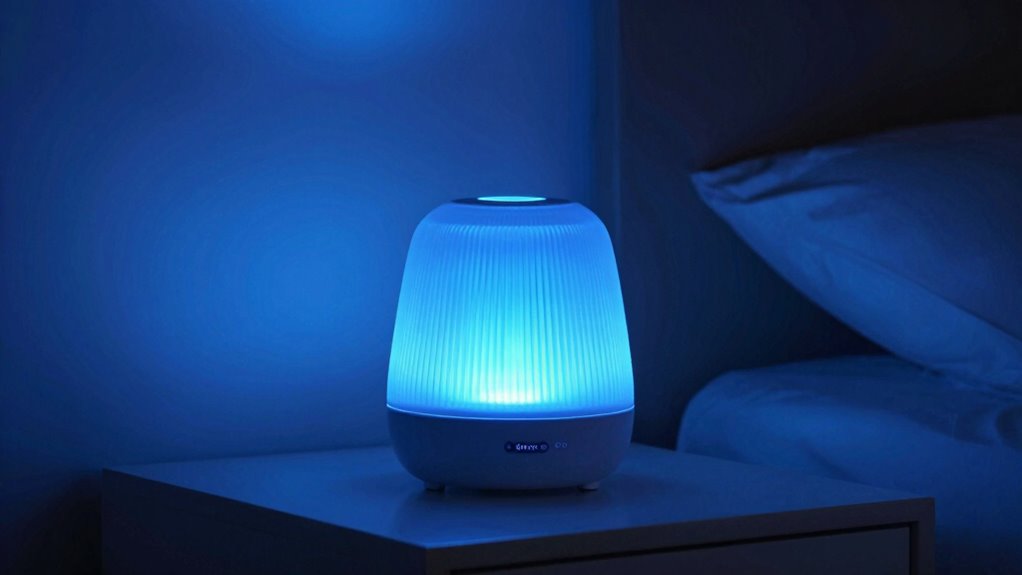
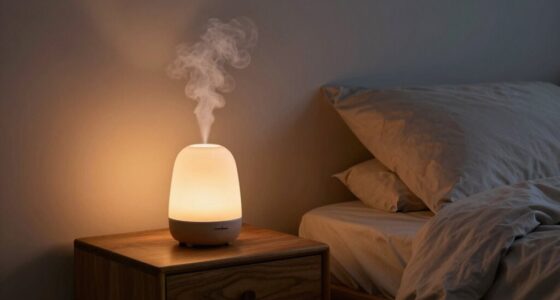
Have you ever wondered how the blue light emitted by diffuser LEDs affects your sleep? Many people don’t realize that the glow from these devices can considerably disrupt your sleep patterns. Blue light, especially from LEDs, has a powerful influence on your circadian rhythm—the internal clock that regulates your sleep-wake cycle. When you’re exposed to blue light late in the day, it signals to your brain that it’s still daytime, making it harder to fall asleep and leading to sleep disruption. This interference can leave you feeling tired, less rested, and less alert during the day.
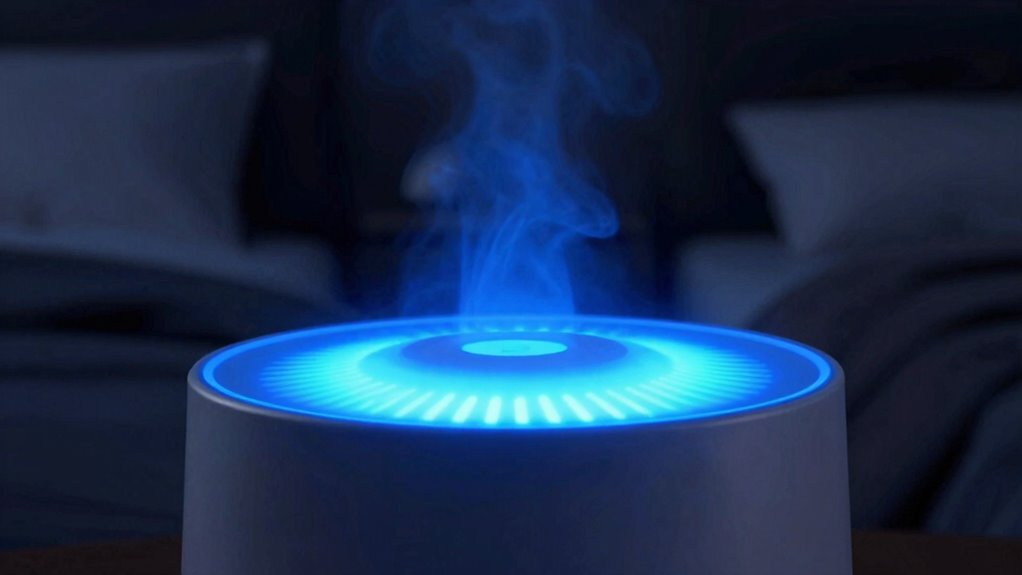
Blue light from diffuser LEDs can disrupt your sleep by signaling daytime to your brain.
Your circadian rhythm relies heavily on natural light cues to stay synchronized. When blue light from diffuser LEDs mimics daylight, it tricks your brain into suppressing melatonin, the hormone responsible for making you feel sleepy. As a result, even if you intend to wind down, exposure to this light can delay the onset of sleep, shorten your sleep duration, and reduce sleep quality overall. Over time, this disruption can accumulate, affecting your mood, cognitive function, and overall health. It’s a subtle but impactful way that artificial light influences your biological clock, often without you realizing it.
To protect your sleep, it’s essential to be mindful of when and how you use diffuser LEDs. One effective step is to limit their use in the hours leading up to bedtime. If you enjoy ambient lighting, consider switching to warmer, dimmer lights in the evening, which are less likely to interfere with your circadian rhythm. Many modern diffusers come with adjustable settings or color options—use these to reduce blue light emission after sunset. You might also want to use blue light filters on your devices or wear blue light-blocking glasses if you need to use the diffuser or other screens in the evening.
Creating a sleep-friendly environment means controlling light exposure. Keep bright, blue light sources away from your bedroom, especially in the hour before you plan to sleep. Instead, opt for softer, warmer lighting that aligns better with your body’s natural cues for sleep. Remember, your circadian rhythm is sensitive to light, and disrupting it with the wrong kind of illumination can lead to ongoing sleep issues. By making simple adjustments, like changing your diffuser’s settings or timing its use, you can help preserve your natural sleep cycle, improve your sleep quality, and wake up feeling more refreshed and energized. Additionally, understanding the impact of artificial light on your biological clock can help you develop healthier habits for overall well-being.
Frequently Asked Questions
Can Blue Light From Diffusers Cause Long-Term Eye Damage?
Blue light from diffusers generally doesn’t cause long-term eye damage if exposure is limited. However, prolonged or intense blue light exposure can affect your eye safety, leading to eye strain or discomfort over time. To protect yourself, reduce exposure during late hours, use blue light filters, or keep the diffuser at a safe distance. Moderation is key to maintaining good eye health and preventing potential issues.
Are There Specific Diffuser Brands That Emit Less Blue Light?
Some diffuser brands, like InnoGear and URPOWER, emit less blue light thanks to diffuser material choices and adjustable LED intensity. Think of it as tuning a radio; you can dial down the blue spectrum to protect your eyes and sleep. Look for diffusers with dimmable LEDs or softer materials, such as frosted glass or silicone, which naturally diffuse light more evenly, reducing blue light exposure and keeping your sleep cycle intact.
Does Using a Diffuser at Night Affect Sleep Quality Differently?
Using a diffuser at night can impact your sleep quality, especially if it’s placed too close or in your sleep environment. The blue light emitted may disrupt melatonin production, making it harder to fall asleep. To minimize this, place your diffuser away from your bed and keep the light dim or use a diffuser with low blue light emission. Creating a calming sleep environment helps improve your overall sleep quality.
Can Blue Light Filters on Phones Mitigate Diffuser Blue Light Effects?
Yes, blue light filters on your phone can help reduce the impact of diffuser blue light, but they might not fully eliminate it. Blue light filters lower the amount of blue light reaching your eyes, which can improve sleep quality, especially if you’re exposed to diffuser blue light in the evening. However, for the best results, consider dimming or turning off the diffuser’s LED blue light altogether, along with using blue light filters on your devices.
Is There a Safe Duration to Be Around Diffuser LED Blue Light?
You should limit blue light exposure from diffusers to about 30 minutes to an hour daily. Prolonged exposure can disrupt your sleep and harm your eyes. To guarantee diffuser safety, avoid keeping it on constantly, and consider using blue light filters or dimming settings. Giving your eyes regular breaks from blue light helps prevent strain and maintains better sleep quality. Always follow manufacturer guidelines for safe diffuser use.
Conclusion
So, next time you reach for your diffuser, remember that tiny blue glow might be more disruptive than you think. It’s easy to overlook, but it could be stealing your precious sleep—night after night. Will you keep ignoring that soft light, or will you take action before it’s too late? The choice is yours, and your restful nights depend on it. Don’t let that glow quietly wreck your sleep—the decision is yours to make.