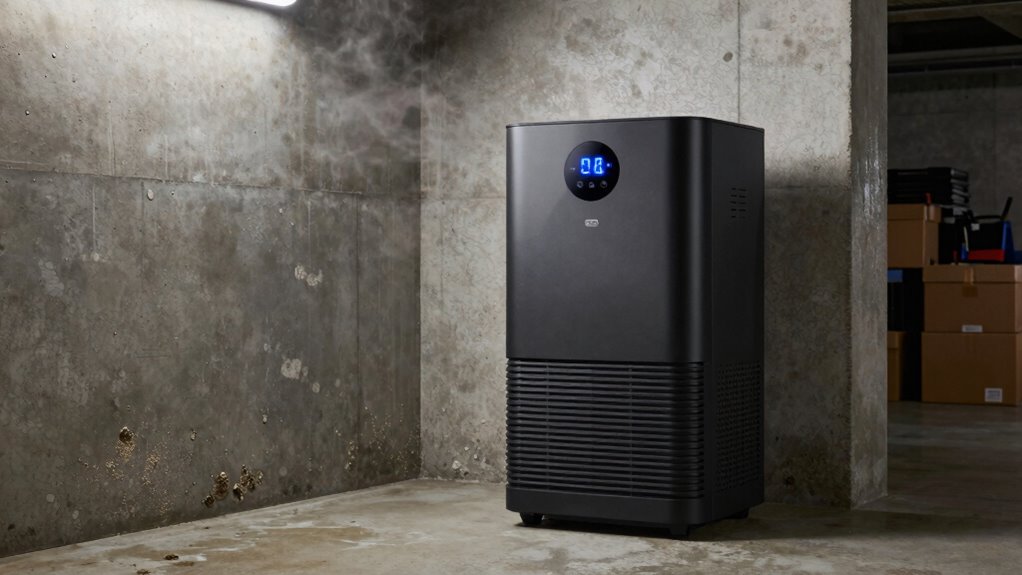
To end basement funk and prevent mold, installing a dehumidifier is highly effective. It helps control excess moisture, keeping humidity levels between 45-50%, which stops mold spores from settling and growing. Regular maintenance, like cleaning filters and emptying the water tank, guarantees peak performance. Choosing the right size and features makes a big difference. Keep moisture in check consistently, and you’ll create a healthier, fresher space—discover more about making your basement mold-free.
Key Takeaways
- Select a dehumidifier suitable for your basement size to effectively reduce moisture and prevent mold growth.
- Maintain humidity levels between 45% and 50% to inhibit mold spores and eliminate musty odors.
- Regularly clean filters and empty water reservoirs to ensure continuous, efficient moisture control.
- Use models with automatic shut-off and energy efficiency features to optimize performance and save costs.
- Incorporate dehumidifiers into a comprehensive moisture management plan for lasting basement mold prevention.
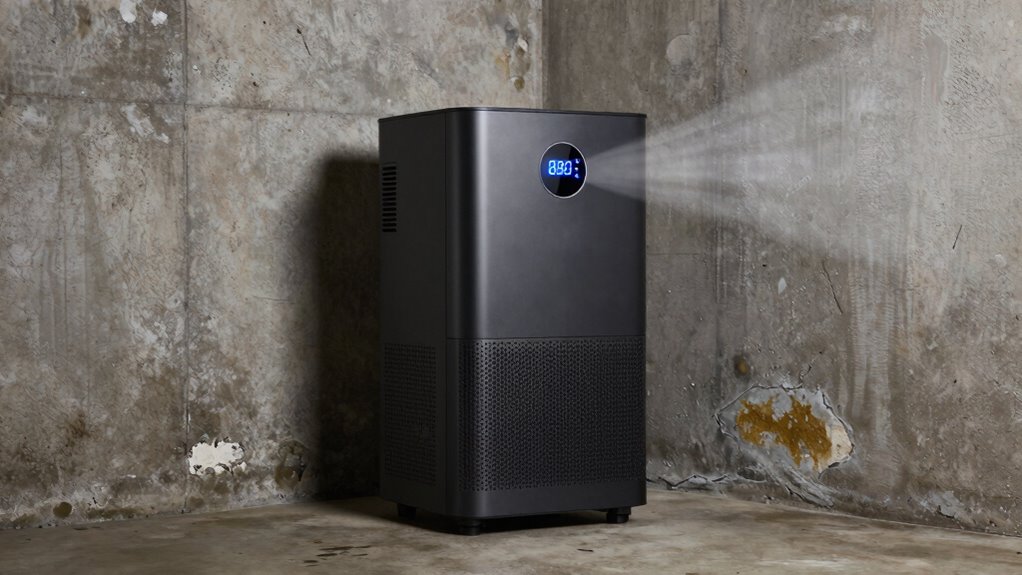
Mold thrives in damp, humid environments, making basements a common battleground for moisture problems. When moisture lingers, mold spores find the perfect conditions to settle and grow, leading to poor air quality that can affect your health and comfort. A dehumidifier is your best weapon against these issues, helping you create a healthier, more comfortable space. By reducing excess moisture, it prevents mold from taking hold and keeps the air in your basement fresh and breathable.
Not only does a dehumidifier improve air quality, but it also boosts your home’s energy efficiency. When your basement is damp, your heating and cooling systems work harder to maintain a stable indoor climate. Excess humidity makes it feel warmer in summer and colder in winter, causing your HVAC system to run more frequently. Using a dehumidifier keeps humidity levels in check, which means your heating and cooling systems don’t have to work overtime. Over time, this can lower your energy bills and extend the lifespan of your HVAC equipment.
To get the most out of your dehumidifier, set it to maintain a humidity level between 45% and 50%. This range is ideal for preventing mold growth while ensuring your space remains comfortable. When you keep humidity within this range, you’ll notice a significant reduction in musty odors, and your basement will feel fresher. Plus, maintaining proper humidity levels helps protect your belongings from moisture damage, preserving the integrity of stored items, furniture, and even your foundation.
Choosing the right dehumidifier depends on the size of your basement and its moisture level. Larger spaces or areas with persistent dampness may require a more powerful unit, while smaller basements might do well with a compact model. Make sure your dehumidifier has an automatic shut-off feature so it doesn’t over-dry the air, and consider models with energy-efficient certifications to keep operational costs low. Regular maintenance, like cleaning the filter and emptying the water reservoir, ensures your dehumidifier runs efficiently and prolongs its lifespan.
Incorporating a dehumidifier into your home’s moisture control plan is a proactive step toward ending basement funk and preventing mold. It improves air quality, making your basement a healthier space, and enhances energy efficiency by reducing the workload on your HVAC system. With consistent use and proper settings, you’ll notice a more comfortable, mold-free environment that’s safer for everyone in your household.
Additionally, choosing a dehumidifier with appropriate capacity for your space ensures optimal moisture control and prevents unnecessary energy consumption, maximizing both comfort and efficiency.
Frequently Asked Questions
How Often Should I Empty the Dehumidifier’s Water Tank?
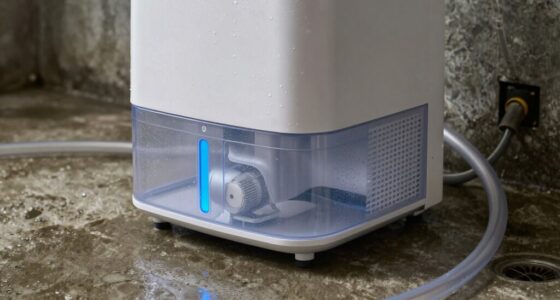
You should empty your dehumidifier’s water tank whenever it’s full, typically every 24 to 48 hours, depending on humidity levels. Regular water tank maintenance prevents mold growth inside the unit and guarantees maximum performance. Consistent maintenance can also extend your dehumidifier’s lifespan. Keep an eye on the tank’s float switch or indicator light, so you don’t forget to empty it and keep your basement dry and mold-free.
Can a Dehumidifier Remove Existing Mold Spores?
A dehumidifier can’t remove existing mold spores from the air because airborne spores are too small to be filtered out completely. It helps prevent mold growth by reducing moisture, breaking the mold lifecycle, and making conditions less hospitable. To effectively control mold, combine dehumidification with cleaning, mold-resistant materials, and proper ventilation. This approach minimizes airborne spores and stops mold from spreading or returning.
What Size Dehumidifier Is Suitable for a Large Basement?
Imagine your basement as a sprawling, damp cave crying out for relief. For a large space, you’ll need a dehumidifier with enough capacity to tame stubborn basement humidity. Look for one rated for 70 pints or more per day. A unit with high capacity guarantees continuous airflow, reducing moisture and preventing mold from lurking in every corner. It’s your fortress against persistent dampness, keeping your basement dry and mold-free.
Are There Specific Dehumidifier Features for Mold Prevention?
Yes, look for dehumidifiers with mold-resistant features like antimicrobial coatings on filters and internal components to prevent mold growth. Adjustable humidity settings allow you to maintain ideal levels, typically between 30-50%, which helps inhibit mold development. These features work together to keep your basement dry and mold-free, ensuring better air quality and protecting your home from potential health issues related to mold.
How Noisy Are Basement Dehumidifiers During Operation?
While dehumidifiers typically whisper rather than roar, you’ll notice some variation in their operational sound. Most models maintain low noise levels, ensuring your space remains peaceful while they work diligently. Compact units tend to be quieter, perfect for bedrooms or living areas, whereas larger, industrial-style dehumidifiers may produce a gentle hum. Overall, you can expect a subtle background noise that shouldn’t disrupt your daily activities or sleep.
Conclusion
Using a dehumidifier is your best bet to prevent basement mold growth. Did you know that maintaining humidity levels below 60% can reduce mold chances by over 80%? By consistently using a dehumidifier, you create an inhospitable environment for mold spores to thrive. Don’t wait until you notice musty odors or visible mold—take action now. Protect your home and health by making dehumidification a regular part of your basement maintenance plan.