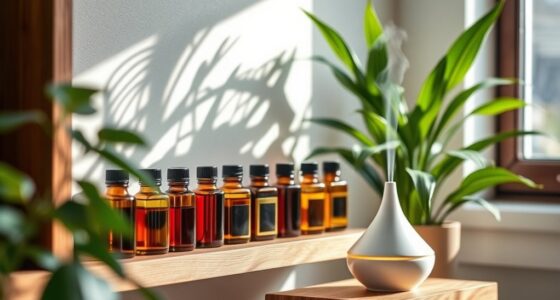

Aromatherapy uses essential oils from plants to boost your physical and emotional well-being. To get started, learn about extraction methods, like steam distillation, which affects the oil’s quality. Always dilute oils with carrier oils before applying them to your skin to guarantee safety. Inhalation techniques, like using diffusers, can create a calming atmosphere. Experimenting with different oils, such as lavender or eucalyptus, helps you find what works best for you. There’s so much more to explore!
Key Takeaways
- Aromatherapy utilizes essential oils from plants to promote physical and emotional well-being through aromatic and therapeutic benefits.
- Common essential oil extraction methods include steam distillation and cold pressing, affecting oil potency and purity.
- Always dilute essential oils with carrier oils for safe topical application, typically at a 1-2% dilution rate.
- Inhalation techniques, like using a diffuser or steam inhalation, provide quick absorption and mental benefits.
- Personalize your aromatherapy experience by experimenting with different oils to find the effects that best suit your needs.
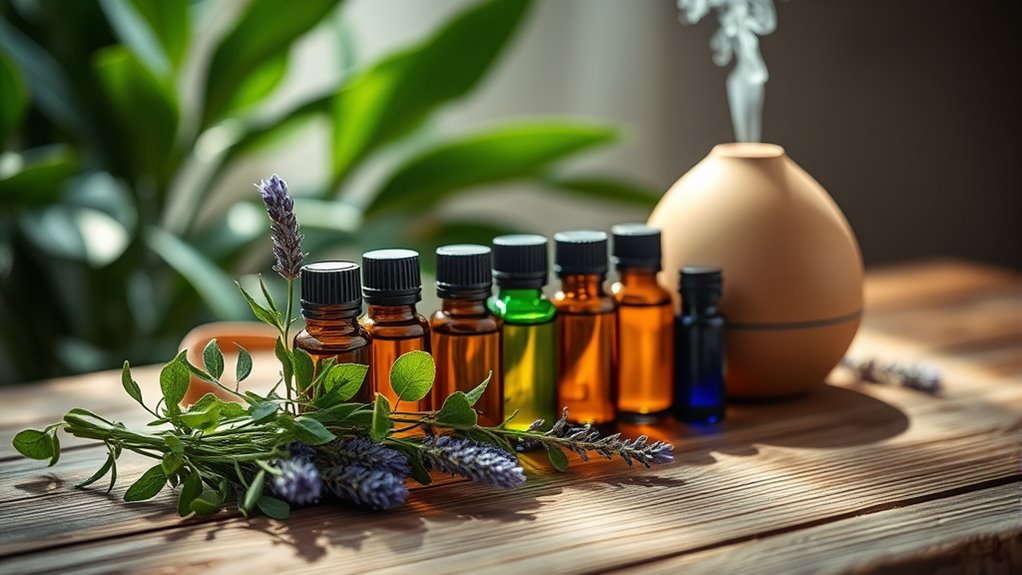
Aromatherapy is an ancient practice that harnesses the power of essential oils to promote physical and emotional well-being. When you immerse yourself in the world of aromatherapy, you’ll discover how essential oils can enhance your life. These concentrated plant extracts come from various sources, including flowers, leaves, bark, and roots. Understanding the basics of essential oil extraction is vital, as this process determines the quality and potency of the oils you’ll be using.
To start, you should familiarize yourself with the common methods of essential oil extraction. Steam distillation is the most popular technique, where steam passes through plant material to capture the aromatic compounds. Another method, cold pressing, is often used for citrus oils, where the peel is mechanically pressed to release the essential oil. There are also solvent extraction and CO2 extraction methods, but they require more specialized equipment. Knowing how your oils are extracted can help you choose high-quality products that suit your needs best.
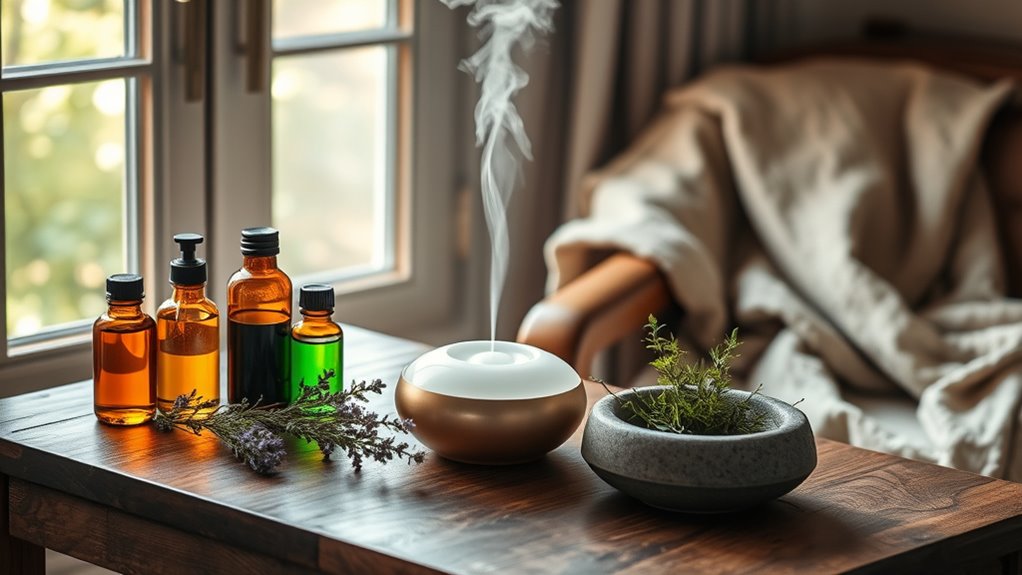
Once you’ve selected your essential oils, you’ll want to learn the safe application methods. Essential oils are potent and should always be used with caution. Dilution is necessary; never apply them directly to your skin without mixing them with a carrier oil like coconut or jojoba oil. A general rule of thumb is to use a dilution of 1-2% for topical applications. This means adding about one to two drops of essential oil to a teaspoon of carrier oil. Testing a small patch of skin before widespread application is a wise step to ensure you don’t have an adverse reaction.
Inhalation is another excellent way to experience the benefits of essential oils. You can use a diffuser to disperse the oils into the air, creating a calming atmosphere in your space. Alternatively, you could simply add a few drops to a bowl of hot water, lean over it, and cover your head with a towel to trap the steam. This method allows for deep inhalation and can be incredibly invigorating.
As you explore aromatherapy, remember that it’s all about personal preference. Different oils elicit different effects, so experiment to find what resonates with you. Popular choices include lavender, eucalyptus, and peppermint, which can guide you on your journey toward better well-being. Whether you’re looking to relieve stress, boost your mood, or improve your sleep, the right essential oils can guide you on your journey toward better well-being. Embrace the power of nature, and let aromatherapy enhance your life.

ASAKUKI Essential Oil Diffuser for Home, 500ML Aromatherapy Humidifier
- Multi-Functional Aromatherapy Device: Includes 500ml tank, LED lights, modes, remote
- Ultra-Quiet Operation: Noise level below 23 dB for peaceful use
- Remote Control Convenience: Control from 16.5 feet, adjust modes and timers
As an affiliate, we earn on qualifying purchases.
As an affiliate, we earn on qualifying purchases.
Frequently Asked Questions
Can Aromatherapy Help With Specific Medical Conditions?
Yes, aromatherapy can help with specific medical conditions. You can explore its clinical applications for issues like anxiety, insomnia, and chronic pain. Certain essential oils, like lavender and eucalyptus, are known for their calming properties, providing emotional benefits that enhance your overall well-being. By incorporating these oils into your routine, you might find relief and improve your mood. Just remember to consult a healthcare professional for guidance tailored to your needs.
Are There Any Side Effects of Using Essential Oils?
Yes, there can be side effects when using essential oils. Did you know that about 2% of the population experiences essential oil allergies? If you’re not careful, you might also face skin irritation, especially if you apply oils directly without dilution. It’s vital to do a patch test before using a new oil and to consult a healthcare professional if you have concerns. Always prioritize your safety while enjoying the benefits of essential oils!
How Do I Choose the Right Essential Oil for Me?
To choose the right essential oil for you, start by considering your scent preferences. Think about what aromas you’re drawn to—floral, citrus, or earthy. Then, explore blending techniques that combine oils for a customized experience. For instance, if you love lavender, pairing it with lemon can create a invigorating blend. Test a few options, and trust your instincts; the right oil will resonate with you, enhancing your well-being and mood.
Can I Use Essential Oils on My Skin Directly?
Using essential oils directly on your skin is like pouring a potent potion—it can work wonders, but it needs careful handling. You should always dilute them with a carrier oil to avoid irritation. Follow dilution guidelines, typically one drop of essential oil to a teaspoon of carrier oil. Store your oils in a cool, dark place to maintain their potency. With the right approach, you can enjoy their benefits safely!
Is Aromatherapy Safe for Children and Pets?
Aromatherapy can be safe for children and pets, but you’ve got to be cautious. Always dilute essential oils before using them around kids, as their skin is more sensitive. For pets, avoid oils like tea tree or eucalyptus, as they can be harmful. It’s best to use oils that are known to be safe, like lavender or chamomile, and always consult a veterinarian or pediatrician if you’re unsure about specific oils.
Conclusion
So, while you might think aromatherapy is just a fancy way to make your space smell nice, it’s actually a powerful tool for enhancing your well-being. Who would’ve thought that a few drops of essential oil could transform your mood or help you relax? As you set out on your aromatic journey, remember: it’s not just about the pleasant scents; it’s about harnessing nature’s gifts to elevate your life. Now, go ahead and embrace those fragrances—your senses will thank you!