
To keep your air purifier working efficiently, you should replace filters typically every 3 to 6 months, depending on usage, air quality, and filter type. Keep an eye out for dust buildup or declining air quality, and follow the manufacturer’s guidance for your specific model. Regular inspections and timely replacements help maintain fresh air and extend your device’s lifespan. If you want to guarantee peak performance, there’s more important information to discover below.
Key Takeaways
- Replace filters every 3 to 6 months, depending on usage, air quality, and manufacturer guidelines.
- Regularly inspect filters monthly for dust buildup and replace when dirty or air quality declines.
- Follow the specific replacement schedule provided in your device’s manual for optimal performance.
- Properly dispose of old filters and ensure new filters are installed securely for maximum efficiency.
- Maintaining timely filter changes prolongs device lifespan, improves air quality, and prevents strain on the purifier.

Replacing your air purifier filter is essential to maintaining peak air quality in your home. Over time, filters gather dust, pollen, pet dander, and other airborne particles, reducing their effectiveness. Knowing the right replacement schedule isn’t just about keeping your air clean—it also prolongs the filter’s lifespan and ensures your device functions efficiently. Most filters have a recommended lifespan, typically ranging from three to six months, but this can vary depending on usage, air quality, and the type of filter you use. Staying aware of these factors helps you avoid the pitfalls of neglecting timely replacements, which can lead to decreased air purification and even strain on your device.
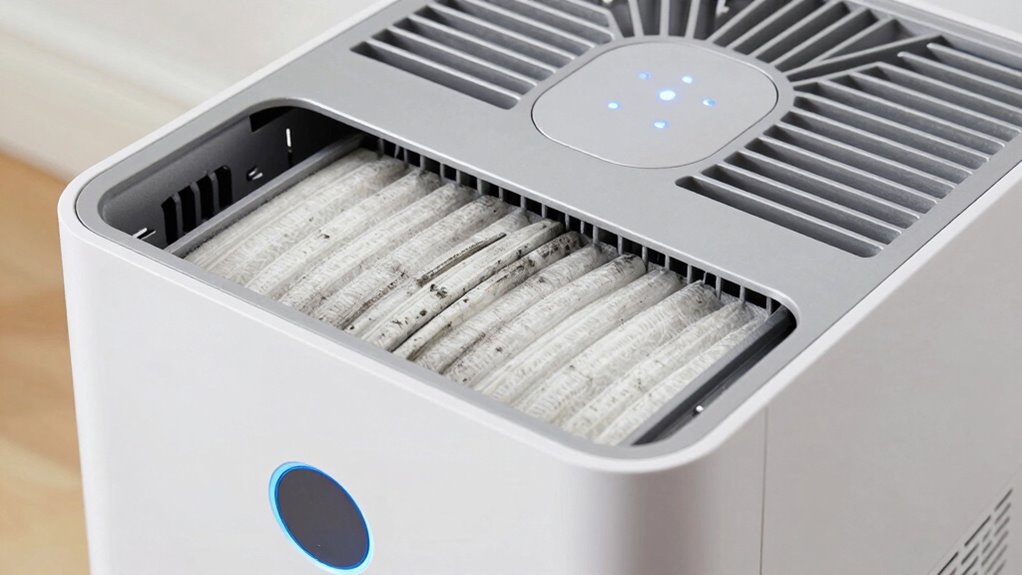
To maximize your filter’s lifespan, it’s a good idea to follow some basic replacement tips. First, check the manufacturer’s guidelines often found in the user manual or on the packaging. These recommendations are tailored specifically to your model and will give you a clear idea of how often to replace the filter. In general, it’s wise to inspect your filter monthly, especially if you’re in an area with high pollution or if you have pets. If you notice a significant buildup of dust or a noticeable decline in air quality, it’s time for a replacement, even if the recommended interval isn’t up yet. Conversely, if your environment is relatively clean and you don’t use your purifier heavily, you might stretch the interval slightly longer, but don’t push it too far.
Another helpful tip is to keep track of your filter changes, either by marking a calendar or setting reminders. This way, you won’t forget to replace the filter at the right time. When it’s time to swap it out, turn off the purifier and carefully remove the old filter. Dispose of it properly—some filters can be recycled, but always follow local disposal regulations. Installing a new filter is straightforward: ensure it’s seated correctly and securely, then turn the unit back on. Regularly changing your filter not only maintains excellent air quality but also preserves the longevity of your air purifier. Remember, a clean filter allows the device to operate efficiently, saving you energy and prolonging its lifespan. Additionally, understanding the contrast ratio of your air purifier can help you evaluate how well it handles dark or complex environments, contributing to better overall air quality management.
Frequently Asked Questions
Can I Use Generic Filters Instead of Brand-Specific Ones?
Yes, you can use generic filters instead of brand-specific ones, but you should check filter compatibility first. Brand vs. generic filters may differ in size, material, and filtration quality. If the generic filter fits your air purifier and meets the required standards, it can be a cost-effective alternative. However, using incompatible filters could reduce efficiency or damage your device, so always verify compatibility before switching.
How Do I Dispose of Used Air Purifier Filters Safely?
Think of used air purifier filters as tiny treasure chests filled with trapped pollutants. To dispose of them safely, you should handle them carefully, sealing them in a plastic bag to prevent airborne hazards. Check local hazardous waste regulations, as some filters contain harmful substances needing special disposal. Never toss them in regular trash. Proper filter disposal keeps your environment clean and safe, like turning old treasures into responsible choices.
Do Filters Need Replacement After Cleaning?
Cleaning your air purifier filter can extend its lifespan temporarily, but it doesn’t eliminate the need for replacement. After several cleanings, the filter’s effectiveness decreases, and particles can clog it, reducing air quality. Always follow your manufacturer’s guidelines on filter cleaning and replacement schedules. Remember, even if you clean your filter regularly, it’ll eventually need replacing to guarantee peak air purification and maintain healthy indoor air quality.
What’s the Cost Difference Between Various Filter Types?
The cost difference between filter types varies based on filter material and lifespan. HEPA filters, made from dense fibers, tend to be pricier but last longer, often around 6-12 months. Charcoal filters are usually cheaper but need replacing more frequently, about 3-6 months. Synthetic filters are affordable and have a moderate lifespan. Consider your budget and air quality needs to choose the best filter type for you.
Are There Filters Suitable for Allergy Sufferers?
So, you’re battling airborne allergens and want a filter that actually works? Luckily, there are HEPA filters designed for allergy sufferers that trap tiny particles like pollen, pet dander, and dust mites. These filters are highly effective, boosting filter effectiveness and giving you relief. Skip the cheap stuff; invest in a true allergen filter, and breathe easier knowing your air purifier is fighting the good fight against allergy triggers.
Conclusion
Remember, your air purifier filter needs replacing every 6 to 12 months to keep your air clean. Did you know that a dirty filter can trap up to 90% of airborne pollutants, turning your purifier into a breeding ground for bacteria? By sticking to a regular schedule, you’ll breathe healthier air and extend your device’s lifespan. Keep track of your filter’s age, and don’t wait until you notice reduced airflow—your lungs will thank you!