
When blending scents for your diffuser, understanding top, middle, and base notes helps you create a balanced aroma. Top notes are light and fresh, like citrus or eucalyptus, that refresh the space quickly. Middle notes are floral or herbal, such as lavender or rose, adding depth. Base notes are rich and long-lasting, like sandalwood or vanilla, grounding the scent. By layering these thoughtfully, you’ll craft an enchanting fragrance—keep exploring to master this art further.
Key Takeaways
- Top notes are light, fresh scents like citrus or eucalyptus that create an initial burst of aroma.
- Middle notes develop after the top notes and include floral or herbal scents like lavender or rose.
- Base notes are rich, long-lasting scents such as sandalwood or vanilla, providing depth and longevity.
- Blending all three notes creates a balanced, evolving fragrance that enhances ambiance over time.
- Experimenting with combinations helps craft personalized diffuser blends tailored to desired moods.
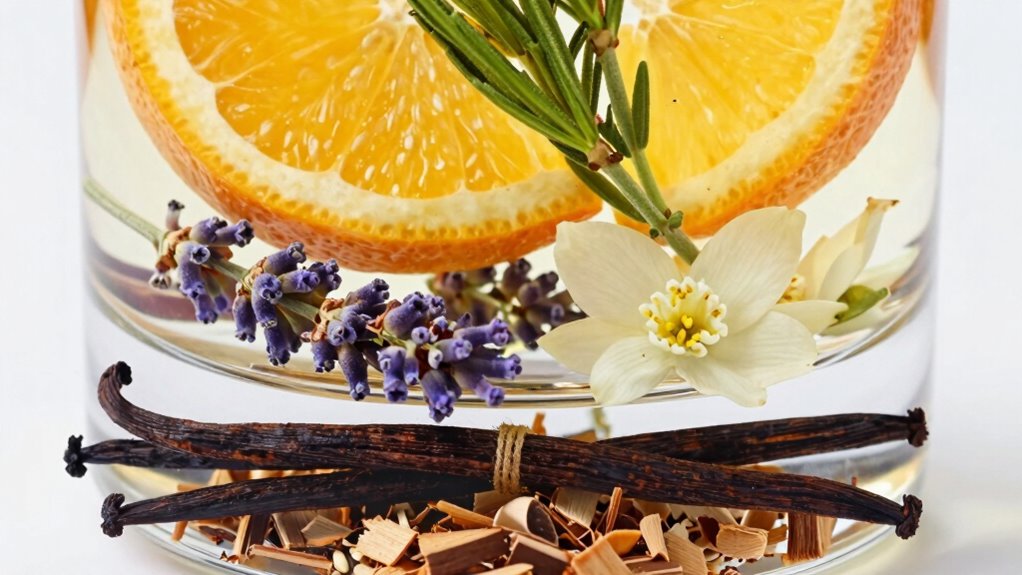
Choosing the right perfume notes for diffusers can transform your space into a welcoming oasis. When you get it right, your home or office becomes a place where you feel relaxed, energized, or simply at peace. One of the most effective ways to achieve this is through diffuser scent layering and experimenting with essential oil combinations. By understanding how top, middle, and base notes work together, you can craft a blend that’s both harmonious and personalized.
Diffuser scent layering involves blending different essential oils to create a balanced fragrance profile. Top notes are the first scents you smell and tend to be light and invigorating, such as citrus or eucalyptus. Middle notes, also called heart notes, form the core of your scent and often include floral or herbal aromas like lavender, rose, or chamomile. Base notes are the foundation, providing depth and longevity with richer scents such as sandalwood, vanilla, or cedarwood. When you combine these layers thoughtfully, your diffuser releases a complex, inviting aroma that evolves over time.
Layering essential oils creates a balanced, evolving diffuser fragrance with top, middle, and base notes.
Essential oil combinations are key to mastering diffuser scent layering. For instance, pairing lemon and peppermint as top notes with a heart of lavender and a base of cedarwood creates a fresh yet grounding atmosphere. You could also blend orange and bergamot for a citrusy lift, then add a middle layer of jasmine or ylang-ylang to introduce floral softness, finished with a touch of patchouli or amber for warmth. The trick is to balance the intensity and longevity of each note to ensure your diffuser’s scent isn’t overpowering or too fleeting.
When experimenting with essential oil combinations, start with small amounts and gradually increase until you find the right balance. Use the diffuser to test your blends, paying attention to how the scent develops over time. Remember that diffuser scent layering isn’t just about mixing fragrances; it’s about creating a scent story that suits your mood and space. Don’t be afraid to try different combinations until you discover what feels most natural and appealing to you.
Ultimately, choosing the right perfume notes for your diffuser is about understanding how different scents interact and layering them intentionally. With a little practice, diffuser scent layering becomes an art form—allowing you to craft personalized atmospheres that enhance your environment and elevate your mood. The key is to be creative, patient, and attentive to how each essential oil combination influences the overall ambiance. Recognizing the role of scent layers can greatly improve your ability to design harmonious and appealing diffuser blends.
Frequently Asked Questions
How Do I Properly Layer Different Perfume Notes in a Diffuser?
To properly layer different perfume notes in a diffuser, start with layering techniques that balance top, middle, and base notes. Add lighter, fresh scents first, then introduce richer, deeper aromas gradually. This promotes scent harmony, ensuring each note complements the others without overpowering. Experiment with small amounts first, adjusting until you achieve a pleasing blend. Regularly test and refine your mix to create a well-rounded, inviting atmosphere.
Can I Mix Different Scent Notes Without Causing Clashing Aromas?
Yes, you can mix different scent notes without clashing by focusing on scent harmony and using blending techniques. Choose notes with complementary aromas, like citrus with florals or herbs with woody scents. Start with small amounts and gradually adjust until you achieve a balanced blend. Trust your nose and experiment patiently—this way, you’ll create a diffuser aroma that’s pleasing and well-rounded without overpowering or conflicting scents.
How Long Do Diffuser Blends Typically Retain Their Scent?
Imagine a gentle breeze carrying your favorite scent through a room; that’s how long diffuser blends typically retain their scent. Generally, you’ll notice good diffuser longevity for about 1 to 3 months, depending on factors like oil quality and diffuser type. For ideal scent retention, top off your diffuser regularly and keep it in a well-ventilated space, ensuring you enjoy consistent aroma without fading too quickly.
Are There Any Safety Tips for Using Essential Oils in Diffusers?
Yes, there are safety tips for using essential oils in diffusers. Always guarantee proper essential oil dilution to avoid skin or respiratory irritation. Place your diffuser in a well-ventilated area and avoid placing it near windows or vents to prevent overexposure. Keep the diffuser out of reach of children and pets. Regularly clean the device to prevent mold or buildup, ensuring a safe and pleasant experience.
What Are the Best Diffuser Notes for Creating a Calming Atmosphere?
To create a calming atmosphere, you should choose diffuser notes that promote aromatic harmony and scent longevity. Opt for essential oils like lavender, chamomile, and ylang-ylang, which are known for their relaxing properties. These notes blend well to foster tranquility and maintain a soothing aroma throughout the day. By combining these calming scents, you’ll cultivate an environment that’s both peaceful and inviting.
Conclusion
Don’t worry if you’re new to diffuser blends—experimenting with top, middle, and base notes can seem overwhelming, but it’s easier than you think. By mixing scents thoughtfully, you’ll create a personalized, calming atmosphere that lasts. Remember, there are no strict rules—trust your nose and adjust as you go. Soon, you’ll enjoy a beautifully balanced space filled with your favorite aromas, transforming your home into a fragrant sanctuary effortlessly.