

When you stop smelling your oils, it’s due to olfactory adaptation, a natural process where your nose adjusts to constant scents to prevent overload. Your olfactory system quickly filters out familiar odors, making them seem to disappear. To fix this, you can regularly switch scents or try olfactory training to keep your sense of smell sharp. Keep exploring, and you’ll discover how to maintain the freshness of your aromatherapy experiences.
Key Takeaways
- Olfactory adaptation causes your nose to become less sensitive to constant scents, leading to the sensation of “stopping” smelling your oils.
- This natural process helps prevent sensory overload but can diminish the perceived strength of your essential oils over time.
- Regularly switching or alternating scents resets olfactory receptors, restoring sensitivity and preventing scent fatigue.
- Incorporating a variety of contrasting scents, like citrus or mint, keeps your olfactory system engaged and responsive.
- Practicing olfactory training and mindful scent rotation enhances your ability to detect subtle aroma differences and maintains aromatherapy effectiveness.
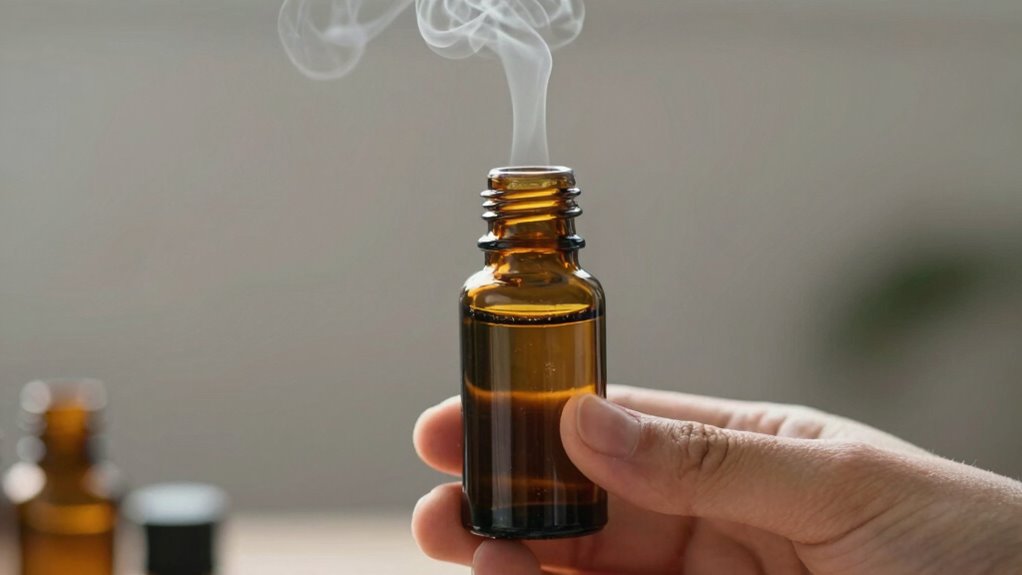
Have you ever noticed how your favorite scent seems to fade after a while? You initially smell a calming lavender or energizing citrus, but soon, it just doesn’t seem to be there anymore. That’s because of a phenomenon called scent fatigue, which occurs when your nose gets used to a particular smell and stops noticing it. Your olfactory system, designed to detect new and changing scents, adapts quickly, making familiar odors seem to disappear even if they’re still present. This can be frustrating, especially if you’re relying on aromatherapy for relaxation or focus. The good news is that there’s a way to combat scent fatigue: olfactory training.
Olfactory training involves intentionally exposing yourself to different scents to keep your sense of smell sharp and responsive. Instead of sticking with one fragrance for long periods, you switch things up, allowing your olfactory receptors to reset and remain sensitive. Think of it as a workout for your nose. By regularly introducing new or contrasting scents, you prevent your nose from becoming desensitized. This process enhances your ability to detect subtle differences and makes your aromatherapy sessions more effective. When you practice olfactory training, you’re actively maintaining your sense of smell’s acuity, ensuring that the aromas continue to influence your mood and well-being.
It’s important to recognize that scent fatigue isn’t a flaw in your sense of smell; it’s a natural response designed to prevent sensory overload. Your brain filters out constant stimuli to focus on new or more important signals, which is why familiar scents seem to vanish. To avoid this, consider setting aside time during your aromatherapy routine to switch scents or incorporate different essential oils into your sessions. This not only prevents scent fatigue but also keeps your olfactory senses engaged and receptive. For example, if you’ve been diffusing eucalyptus for relaxation, try alternating with peppermint or orange for a few days. This variation keeps your nose alert and amplifies the benefits of your aromatherapy practice. Additionally, understanding the concept of Free Floating scents can help you better appreciate how your olfactory system adapts and how to manage scent exposure effectively.
Frequently Asked Questions
Can You Reverse Olfactory Adaptation Quickly?
Yes, you can reverse olfactory adaptation quickly. When you experience scent desensitization or olfactory fatigue, take a break from smelling the oils for a few minutes. You can also inhale fresh air or a different scent to reset your sense of smell. Once you do this, your olfactory receptors become more responsive, allowing you to enjoy the aroma again without long delays.
Does Olfactory Adaptation Affect All Scents Equally?
A wise saying goes, “You never miss the water till the well runs dry.” Olfactory adaptation doesn’t affect all scents equally; some fade faster than others. Your scent sensitivity varies based on aroma complexity and strength, causing olfactory fatigue differently. Stronger or more familiar scents may trigger quicker adaptation, while subtle ones linger longer. To keep enjoying your oils, switch scents regularly and give your nose a break.
How Long Does Olfactory Adaptation Typically Last?
Olfactory adaptation usually lasts from a few minutes to about 30 minutes, depending on your duration tolerance and scent habituation. During this time, your nose becomes less sensitive to the aroma, making it seem like you’re not smelling it anymore. To reset your sense of smell, take breaks or switch scents. This helps prevent scent habituation and keeps your aromatherapy sessions effective and enjoyable.
Are Some People More Prone to Olfactory Adaptation?
Yes, some people are more prone to olfactory adaptation due to sensory fatigue and scent saturation. If you’re exposed to strong or continuous scents, your nose becomes less sensitive faster, making it harder to pick up the aroma. Factors like genetics, nasal health, and exposure frequency influence your susceptibility. To avoid this, take breaks and rotate scents, helping your olfactory system stay alert and responsive.
Can Olfactory Adaptation Impact Therapeutic Aromatherapy Benefits?
Sensory fatigue from olfactory adaptation can lessen aromatherapy’s therapeutic benefits, even when scent intensity remains high. As your nose becomes accustomed, your perception diminishes, potentially reducing the healing effects. This paradox means that despite persistent scents, your ability to benefit decreases. To counteract this, vary scents or take breaks, ensuring your olfactory system stays responsive and you maximize the therapeutic potential of your oils.
Conclusion
Next time you notice your scent fading, remember it’s like trying to hear a constant background hum—you eventually stop noticing it because your nose adapts. I once used lavender oil daily, and at first, it filled the room; later, I barely noticed it. That’s olfactory adaptation. To keep enjoying your oils, take breaks or switch scents. Think of it as tuning your senses—sometimes, you need to reset to truly appreciate the aroma again.