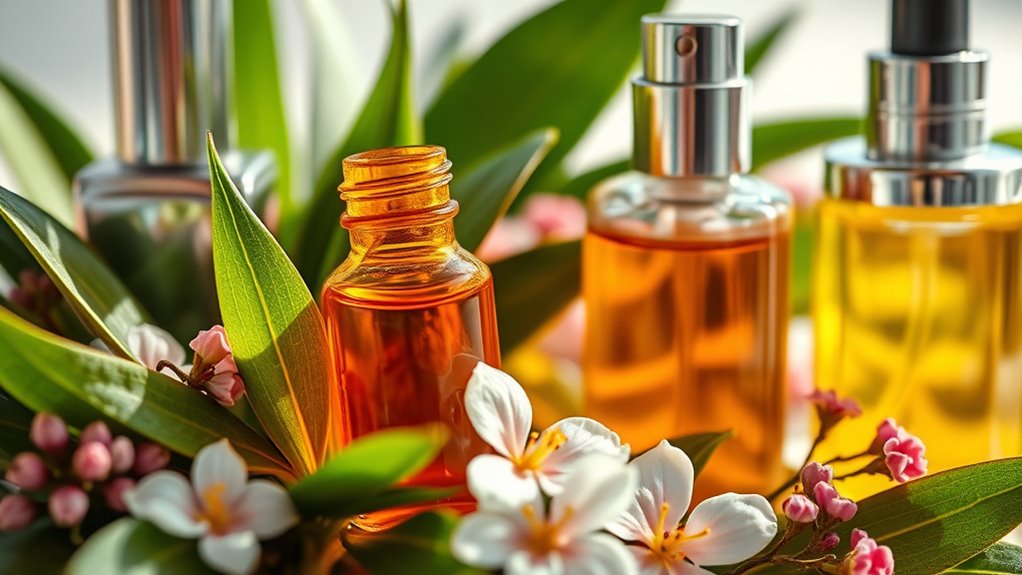

Choosing between natural and synthetic fragrances depends on what you value most. Natural oils offer authentic scents and environmental benefits when sustainably sourced, but they can vary batch to batch. Synthetic fragrances provide consistent, versatile scents but may have a larger environmental footprint. Your decision may hinge on authenticity, sustainability, or reliability. To discover more reasons behind each choice and how to pick what’s best for you, keep exploring the differences.
Key Takeaways
- Natural aromatic oils offer authentic scents derived from plants, while synthetics provide consistent and customizable fragrances.
- Natural oils are renewable and biodegradable, but may vary in scent due to environmental factors; synthetics ensure uniformity.
- Choosing natural oils supports sustainable harvesting when sourced responsibly, whereas synthetics reduce pressure on wild plant populations.
- Synthetic fragrances often have a longer shelf life and greater scent stability compared to natural oils.
- Consider personal values: natural oils for authenticity and eco-friendliness, synthetics for reliability and versatility.

When choosing a fragrance, you might wonder whether natural or synthetic options are better for you. It all comes down to understanding their differences in chemical composition and environmental impact. Natural fragrances are derived from plant extracts, essential oils, and other organic materials, giving them a complex and authentic scent profile. Synthetic fragrances, on the other hand, are made through chemical processes that create aroma compounds not always found in nature. These synthetic compounds can be engineered to produce specific scents, making them versatile and often more consistent in quality.
Your choice can be influenced by how these fragrances are made. Natural oils contain a variety of compounds naturally present in plants, but their chemical composition can vary depending on factors like harvest time, climate, and extraction methods. This variability can lead to subtle differences in scent from batch to batch. Synthetic fragrances are designed with precise chemical formulas, resulting in a more uniform scent every time. This consistency appeals to many who want reliability in their fragrance experience. However, this controlled chemical composition also means that synthetic fragrances may lack the depth and complexity found in natural oils.
Environmental impact plays a significant role in your decision as well. Producing natural fragrances often involves harvesting large quantities of plant material, which can put pressure on ecosystems and contribute to deforestation or habitat loss if not managed sustainably. Although natural oils are biodegradable and generally considered environmentally friendly, their extraction processes can sometimes involve the use of solvents and water-intensive practices. Synthetic fragrances are created in laboratories, which reduces the need for plant harvesting, but their production involves chemical manufacturing that can produce waste and emissions. Some synthetic compounds are derived from petrochemicals, raising concerns about fossil fuel dependency and pollution. Additionally, the development of biodegradable synthetic compounds is helping to reduce some of these environmental impacts.
If you’re environmentally conscious, you might weigh these factors carefully. Natural fragrances are renewable and biodegradable, but their sourcing must be sustainable to truly be eco-friendly. Synthetic options, while potentially less impactful on wild plant populations, come with their own environmental challenges due to chemical manufacturing and disposal. Advances in sustainable sourcing practices are helping to mitigate some of these concerns. It’s also worth noting that ongoing research into green chemistry aims to develop more environmentally friendly synthetic fragrances. Ultimately, your choice depends on what qualities matter most to you—authenticity and sustainability or consistency and versatility. Both options have their merits and drawbacks, so understanding their chemical composition and environmental impact helps you make an informed decision aligned with your values and preferences.
Frequently Asked Questions
Are Natural Fragrances More Environmentally Sustainable Than Synthetic Ones?
You might wonder if natural fragrances are more eco-friendly than synthetic ones. Generally, natural fragrances often involve eco-friendly sourcing, reducing chemical waste and supporting sustainable farming. They tend to be more biodegradable, breaking down more easily in the environment. However, this isn’t always guaranteed, so it is crucial to check specific brands’ practices. Overall, choosing natural aromatic oils can be a more sustainable option, especially if they prioritize eco-conscious production methods.
How Do Synthetic Fragrances Impact Allergy Sufferers Differently?
Did you know that about 30% of allergy sufferers report increased reactions to synthetic fragrances? Synthetic irritants can trigger allergy sensitivity more intensely, causing symptoms like sneezing, headaches, or skin rashes. If you’re sensitive, you might find that synthetic fragrances worsen your symptoms, unlike natural oils which tend to be gentler. Being aware of these impacts helps you choose products that support your well-being and reduce allergic reactions.
Can Natural Fragrances Cause Allergic Reactions?
You might wonder if natural fragrances can cause allergic reactions. While they often have hypoallergenic properties, they still contain plant-based irritants that can trigger sensitivities in some people. If you have allergies, it’s essential to test a small amount first and choose products with known hypoallergenic qualities. Natural doesn’t always mean completely safe, but many find they tolerate plant-based aromatic oils better than synthetic options.
What Is the Typical Cost Difference Between Natural and Synthetic Oils?
Think of the cost comparison as a journey through a diverse landscape. Natural oils often stand taller, symbolizing rarity and purity, and tend to have higher pricing factors due to extraction and sourcing. Synthetic oils, like a well-worn path, are more accessible and affordable. Your choice hinges on these pricing factors, with natural options usually costing more because of their quality, purity, and production process, making them a valued treasure.
Do Natural Fragrances Have a Longer Shelf Life Than Synthetic Alternatives?
You might wonder if natural fragrances last longer than synthetic ones. Generally, natural oils have shorter shelf stability because they lack synthetic preservatives. Proper preservation techniques, like storing in cool, dark places, can help extend their freshness. Synthetic fragrances tend to be more stable over time, maintaining their scent quality longer. So, if longevity matters most, synthetic options often offer better shelf stability, but natural oils can still be preserved effectively with proper care.
Conclusion
Choosing between natural and synthetic fragrances is like selecting your own adventure—each offers a unique path. Natural oils bring the purity of a forest breeze, while synthetics offer endless creativity, like Da Vinci’s endless innovations. Ultimately, your choice reflects your personal story. Embrace what resonates with you, and let your scent be your signature—an invisible masterpiece, whispering your essence to the world.