Across cultures worldwide, scent healing blends aromatic herbs, resins, and infusions into rituals that purify spaces, strengthen spiritual bonds, and support physical health. From burning frankincense in the Middle East to using herbal baths in Europe, these practices help create sacred and healing environments. They often serve as tools for protection, wellness, and spiritual connection. If you want to explore more about these diverse traditions and their unique scents, you’ll find fascinating insights ahead.
Key Takeaways
- Aromatic herbs, resins, and oils are used globally in rituals to purify spaces, promote wellness, and foster spiritual connection.
- Cultures incorporate scent practices such as incense burning, herbal infusions, and oil burning for healing and spiritual elevation.
- Traditional scent rituals often involve combining herbs like jasmine, frankincense, or sage to balance energy and enhance mental clarity.
- Scent healing practices serve physical, emotional, and spiritual purposes across diverse societies, reflecting cultural identities.
- Multi-sensory experiences in aromatherapy include burning, inhalation, and topical application rooted in ancient healing traditions.

Aromatherapy has gained popularity worldwide as a natural way to promote relaxation and well-being. But beyond modern practices, many cultures have long embraced scent healing through traditional rituals and herbal infusions, blending aroma with spiritual and physical health. When you explore these cultural traditions, you see how deeply scent is woven into daily life, rituals, and healing practices across the globe.
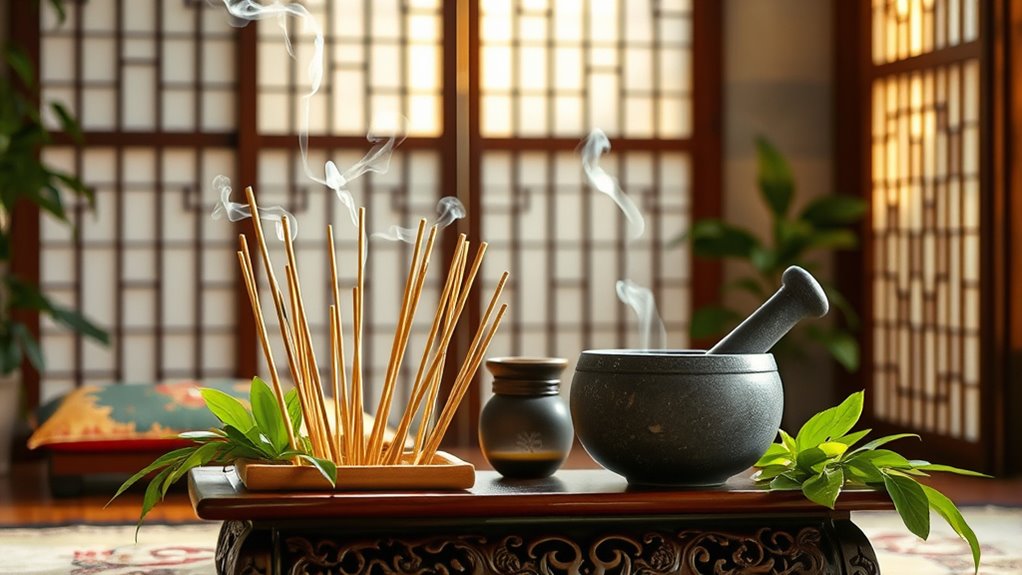
In many Asian cultures, particularly in India and China, traditional rituals involve aromatic herbs and oils to cleanse spaces and uplift spirits. You might participate in a Hindu puja, where fragrant incense and herbal infusions are used to purify the environment and invite positive energy. Similarly, Chinese medicine incorporates herbal infusions—like ginseng and jasmine—believed to balance Qi and promote mental clarity. These rituals often involve carefully prepared herbal infusions, which are either burned as incense or infused into oils, creating a multi-sensory experience that connects body, mind, and spirit.
Moving to the Middle East, you’ll find that scent plays a essential role in religious and social rituals. Traditional practices involve burning fragrant resins like frankincense and myrrh, which are believed to purify spaces and elevate spiritual consciousness. These resins are often combined with herbal infusions derived from local plants, creating a sensory environment that fosters both relaxation and spiritual connection. You might notice that these aromatic rituals are embedded in daily life—from cleansing homes to marking special occasions—highlighting scent’s role in fostering community and spiritual well-being.
Scent rituals in the Middle East purify spaces and foster spiritual connection through frankincense, myrrh, and local herbal infusions.
In Africa, aromatic herbs and essential oils are often used in healing ceremonies and traditional medicine. You could find yourself participating in a ritual where herbal infusions are prepared from local plants like lemongrass, rosemary, or eucalyptus. These infusions are either applied topically, inhaled, or burned as incense to help treat ailments or to invoke protection and blessings. The use of scent in these rituals isn’t just about physical healing; it’s also about connecting with ancestors and invoking spiritual protection, showing how deeply scent is intertwined with cultural identity. Additionally, many African cultures emphasize the importance of herbal infusions in maintaining health and spiritual harmony.
Across Europe, especially in Mediterranean regions, herbal infusions play a central role in folk medicine and wellness rituals. You might come across practices where herbal infusions are used in baths, massage oils, or as incense, meant to restore balance and promote health. These traditions often draw from ancient knowledge, blending herbs like lavender, sage, and rosemary into rituals that foster relaxation and mental clarity. Many of these practices have been passed down through generations, emphasizing the cultural importance of scent as a form of natural healing.
Frequently Asked Questions
How Do Different Cultures Select Their Signature Aromatic Plants?
You might wonder how different cultures choose their signature aromatic plants. Typically, they rely on herbal symbolism and cultural beliefs, associating specific scents with spiritual or health benefits. They also consider botanical origins, selecting plants native to their environment for authenticity and potency. This process reflects deep-rooted traditions, ensuring the aromatic choices resonate with cultural identity and natural surroundings, creating meaningful healing practices rooted in history and environment.
Are There Specific Rituals Associated With Scent Healing in Various Societies?
You’ll find that many societies associate scent healing with specific rituals. Ritual cleansing often involves burning incense or using essential oils during sacred ceremonies to purify spaces and individuals. These practices help connect participants to spiritual spheres or cultural traditions. You may observe offerings, prayers, or meditative acts intertwined with scent application, emphasizing the sacred role aromas play in fostering spiritual and emotional well-being across different cultures.
What Safety Precautions Are Taken in Traditional Aromatherapy Practices Globally?
Imagine stepping into a fragrant garden where each scent has a story. In traditional aromatherapy, you must prioritize essential oil safety by diluting concentrates and avoiding sensitive skin. Cultural sensitivity guides you to respect local customs and avoid misusing sacred aromas. By blending safety and respect, you create a harmonious balance that honors centuries-old healing practices while protecting your well-being.
How Has Modern Science Validated Traditional Scent Healing Methods?
Modern science has begun to validate traditional scent healing methods through scientific validation studies, showing that certain essential oils can influence mood and reduce stress. However, you should be aware that some benefits might also be due to placebo effects. Researchers emphasize the importance of rigorous testing to distinguish genuine therapeutic effects from placebo responses, helping to integrate traditional practices into evidence-based approaches while respecting cultural origins.
Can Cultural Aromatherapy Practices Be Integrated Into Contemporary Wellness Routines?
While modern wellness often emphasizes science, don’t overlook the historical significance and cultural symbolism behind traditional scent practices. You can seamlessly integrate cultural aromatherapy into your routine by respecting its roots and adapting techniques mindfully. This fusion enriches your experience, blending time-honored wisdom with contemporary self-care, creating a holistic approach that honors diversity and enhances well-being. Embrace these practices to deepen your connection to different cultures and your own healing journey.
Conclusion
As you explore the world’s scent healing traditions, you realize how closely they intertwine with culture and history—almost like scents guiding you to a shared human experience. It’s funny how, amid diverse practices, a simple aroma can connect you to ancient rituals and modern wellness alike. So, next time you breathe in a calming essential oil, remember, you’re joining a global, timeless journey of healing through scent—united by the invisible power of aroma.