
Cross-cultural aroma traditions shape how you experience spirituality, hospitality, and healing rituals. Scents like sandalwood and oud enhance spiritual connection and signify warmth in gatherings. Indigenous practices use sage for cleansing and protection, promoting well-being in communities. The meanings of these aromas vary widely, reflecting cultural identities and histories. Engaging with these scent traditions offers deeper insights into human connection and emotional resonance. Discover how aromas enrich your understanding of diverse cultures and their legacies.
Key Takeaways
- Scents play a vital role in spirituality, enhancing meditation and prayer through aromatic rituals in various religions.
- In the Middle East, oud serves as a symbol of hospitality, creating inviting atmospheres during social gatherings.
- Indigenous cultures, such as those in South America, use sage smudging for cleansing and protection, embodying healing practices.
- Scent symbolism differs across cultures, reflecting historical, geographical, and spiritual beliefs that enrich our understanding of diverse traditions.
- Engaging with aroma traditions reveals cultural identities and preserves historical legacies, connecting individuals to their heritage and each other.
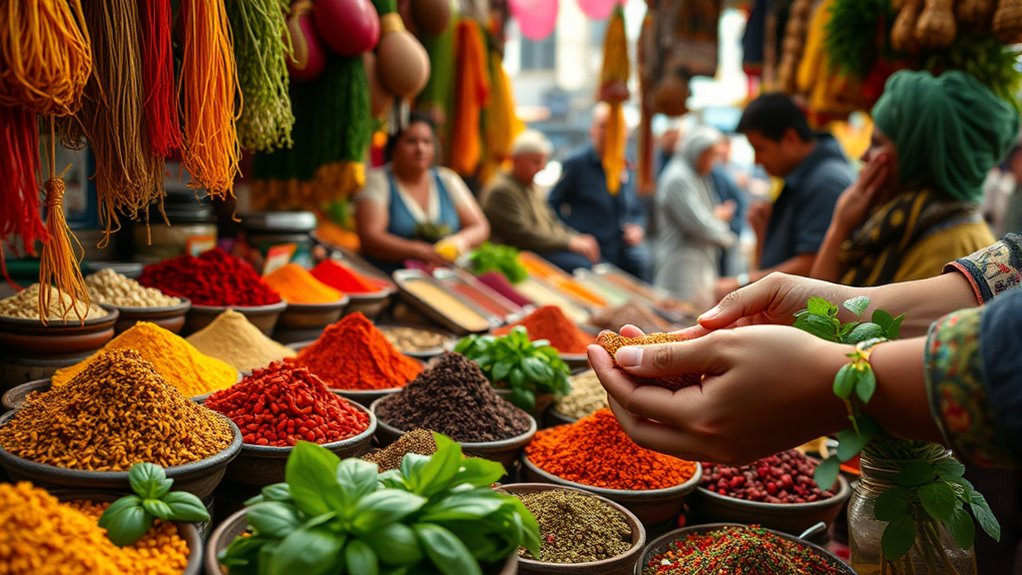
When you explore the diverse world of aroma traditions, you’ll find that scent isn’t just a sensory experience; it’s deeply woven into the fabric of cultures. Each culture around the globe has its unique relationship with aroma, and within that relationship lies rich layers of meaning. You’ll discover that scents often carry profound symbolism, representing everything from spirituality to community ties. Engaging with these aromas provides not just a pleasant experience but also a window into the values and beliefs of different societies.
Consider, for instance, the use of incense in many Eastern religions. When you step into a temple, the fragrant wafts of sandalwood or jasmine invite you to reflect and connect with the divine. These aromatic rituals, performed during prayer or meditation, serve as a bridge between the physical and spiritual worlds. The scent becomes a powerful tool, enhancing your focus and deepening your sense of presence. It’s fascinating how something as simple as a fragrance can evoke such intense feelings and connections.
The fragrant wafts of incense in temples bridge the physical and spiritual, deepening our connection to the divine.
In the Middle East, you’ll find the tradition of using oud, a rich, woody scent derived from agarwood. It symbolizes luxury and hospitality, often used during gatherings to create an inviting atmosphere. When you enter a home where oud is burnt, you feel the warmth of welcome and generosity. This aromatic ritual transcends mere enjoyment, creating bonds between hosts and guests, making you part of a shared experience that honors relationships.
Moving to South America, indigenous peoples often use plants like sage for cleansing and protection. The ritual of smudging, where smoke from burning sage is wafted over people or spaces, is steeped in tradition and belief. You’ll notice how this practice embodies the symbolism of purification and healing, inviting you to participate in something much larger than yourself—a communal effort towards balance and well-being.
As you travel through these diverse aroma traditions, you’ll realize that scent symbolism isn’t universal; it’s intricately tied to history, geography, and spiritual beliefs. Every aromatic ritual offers a glimpse into the heart of a culture, revealing how deeply scents can influence emotions, relationships, and even spiritual practices. By embracing these aromas, you connect with the stories and legacies behind them, enriching your understanding of humanity’s shared experience. The world of scents is waiting for you to explore, inviting you to set out on a journey through time and culture, one fragrance at a time. Additionally, the use of incense in many Eastern religions highlights the significance of scent in enhancing spiritual practices and creating a deeper connection to the divine.
Frequently Asked Questions
How Can I Incorporate Aroma Traditions Into My Daily Routine?
To incorporate aroma traditions into your daily routine, start by integrating daily scent practices. You can create your own aromatherapy rituals by using essential oils that uplift your mood or promote relaxation. Diffuse calming lavender while you work or apply invigorating citrus oils before a workout. Experiment with different scents during meditation to enhance focus. By consciously choosing aromas that resonate with you, you’ll enrich your everyday experiences and foster well-being.
Are There Any Health Risks Associated With Certain Aromas?
Yes, there can be health risks associated with certain aromas. You should be cautious with essential oils, as some can cause toxicity if used improperly—especially in concentrated forms. Also, watch for allergic reactions; certain scents might trigger asthma or skin irritations. Always dilute essential oils and perform a patch test before using them extensively. Keeping these precautions in mind will help you enjoy the benefits of aromas while minimizing potential health risks.
What Are the Best Sources for Learning More About Aroma Traditions?
To learn more about aroma traditions, explore books and documentaries focusing on aroma history and cultural practices. Websites dedicated to anthropology and cultural studies also offer valuable insights. Visiting museums with exhibits on indigenous practices can deepen your understanding. Additionally, joining workshops or online forums where enthusiasts discuss their experiences can enhance your knowledge. Engaging with diverse communities will provide you with richer perspectives on how aromas shape different cultures.
Can Aroma Traditions Vary Significantly Within the Same Culture?
Absolutely, aroma traditions can vary considerably within the same culture! Imagine walking through different regions, each with its own unique scents. You’ll discover that cultural variations often arise from local ingredients or historical influences. One area might favor floral fragrances, while another leans towards earthy aromas. These regional differences create a rich tapestry of olfactory experiences, showcasing how even the same culture can express itself in diverse aromatic ways. Isn’t that fascinating?
How Do I Choose the Right Aroma for Specific Occasions?
To choose the right aroma for specific occasions, consider the cultural symbolism tied to scents and your seasonal preferences. For festive gatherings, opt for warm spices like cinnamon or nutmeg, which evoke feelings of comfort and joy. During spring, fresh florals like jasmine can uplift the mood. Always think about the event’s atmosphere; a calming lavender works well for relaxation, while invigorating citrus can energize a lively celebration. Trust your instincts, and enjoy the process!
Conclusion
In exploring cross-cultural aroma traditions, you’ve uncovered how scents connect us across time and place. Whether it’s the calming scent of lavender in Europe or the invigorating notes of sandalwood in Asia, each culture offers a unique olfactory experience that speaks to the heart. Isn’t it fascinating how a simple fragrance can evoke memories and emotions, bridging gaps between diverse backgrounds? Embrace these aromatic traditions, and let them enrich your life and understanding of the world around you.