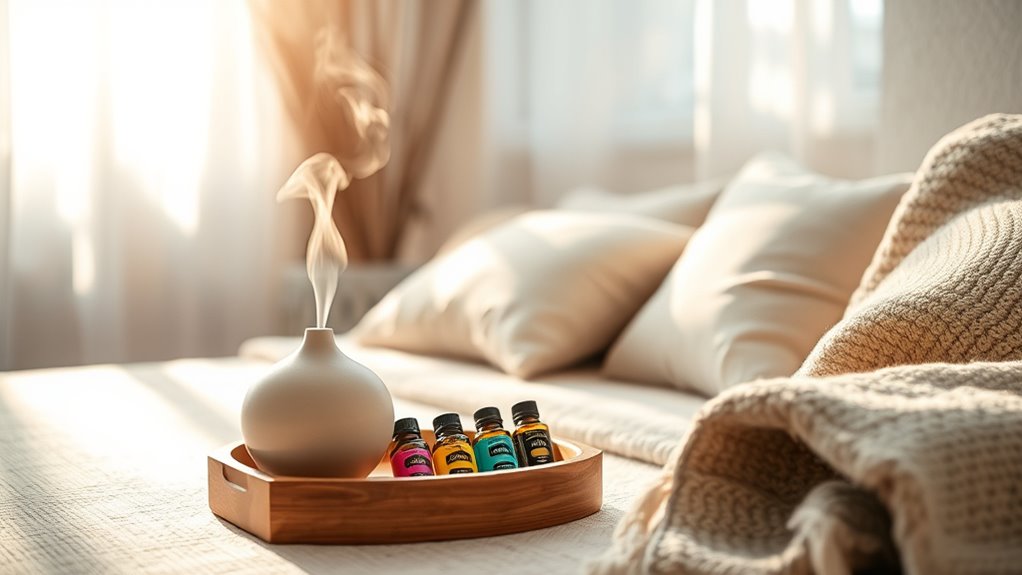

Aromatherapy can greatly enhance your meditation and mindfulness practice by creating a calming, focused environment with natural essential oils. Scents like lavender promote relaxation, while peppermint sharpens focus, helping anchor your attention. Diffusing oils or inhaling directly supports mental clarity and inner calm. By adjusting scent intensity and choosing what suits your mood, you’ll find it easier to stay present. Exploring these techniques further can help you develop a personalized approach to deepen your mindfulness journey.
Key Takeaways
- Incorporate essential oils like lavender or peppermint through diffusing or direct inhalation to enhance focus and relaxation during meditation.
- Use targeted scents to activate the olfactory system, linking aromas to emotions and deepening mindfulness practices.
- Create a subtle, calming environment by adjusting scent intensity, fostering a space conducive to inner peace and concentration.
- Personalize aromatherapy methods—diffusing, applying, or inhaling—to suit individual preferences and maximize benefits.
- Incorporate essential oils as a natural mindfulness tool to deepen meditation, promote mental clarity, and support long-term inner calm.

Have you ever wondered how scents can deepen your meditation or enhance mindfulness? The answer lies in the power of essential oils and scent therapy. These natural extracts from plants aren’t just pleasant aromas; they can profoundly influence your mental state, helping you achieve a more focused and relaxed meditation session. When you incorporate essential oils into your practice, you’re engaging in a form of scent therapy that can elevate your mindfulness to new levels. The right aroma can anchor your attention, calm your racing thoughts, and create an environment conducive to inner peace.
Using essential oils in your meditation routine is straightforward. You can diffuse them in the air, add a few drops to a cotton ball or tissue placed near your nose, or dilute them with a carrier oil and apply to your wrists or temples. Each method allows you to experience the aromatic benefits directly. When you breathe in these scents, you’re activating your olfactory system, which is closely linked to the limbic system—the part of your brain responsible for emotions and memory. This connection means that certain scents can evoke feelings of calmness, clarity, or even joy, making your meditation more impactful. Incorporating aromatherapy techniques into your practice can further enhance these effects.
Breathing in essential oils activates your olfactory system, linking scents to emotions and enhancing meditation.
Lavender, for example, is widely known for its relaxing properties. When you incorporate lavender essential oil into your scent therapy, you’ll notice a soothing effect that can ease anxiety and promote restful breathing. Peppermint, on the other hand, can invigorate your mind, sharpening focus and mental clarity, perfect for those times when your thoughts feel scattered. Eucalyptus is another potent option, especially if you’re feeling congested or mentally foggy; its crisp aroma can clear your mind and energize your senses. By choosing the right essential oils for your needs, you empower yourself to craft a personalized meditation environment that supports your mental state.
It’s important to remember that scent therapy isn’t about overpowering your space but creating a subtle, inviting atmosphere. Start with small amounts of essential oils and adjust based on your preferences. As you become more familiar with how different scents influence your mood and concentration, you’ll naturally refine your approach. Incorporating essential oils into your meditation practice is a simple yet effective way to deepen your mindfulness, making each session more immersive and restorative. With consistent use, you’ll discover that these natural aromas can become a crucial part of your mindfulness toolkit, guiding you toward greater inner calm and mental clarity.
Frequently Asked Questions
Can Aromatherapy Replace Traditional Meditation Practices?
You might wonder if aromatherapy can replace traditional meditation practices, but it’s better seen as a complementary therapy. Aromatherapy enhances your relaxation and supports stress reduction, helping you achieve a calmer state. While it can deepen your mindfulness and create a peaceful environment, it doesn’t replace the mental focus and discipline of meditation. Combining both can optimize your stress relief and overall well-being, making each practice more effective.
Are There Any Risks or Side Effects From Using Essential Oils?
You should know that using essential oils comes with some risks. Always follow safety precautions to prevent issues like allergic reactions or skin irritation. Dilute oils properly and do a patch test before applying them more broadly. While generally safe, some oils may cause sensitivities, especially if you’re pregnant or have health conditions. Being cautious helps you enjoy aromatherapy benefits safely and reduces potential side effects.
Which Scents Are Best for Beginners in Mindfulness?
Starting your journey with aromatherapy can be like opening a gentle door. For aromatherapy beginners, beginner scents like lavender, chamomile, and citrus are ideal, as they promote calm and focus without overwhelming your senses. These scents are easy to find and use, helping you ease into mindfulness practices. As a beginner, you’ll find that these soothing aromas create a peaceful environment, making your meditation sessions more enjoyable and effective.
How Long Should I Use Aromatherapy During Meditation Sessions?
You might wonder about the ideal duration for using aromatherapy during meditation. Generally, it’s best to follow duration guidelines of 15 to 30 minutes to avoid overstimulation. For maximum timing, start by diffusing essential oils just before you sit down and continue for the duration of your session. Adjust as needed based on how you feel, ensuring the scent enhances your focus without becoming overwhelming.
Can Aromatherapy Improve Mental Health Beyond Meditation?
Imagine your mind as a garden, and your emotional balance as the flowers and weeds within it. Aromatherapy acts like a gentle rain, nourishing your mental health beyond meditation. Studies suggest it can reduce anxiety, improve mood, and promote holistic wellness. So, yes, incorporating essential oils into your daily routine can help you cultivate emotional resilience and foster mental clarity, making your mental garden healthier and more vibrant overall.
Conclusion
Imagine transforming your meditation space with calming scents that deepen your mindfulness. Aromatherapy offers a simple yet powerful way to enhance your practice, helping you stay present and relaxed. Are you ready to harness the power of essential oils to elevate your meditation journey? By incorporating these natural aromas, you can create a peaceful environment that nurtures your mind and soul. So, why not try it today and experience the difference for yourself?