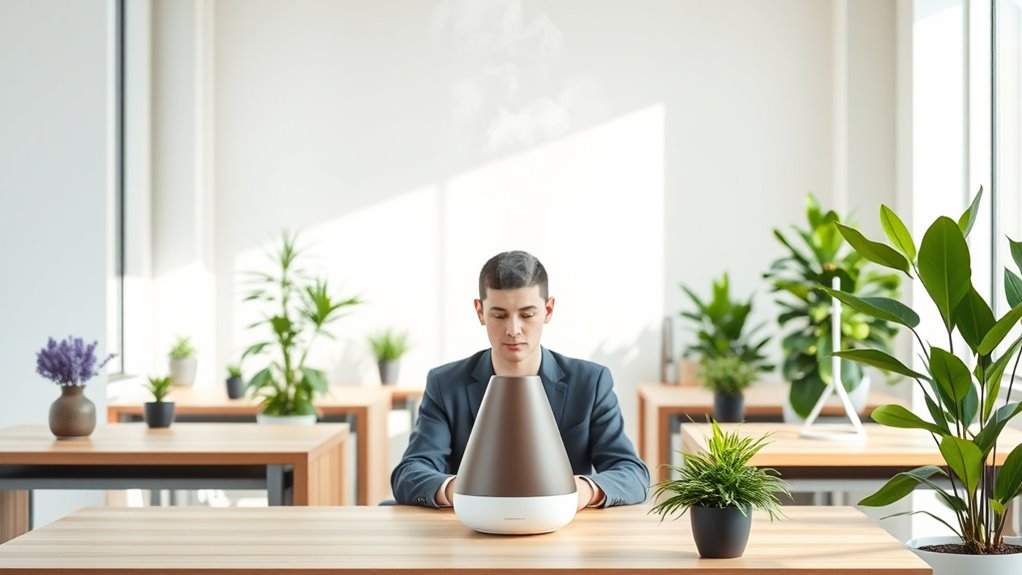

Using aromatherapy in your workplace can boost focus, reduce stress, and lift your mood. Diffusing calming scents like lavender or chamomile helps you relax, while energizing aromas like citrus or peppermint can increase alertness. Scientific insights show that scents influence brain activity and emotions, making them powerful tools for productivity. By choosing the right scents, you can create a more positive, balanced environment—keep exploring to find out how scent can transform your workday.
Key Takeaways
- Aromatherapy enhances productivity by creating a calming or energizing environment through targeted scent selection.
- Diffusing scents like lavender reduces stress, helping employees focus and perform better under pressure.
- Scientific research supports using essential oils to influence brain activity and emotional states positively.
- Energizing aromas such as citrus or peppermint boost mood and motivation for improved task engagement.
- Incorporating mindful scent routines offers quick mental resets, supporting sustained concentration and overall well-being.

Aromatherapy is gaining popularity as a way to boost well-being and productivity in the workplace. When you incorporate scent into your daily routine, you can experience real benefits like stress reduction and mood enhancement. These effects aren’t just psychological; they can directly influence how well you perform your tasks and how you feel throughout the day. By using essential oils thoughtfully, you create an environment that supports focus, relaxes your mind, and fosters a positive attitude.
Stress reduction is one of the most immediate benefits you’ll notice with aromatherapy. When you’re feeling overwhelmed or anxious, diffusing calming scents like lavender or chamomile can help ease tension. These aromas activate receptors in your brain that promote relaxation, lowering cortisol levels and soothing your nerves. As a result, you’ll find it easier to concentrate and stay calm during high-pressure moments. Incorporating aromatherapy in your workspace isn’t complicated; a small diffuser or a few drops of oil on your desk can make a significant difference. When stress levels decrease, your overall well-being improves, leading to less burnout and a more resilient mindset. Additionally, understanding the scientific basis of scent effectiveness can help you select the most beneficial aromas for your needs. Recognizing the essential oils that promote relaxation can help tailor your aromatherapy routine more effectively.
Diffusing calming scents like lavender reduces stress and boosts focus, promoting relaxation and resilience in your workspace.
Mood enhancement is another key advantage. Certain scents, such as citrus or peppermint, are known to boost your energy and lift your spirits. These aromas stimulate your brain’s limbic system, which controls emotions and motivation, helping you feel more alert and positive. When you start your workday with an invigorating citrus scent or take a moment to inhale peppermint, you set a tone of enthusiasm and clarity. This can translate into better interactions with colleagues and a more proactive attitude toward your tasks. Consistently using mood-enhancing scents creates a more upbeat atmosphere, making your workspace more inviting and motivating. Moreover, scientific research supports the idea that scent can influence brain activity and emotional states, further emphasizing the importance of selecting the right aromas.
Using aromatherapy in the workplace also encourages mindfulness. Taking a few moments to breathe in a pleasant scent can serve as a mini-break, helping you reset and re-center. This simple act can break up the monotony of the workday, reducing fatigue and improving mental clarity. When your environment is infused with carefully selected scents, you’re more likely to feel upbeat and balanced, which supports sustained productivity. Just remember to choose the right oils for your goals—calming for stress relief and energizing for mood boosts—and use them consistently to maximize their benefits. Additionally, awareness of scent effectiveness, based on scientific understanding, can help you select the most beneficial aromas for your needs. Cultivating a mindful approach to scent selection amplifies the positive effects, making aromatherapy a powerful complementary strategy in your wellness toolkit.
Frequently Asked Questions
Are There Any Workplace Scent Policies to Consider?
When considering workplace scent policies, you should think about scent masking to reduce strong odors and respect employee preferences for certain scents. It’s important to establish guidelines that guarantee scents are subtle and non-intrusive, allowing everyone to work comfortably. By involving employees in policy creation, you can balance scent use and create a pleasant environment without causing discomfort or distraction, fostering a more productive and respectful workplace.
How Do I Choose the Right Essential Oils for Work?
When choosing the right essential oils, consider your personal preferences and the scent strength you find comfortable. Opt for calming scents like lavender or peppermint to boost focus and reduce stress. Test different oils in small amounts to see how they affect your mood and productivity. Keep in mind that subtle scents are often best for work, so choose oils that are pleasant but not overwhelming.
Can Aromatherapy Cause Allergies or Sensitivities?
Ever wondered if aromatherapy could cause allergic reactions or scent sensitivities? You should be aware that some essential oils may trigger allergic reactions or sensitivities, especially if you have existing allergies or respiratory issues. Always start with a patch test and use oils in moderation. Being cautious helps you enjoy aromatherapy benefits without risking discomfort or adverse effects from scent sensitivities.
What Are the Best Diffuser Types for Office Environments?
You should consider ultrasonic diffusers for office environments because they offer easy diffuser maintenance and allow you to adjust scent intensity precisely. These diffusers use vibrations to disperse essential oils without heat, preserving their potency. With adjustable settings, you can control how strong the scent is, preventing overwhelming odors. Their quiet operation makes them ideal for workspaces, helping you create a pleasant, focused atmosphere without distractions.
Is There Scientific Evidence Supporting Aromatherapy’S Productivity Benefits?
Scientific studies and effectiveness research suggest that certain scents can boost your focus and mood. While evidence varies, some research shows that aromas like peppermint or citrus may enhance alertness and reduce stress. You might notice improvements in productivity when using aromatherapy, but results depend on individual responses. Keep in mind that more extensive studies are needed, so try different scents to see what works best for you at work.
Conclusion
As you embrace aromatherapy at work, you’re planting seeds of calm and focus in your daily routine. The scents become more than just aromas—they symbolize clarity, motivation, and balance. When you breathe in these fragrant symbols, you’re nurturing your well-being, allowing productivity to blossom like a garden in full bloom. Remember, every scent is a gentle reminder that taking care of yourself is the true path to growth and success in your professional journey.