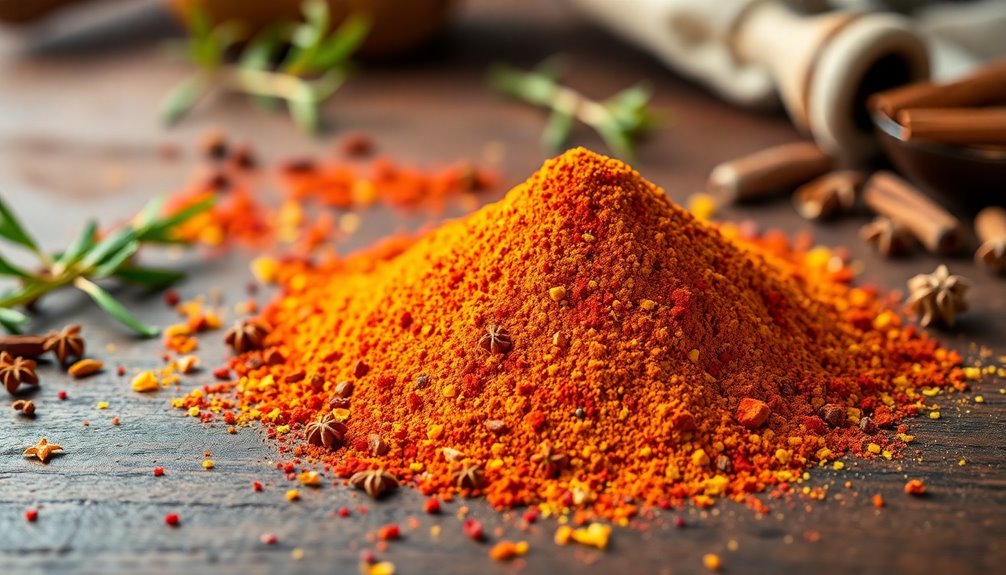
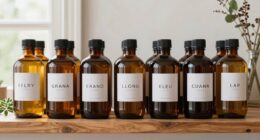
To calm your mind with aromatherapy, choose soothing essential oils like lavender, chamomile, or frankincense. Use a diffuser—ultrasonic or nebulizing—for consistent scent dispersion, and add a few drops of your chosen oil. Create a relaxing environment by focusing on the aroma during deep breathing or meditation. Properly dilute oils, patch test for sensitivity, and store them safely. If you keep exploring, you’ll discover more ways to incorporate aromatherapy into your stress relief routine.
Key Takeaways
- Choose calming essential oils like lavender, chamomile, or frankincense, and diffuse them in a suitable diffuser for relaxation.
- Dilute essential oils properly and perform patch tests to ensure safe skin contact before use.
- Incorporate deep breathing exercises while focusing on the aroma to enhance stress reduction.
- Create a peaceful environment by maintaining a clean diffuser and using high-quality, pure essential oils.
- Integrate aromatherapy into routines such as meditation or yoga to promote mental calmness and emotional balance.

Have you ever wondered if something as simple as scent can reduce stress? Aromatherapy offers a natural way to calm your mind and soothe your body, but it’s essential to approach it safely and effectively. When using essential oils for stress relief, understanding essential oil safety is critical. Not all oils are suitable for everyone, especially those with sensitive skin or respiratory issues. Always dilute essential oils properly and perform patch tests before widespread use. Keep in mind that some oils can cause skin irritation or allergic reactions, so it’s best to consult a healthcare professional if you have concerns. Proper storage is also important—keep your oils in dark, airtight containers away from direct sunlight to maintain their potency.
Prioritize safety with essential oils: dilute, patch test, and store properly to enjoy stress-relieving aromatherapy safely.
A key element in aromatherapy is how you disperse the scents. Aromatherapy diffuser types vary, and choosing the right one can enhance your experience. Ultrasonic diffusers are popular because they use water and vibrations to disperse a fine mist of essential oils into the air, providing a gentle, consistent aroma. Nebulizing diffusers, on the other hand, work without water, releasing pure, concentrated essential oil particles for a more intense scent. Heat diffusers, which warm oils to release fragrance, are simple but can alter the chemical composition of delicate oils, so they’re less ideal for stress-focused aromatherapy. Each diffuser type offers different benefits, so consider your space, budget, and scent preferences when selecting one. A good diffuser not only fills your environment with calming aromas but also ensures safe and effective dispersal of essential oils.
Once you’ve chosen your diffuser, creating a relaxing environment becomes straightforward. Add a few drops of stress-relieving essential oils such as lavender, chamomile, or frankincense to your diffuser. These scents are known for their calming properties and can help lower cortisol levels. Breathe deeply and focus on the aroma, allowing your mind to detach from stressors. Incorporating aromatherapy into your routine—whether during meditation, yoga, or just winding down after a long day—can make a noticeable difference. Remember, proper diffuser maintenance is important to prevent contamination and ensure longevity of your device. Regular cleaning helps maintain the quality and safety of the aromatherapy experience. Understanding essential oil safety is crucial to avoid adverse reactions and maximize benefits. Additionally, choosing quality essential oils from reputable sources can ensure you’re getting pure, effective products for your stress relief routine. Consistency is key; regular use enhances the calming effects over time.
In essence, the power of scent to reduce stress hinges on thoughtful selection, proper use, and safety. By understanding essential oil safety and choosing the right diffuser type, you can create a peaceful space that supports your mental well-being. Aromatherapy isn’t just about smelling good; it’s about harnessing natural aromas to nurture your mind and body whenever stress starts to take over. Utilizing essential oils for stress relief can amplify these benefits and help you achieve a more relaxed state.
Frequently Asked Questions
Can Aromatherapy Replace Traditional Stress Management Methods?
You might wonder if aromatherapy can replace traditional stress management methods. While it’s a popular complementary therapy, it shouldn’t be your only approach. A holistic approach combines aromatherapy with practices like exercise, therapy, and mindfulness for better results. Aromatherapy can enhance your overall stress relief plan, but relying solely on it may not address all underlying issues. Use it as part of a well-rounded strategy for ideal stress reduction.
Are There Any Risks or Side Effects From Using Essential Oils?
Sure, using essential oils sounds harmless—until you experience an allergic reaction or skin irritation. While they’re generally safe, you should always follow safety precautions, like diluting oils properly and doing a patch test. Ignoring these steps can turn your calming aromatherapy session into a sneezing, itchy nightmare. Remember, even natural products can have side effects, so stay cautious and listen to your body’s signals.
How Often Should I Use Aromatherapy for Stress Relief?
You might wonder about the proper frequency guidelines for aromatherapy to guarantee safe stress relief. Generally, you can use essential oils daily or as needed, but it’s best to follow usage tips like diluting oils and limiting sessions to 20-30 minutes. Pay attention to how your body responds, and avoid overusing. Regular, moderate use can help calm your mind without risking irritation or adverse effects.
Which Essential Oils Are Best for Anxiety and Depression?
You might think all essential oils are the same, but specific blends offer unique emotional benefits. For anxiety and depression, try lavender, chamomile, and bergamot, which are known for calming and uplifting effects. Creating customized essential oil blends can target your mood effectively. Use these oils in diffusers or topically, and you’ll notice their emotional benefits helping you feel more relaxed and balanced throughout your day.
Can Aromatherapy Be Combined With Other Relaxation Techniques?
Yes, you can definitely combine aromatherapy with other relaxation techniques. Complementary techniques like meditation, deep breathing, or yoga work well alongside aromatherapy to enhance relaxation. Holistic therapies focus on treating the whole person, so integrating essential oils into your routine can deepen your calming experience. Just make certain you choose compatible methods and listen to your body to create a personalized, effective stress relief plan.
Conclusion
As you breathe in the soothing scents, let them be your gentle lighthouse guiding you through stormy seas of stress. Remember, aromatherapy is like a warm embrace for your mind—calming, comforting, and restoring balance. With each inhale, you plant seeds of tranquility that grow into a peaceful garden within. Embrace these fragrant moments, and watch your worries dissolve like morning mist, leaving you grounded, refreshed, and ready to navigate life’s waves with calm confidence.