
Using aromas during meditation and prayer can enhance your spiritual experience like never before. Essential oils such as lavender, frankincense, lemon, and orange create a calming, grounding, and uplifting atmosphere. Lavender helps you relax and focus, while frankincense promotes clarity and peace. Citrus oils energize and invite positivity. Incorporating these scents into your practice can deepen your mindfulness and connection. There’s so much more you can explore to enrich your journey toward tranquility and spiritual awareness.
Key Takeaways
- Incorporating essential oils like lavender and frankincense creates a calming and grounding atmosphere for meditation and prayer practices.
- Lavender essential oil helps release tension and anxiety, enhancing focus during spiritual routines.
- Frankincense promotes grounding and spiritual awareness, inviting clarity and peace into the mind and heart.
- Uplifting citrus oils such as lemon and orange energize the spirit and invite positivity into meditation or prayer.
- Establishing rituals, like lighting candles and diffusing oils, signals a sacred transition into mindfulness practices.

As you settle into your meditation or prayer practice, the right aromas can enhance your experience, grounding you in the moment. The power of smell can transform your environment, making it more conducive to reflection and mindfulness. By incorporating beneficial essential oils into your routine, you create an atmosphere that supports your inner journey.
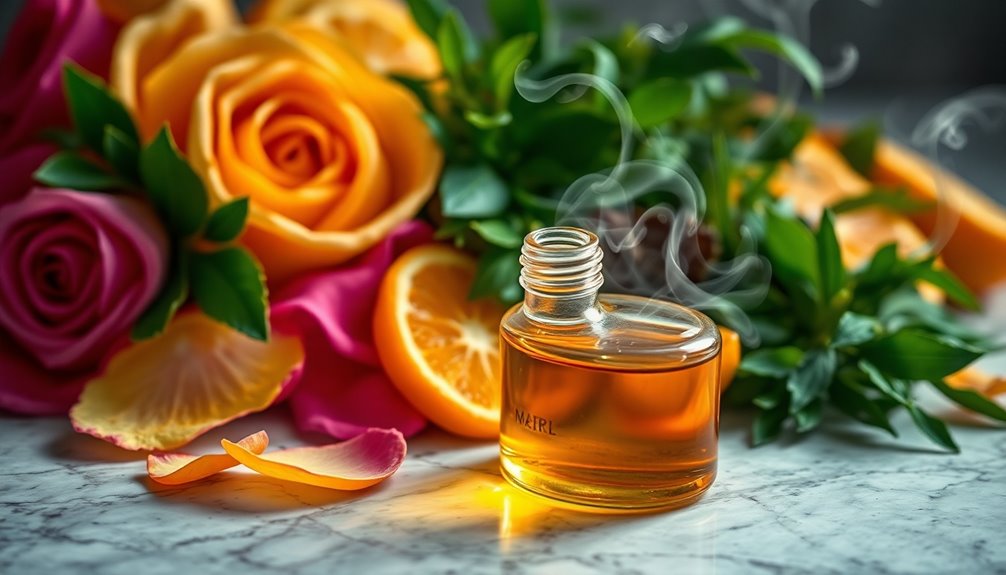
Consider using lavender essential oil, renowned for its calming properties. Just a few drops in a diffuser can fill your space with a soothing scent, helping you release tension and anxiety. As you breathe in the gentle fragrance, you might find it easier to focus your thoughts and embrace a state of tranquility. Pair this with aromatic meditation techniques, like deep breathing, to deepen your connection with the scent and your practice.
Another excellent choice is frankincense, often used in spiritual rituals. Its warm, resinous aroma can promote a sense of grounding while enhancing your spiritual awareness. When you use frankincense oil, you’re not just enjoying a pleasant smell; you’re also inviting clarity and peace into your heart and mind. This oil works beautifully with visualization techniques, allowing you to visualize a peaceful landscape or a personal mantra, anchoring you in the present moment.
If you’re seeking a boost of positivity during your prayer or meditation, citrus oils like lemon or orange can work wonders. Their bright, uplifting scents can energize your spirit and awaken your senses. You might find that using these oils in combination with mindfulness techniques empowers you to let go of negativity and invite positivity into your life. Additionally, oils like tea tree oil can provide antibacterial properties, enhancing your overall wellness during your practices.
To maximize the benefits of these essential oils, consider creating a ritual. For example, before starting your session, you might light a candle, diffuse your chosen oil, and set an intention for your practice. This not only elevates your experience but also signals to your mind that it’s time to shift into a sacred space.
Ultimately, the right aromas can serve as powerful allies in your meditation and prayer practice. By integrating beneficial essential oils and aromatic meditation techniques, you enrich your journey toward mindfulness and spiritual connection. So, go ahead, explore different scents, and discover what resonates with you. Your practice deserves that extra layer of depth and richness.
Frequently Asked Questions
Can I Use Essential Oils in a Diffuser for Prayer?
Yes, you can use essential oils in a diffuser for prayer. Just make sure you prioritize essential oil safety by choosing oils that are safe for diffusion. Different diffuser types, like ultrasonic or nebulizing diffusers, can enhance your experience, so pick one that suits your needs. Always follow the manufacturer’s guidelines for oil usage, and consider diluting oils when necessary to avoid any adverse reactions. Enjoy the calming atmosphere they create during your prayers!
Are There Any Aromas That Should Be Avoided During Meditation?
Yes, there are certain aromas to avoid during meditation. If you or anyone nearby has fragrance allergies, it’s best to steer clear of strong scents like synthetic fragrances or overly sweet aromas. These can cause discomfort or distraction, hindering your meditation experience. Always prioritize aroma safety by opting for milder, natural scents that promote relaxation and focus. Listening to your body’s reactions is key to creating a peaceful environment.
How Do I Choose the Right Aroma for My Practice?
Selecting the perfect scent’s pivotal! Start with aromatherapy benefits; it can enhance your experience. Consider calming fragrances like lavender or uplifting citrus. Use scent selection tips: trust your instincts, and choose aromas that resonate with you. Experiment with blends for balance, and pay attention to how each scent makes you feel. Your practice should be personal, so find what sparks serenity and supports your journey. Embrace the essence that elevates your experience!
Can Synthetic Fragrances Be Used for Meditation and Prayer?
Yes, you can use synthetic fragrances for meditation and prayer, but it’s crucial to take into account their effects on your practice. While they may offer pleasant scents, natural alternatives often provide a more calming experience. Essential oils or plant-based aromas can enhance focus and relaxation. If you’re sensitive to chemicals, it’s best to stick with natural options. Ultimately, choose what resonates with you and supports your spiritual journey.
How Long Should I Diffuse Aromas During Meditation Sessions?
You should diffuse aromas for about 30 to 60 minutes during your meditation sessions. This duration allows the aroma intensity to build up without becoming overwhelming. Start with 30 minutes and adjust based on your preference. If you find the scent too strong, reduce the time. Conversely, if you want a longer experience, you can extend it to an hour. Pay attention to how the aroma affects your focus and relaxation.
Conclusion
Incorporating aromas into your meditation and prayer practice can markedly enhance your experience. Did you know that studies show 75% of our emotions are triggered by smell? By using scents like sandalwood or lavender, you can create a calming atmosphere that deepens your focus and connection. So, whether you’re lighting incense or using essential oils, embrace the power of scent to elevate your spiritual journey. It’s a simple yet effective way to enrich your practice.