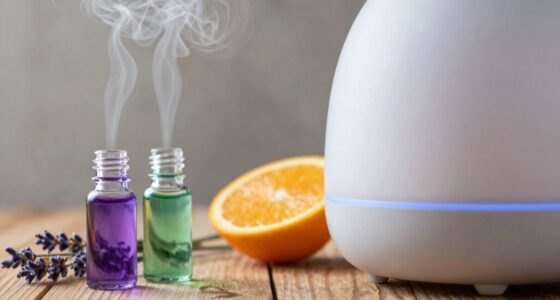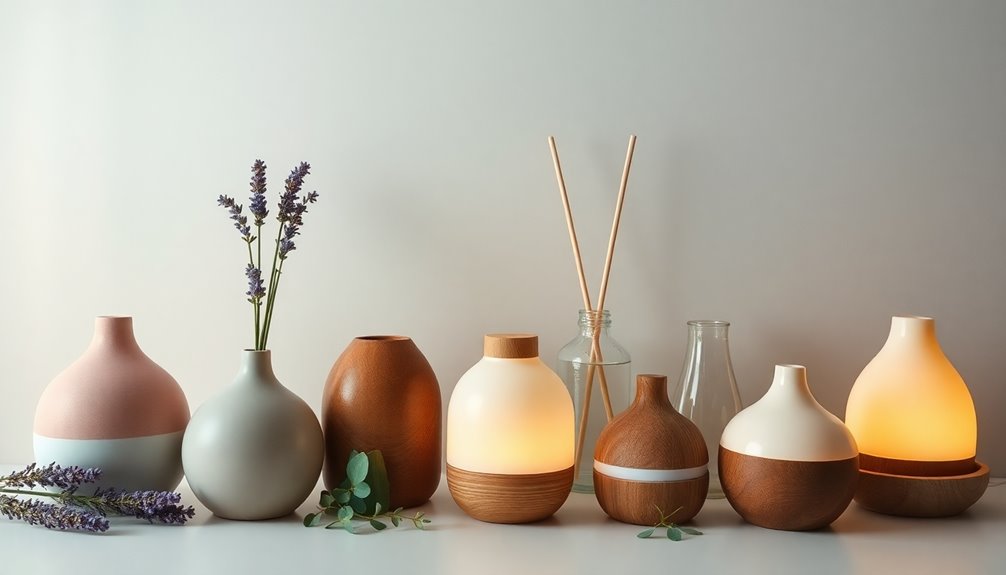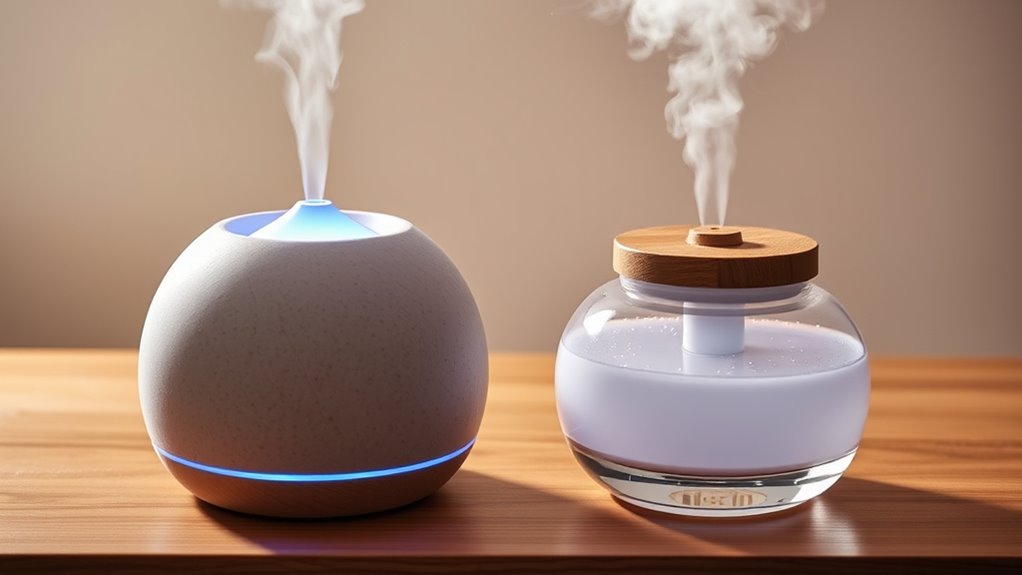

Ultrasonic diffusers use water and vibrations to create a gentle mist that disperses diluted essential oils, making them ideal for subtle, continuous scenting. Nebulizing diffusers, on the other hand, atomize pure oils directly into tiny particles, delivering a stronger, more immediate aroma. If you want a calmer daily ambiance, ultrasonic may suit you better, but for potent, therapeutic effects, nebulizing is the way to go. Keep exploring to discover which one fits your needs best.

Get oils, diffusers and self-care delivered free with Prime
- Fast, free delivery on millions of items
- Prime Video, Amazon Music and more included
- Member-only deals all year
Key Takeaways
- Ultrasonic diffusers use water and vibrations to create a gentle mist, while nebulizers atomize pure oils directly into a concentrated mist.
- Nebulizing diffusers produce a stronger, more immediate scent compared to the subtle, continuous aroma of ultrasonic models.
- Ultrasonic devices are typically more affordable and easier to maintain, whereas nebulizers are costlier but offer more potent therapeutic effects.
- Ultrasonic diffusers are ideal for gentle aromatherapy and long-term use; nebulizers suit quick, intense scenting and respiratory benefits.
- Both methods disperse essential oils differently, influencing scent intensity, effectiveness, and suitable applications.

When choosing a diffuser for your essential oils, understanding the differences between ultrasonic and nebulizing models is crucial. Both serve to disperse your favorite scents, but they do so in distinct ways that affect aromatherapy benefits and maintenance considerations. Ultrasonic diffusers use water and ultrasonic vibrations to create a fine mist, which carries the essential oils into the air. This method not only humidifies the room but also spreads the aroma gently, making it ideal for those seeking subtle, continuous scenting. The aromatherapy benefits here include stress relief, improved mood, and relaxation, thanks to the steady release of essential oils. However, because water dilutes the oils, the scent might not be as intense or immediate as with nebulizing diffusers. Additionally, ultrasonic diffusers are often more cost-effective, making them a popular choice for everyday use.
Nebulizing diffusers, on the other hand, work without water. They use pressurized air to atomize pure essential oils into tiny particles that are released directly into the air. This results in a potent, concentrated mist that delivers maximum aromatherapy benefits quickly and effectively. If you want to experience the full therapeutic effects of your oils, especially for respiratory issues or deep relaxation, nebulizing diffusers are often preferred. They provide a more immediate and robust scent, but that intensity comes with some trade-offs. Maintenance considerations become more prominent here because nebulizers have fewer parts but require regular cleaning to prevent clogging and guarantee ideal performance. Unlike ultrasonic models, they don’t need water, which simplifies some aspects, but the concentrated oil particles can leave residues that need attention.
ultrasonic essential oil diffuser
As an affiliate, we earn on qualifying purchases.
As an affiliate, we earn on qualifying purchases.
Frequently Asked Questions
Which Diffuser Type Is Best for Essential Oil Longevity?
If you’re wondering which diffuser type preserves essential oil longevity best, consider how diffuser maintenance affects scent intensity. Nebulizing diffusers, with their minimal water use, tend to concentrate oils more, making scents last longer and maintaining stronger scent intensity. Ultrasonic diffusers, requiring regular cleaning, may dilute oils over time, reducing longevity. So, for longer-lasting scents and less maintenance, nebulizing diffusers are often your best bet.
Can Ultrasonic Diffusers Operate Without Water?
Imagine trying to run your car without fuel—that’s like trying ultrasonic diffusers to operate without water. Ultrasonic diffusers rely on water to create mist, so they can’t operate waterless. Their ultrasonic limitations mean water is essential for functioning properly. Without water, they simply won’t produce scent or mist, so you’ll need to refill with water regularly for effective diffusion.
Are Nebulizing Diffusers Suitable for Large Spaces?
Nebulizing diffusers are great for large spaces because they emit concentrated essential oils directly into the air, making them effective even in rooms with poor air circulation. They work well for larger room sizes, ensuring the aroma disperses evenly. However, keep in mind that their size and power may require more frequent refilling and maintenance. Overall, they’re a solid choice if you want strong scent coverage in spacious areas.
Do Ultrasonic Diffusers Produce Any Harmful Emissions?
You might wonder if ultrasonic diffusers produce harmful emissions. Generally, ultrasonic diffusers are safe and don’t emit harmful substances because they only disperse water and essential oils into the air. They help improve air quality without compromising emission safety. However, it’s important to use high-quality oils and clean your diffuser regularly to prevent mold or bacteria growth, ensuring you maintain a healthy, safe environment.
How Do Noise Levels Compare Between the Two Diffuser Types?
When comparing sound levels, ultrasonic diffusers tend to be quieter, producing a gentle hum that many find unobtrusive. Nebulizing diffusers usually generate more noise because they operate with a small, vibrating mechanism or airflow that creates a noticeable sound. Overall, in the noise comparison, ultrasonic diffusers are quieter, making them better suited for quiet environments like bedrooms or offices, while nebulizing diffusers may be more audible but still manageable.
Conclusion
Now that you understand the difference, imagine the gentle mist swirling around you like a calming fog, filling your space with soothing scents. Whether you choose the quiet hum of an ultrasonic diffuser or the potent burst of a nebulizer, you’re creating an oasis of tranquility. So, pick the one that best fits your mood and needs, and let your senses drift away into a peaceful, fragrant dreamland. Your perfect aromatherapy experience awaits.
Halloween Picks
halloween
As an affiliate, we earn on qualifying purchases.