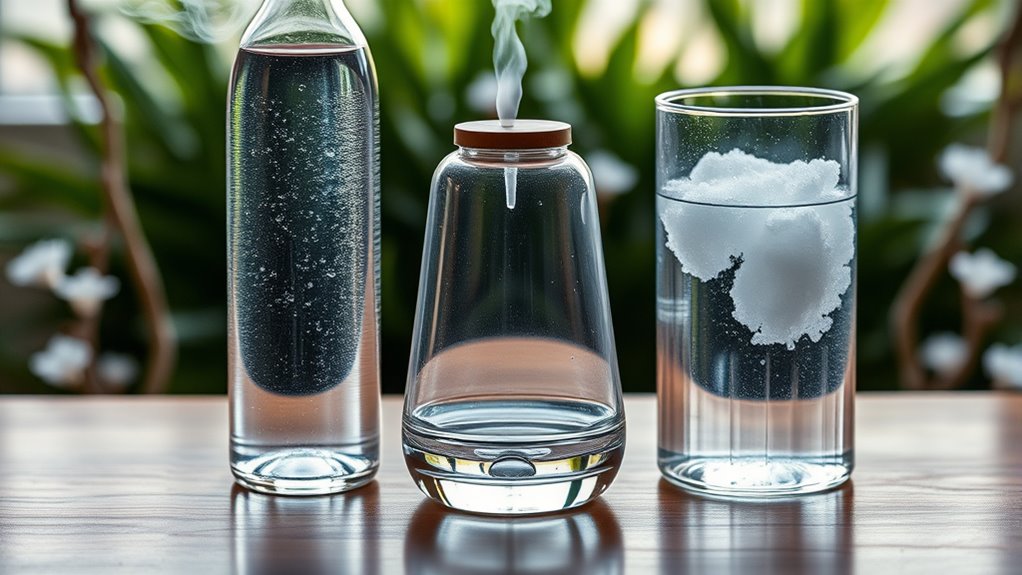

When deciding between distilled and filtered water for your diffuser, consider their differences in purity and maintenance. Distilled water is the purest option, preventing mineral buildup and ensuring ideal performance. Filtered water retains some minerals, which can enhance taste but may lead to clogs over time. If you want a hassle-free experience and longer device life, distilled water is the way to go. Stick around to uncover more about how each option affects your diffuser’s efficiency.
Key Takeaways
- Distilled water is the purest form, minimizing mineral deposits that can clog diffusers and reduce functionality.
- Filtered water retains some minerals, enhancing taste but may lead to mineral buildup over time.
- Using distilled water requires less maintenance, extending the lifespan of the diffuser.
- Filtered water is suitable for aromatherapy but may necessitate regular cleaning to avoid issues.
- Choice between distilled and filtered water depends on prioritizing purity versus taste and mineral content.
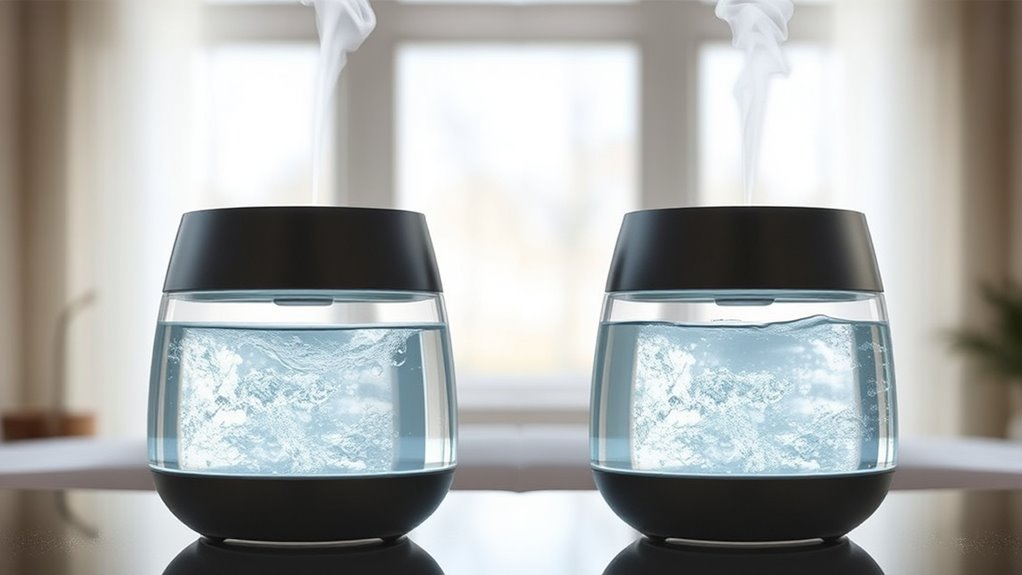
When you’re choosing between distilled water and filtered water, it’s essential to understand the differences that can affect your health and hydration. Both types of water serve their purpose, but when it comes to using them in diffusers, your choice can impact the performance and longevity of your device. Distilled water has undergone a process that removes impurities, bacteria, and minerals, making it the purest form available. This high level of purity meets strict purity standards, ensuring that you’re using water free of contaminants. On the other hand, filtered water has been treated to remove some impurities but typically retains certain minerals that might enhance its taste and potential health benefits.
Using distilled water in your diffuser is often recommended because it minimizes the buildup of mineral deposits that can occur with hard water. These deposits not only affect the performance of your diffuser but can also lead to a shorter lifespan for the device. The absence of mineral content in distilled water means you’re less likely to encounter issues like clogging or malfunctioning. If you’re aiming for ideal performance, distilled water is your safest bet.
However, filtered water isn’t without its advantages. While it may not be as pure as distilled water, many people prefer the taste of filtered water due to its retained minerals, which can add a revitalizing element to your hydration. If you’re using the diffuser primarily for aromatherapy or humidifying your space, using filtered water can still be effective, provided you’re aware of the potential for mineral buildup over time.
Ultimately, your choice between distilled and filtered water comes down to your specific needs and preferences. If you’re focused on maintaining the highest purity and ensuring your diffuser operates smoothly, distilled water is the way to go. But if you appreciate a bit of mineral content and don’t mind the slight risk of maintenance, filtered water can also serve you well. Just remember to clean your diffuser regularly if you choose filtered water. Understanding these differences can help you make the right decision, ensuring that both your hydration and your diffuser’s performance remain at their best. Additionally, using water from Italian espresso appliances can also enhance your overall coffee experience at home.
Frequently Asked Questions
Can I Use Tap Water in My Diffuser?
You can use tap water in your diffuser, but there are some concerns. Tap water often contains minerals and chemicals that can affect diffuser compatibility and performance. These impurities might lead to buildup, reducing the lifespan of your device. If you want to keep your diffuser running smoothly and maintain the quality of your essential oils, consider using filtered or distilled water instead. It’s a simple way to guarantee a better experience.
How Often Should I Clean My Diffuser?
You should clean your diffuser at least once a week for peak performance. This cleaning frequency helps prevent mineral buildup and guarantees that your essential oils stay pure. If you use it daily or with different oils, consider adjusting your maintenance schedule to clean it more often. Regular cleaning not only extends the life of your diffuser but also enhances the quality of the mist and fragrance it produces.
What Are the Benefits of Using Distilled Water?
Using distilled water offers several benefits. Did you know that around 80% of households experience mineral buildup in their appliances? By choosing distilled water, you eliminate purity concerns associated with minerals and contaminants found in tap water. This means your diffuser will run more efficiently and last longer without scaling. Plus, distilled water provides a cleaner mist, enhancing your aromatherapy experience and keeping your space fresher without unwanted residues.
Does Filtered Water Affect Essential Oil Quality?
Yes, filtered water can affect essential oil quality. While it may remove some impurities, it often retains minerals and chemicals that can compromise oil purity. These contaminants can alter the scent preservation of your oils, leading to a less vibrant aroma. If you want to maintain the integrity of your essential oils and guarantee their full fragrance potential, consider using distilled water, as it provides a cleaner base for your diffuser.
How Does Water Type Impact Diffuser Lifespan?
The type of water you use considerably impacts your diffuser’s lifespan. Using water with high mineral content can lead to mineral buildup, which clogs the system and decreases efficiency. This buildup can cause increased maintenance needs and even damage over time. Additionally, certain water types may heighten the corrosion risk of internal components. To prolong your diffuser’s life, opt for water that minimizes these issues, ensuring a smooth and efficient operation.
Conclusion
In the domain of hydration, distilled water is like a wise sage, free from impurities and ready to fill your diffuser with clarity. Filtered water, on the other hand, is the trusty companion, bringing along some minerals for a gentle touch. Choosing between them is like picking between a calm lake and a bubbling brook; both can enhance your experience, but they do so in their own unique ways. Ultimately, it’s about what best suits your journey.