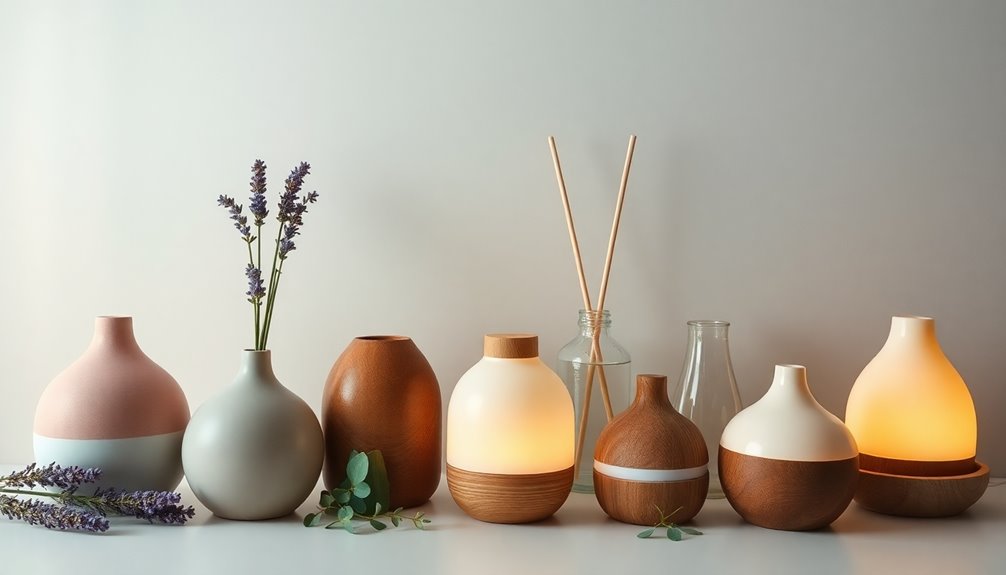
When choosing between ceramic and glass reservoirs for diffusers, consider that ceramic retains heat better, enhancing scent intensity and longevity. It may slightly alter oil scents over time, while glass maintains purity and the original aroma. However, ceramic can chip, and glass is heavier and shatters easily. Your choice should align with your aromatherapy style and preferences. If you want to explore how these materials influence your experience even further, there’s more to discover.
Key Takeaways
- Ceramic reservoirs retain heat effectively, enhancing essential oil scents and prolonging fragrance duration during aromatherapy sessions.
- Glass reservoirs are non-porous, preserving the purity of essential oils without altering their original aroma over time.
- While ceramic can chip or crack, glass is heavier and susceptible to shattering, requiring careful handling for both materials.
- Switching between different oils is easier with glass due to its non-absorptive nature, allowing for a cleaner scent experience.
- Aesthetic preferences play a role; glass offers a modern look, whereas ceramic provides a traditional, heat-retaining option for aromatherapy.
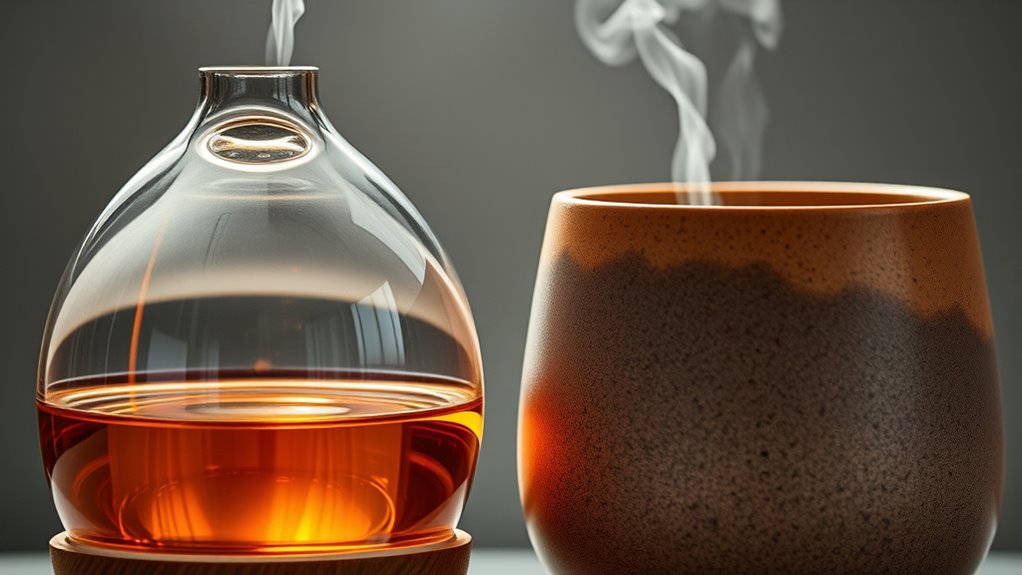
When you’re choosing between ceramic and glass reservoirs, it’s crucial to take into account how each material affects your experience. Both options have unique properties that can enhance your aromatherapy sessions, but they also come with their own sets of pros and cons. Understanding these differences can help you make the best choice for your needs.
Ceramic reservoirs are known for their ability to retain heat, which can be beneficial for certain types of essential oils. When you heat essential oils, their aromatic compounds become more volatile, enhancing their scent. This property can amplify the aromatherapy benefits, allowing you to enjoy a more intense and longer-lasting fragrance. However, ceramic can be more fragile than you might expect; while it’s generally durable, it can chip or crack if mishandled. If you’re someone who’s prone to accidents, you might want to consider this factor in your decision-making process.
On the other hand, glass reservoirs offer a sleek and modern aesthetic that many people find appealing. They’re non-porous, meaning they won’t absorb any oils, which helps maintain the purity of your blends. This is particularly important if you like to switch between different essential oils frequently. The durability comparison between ceramic and glass also reveals that glass is often more resilient to temperature changes, making it a good choice for those who enjoy experimenting with hot and cold infusions. However, glass can be heavier and more susceptible to shattering, so you’ll need to handle it with care.
Another aspect to evaluate is how each material interacts with the oils. Some users report that ceramic can slightly alter the scent of certain essential oils over time, while glass tends to keep the original aroma intact. If you’re using your diffuser primarily for its aromatherapy benefits, you might prefer glass for its neutrality. Additionally, understanding the key factors influencing asset division can help streamline your decision-making process when investing in quality diffusers.
Ultimately, your choice between ceramic and glass reservoirs should reflect your lifestyle and preferences. If you’re looking for a more traditional, heat-retaining option, ceramic could be ideal. If you value versatility and a modern look, glass might suit you better. Assess how each option aligns with your aromatherapy practices, and you’ll find the perfect reservoir for your needs.
Frequently Asked Questions
Can I Mix Essential Oils in Ceramic and Glass Reservoirs?
Yes, you can mix essential oils in both ceramic and glass reservoirs. Each material has its benefits; glass is non-reactive and won’t alter the oils’ properties, while ceramic can provide a unique aesthetic. Just guarantee your essential oils are compatible with each other to avoid any adverse reactions. Always check the recommended ratios and combinations for the best results, ensuring you enjoy the full benefits of your chosen essential oils.
How Do I Clean Ceramic and Glass Reservoirs Effectively?
To clean your reservoirs effectively, start by emptying them completely. You’ll want to use a mixture of warm water and mild soap, gently scrubbing with a soft cloth or sponge. For stubborn residue, a mix of vinegar and water works wonders. Rinse thoroughly and let them dry to guarantee proper reservoir maintenance. Curious about the best techniques? Keep experimenting with different methods to find what suits you and keeps your oils fresh!
Are Ceramic or Glass Reservoirs More Durable Over Time?
When it comes to durability over time, glass reservoirs generally offer better material longevity than ceramic. Glass is less prone to chipping or cracking under normal use, while ceramics can be more susceptible to damage. However, you’ll need to evaluate maintenance for both; glass requires careful handling to avoid breakage, while ceramic may need regular inspection for signs of wear. Choosing the right option depends on how much care and effort you’re willing to invest.
Do Ceramic and Glass Reservoirs Affect the Aroma Intensity?
Yes, ceramic and glass reservoirs can affect aroma intensity. In fact, studies show that ceramic materials can enhance aroma diffusion by up to 30% compared to glass. This increase happens because ceramic’s porous structure allows for better absorption and release of essential oils. If you’re looking for a stronger scent experience, consider using ceramic reservoirs, as they might give you a more potent aroma than their glass counterparts. Enjoy the difference!
Can I Use Tap Water in Ceramic and Glass Diffusers?
Yes, you can use tap water in ceramic and glass diffusers, but it’s not ideal. Tap water often contains impurities that can affect water purity and may reduce the lifespan of your reservoir. These impurities can lead to buildup and damage over time. For the best results, consider using distilled or filtered water to maintain aroma quality and guarantee your diffuser lasts longer. Your diffuser deserves the care for maximum performance!
Conclusion
In the great debate of ceramic versus glass reservoirs, it ultimately comes down to your personal preference and needs. Just like choosing between a classic novel and a modern bestseller, each option offers unique benefits. Ceramic’s durability and warmth can evoke the charm of a cozy cottage, while glass provides clarity and elegance reminiscent of a tranquil lake. Whichever you choose, you’ll be enhancing your diffuser experience, inviting a symphony of scents to dance through your space.