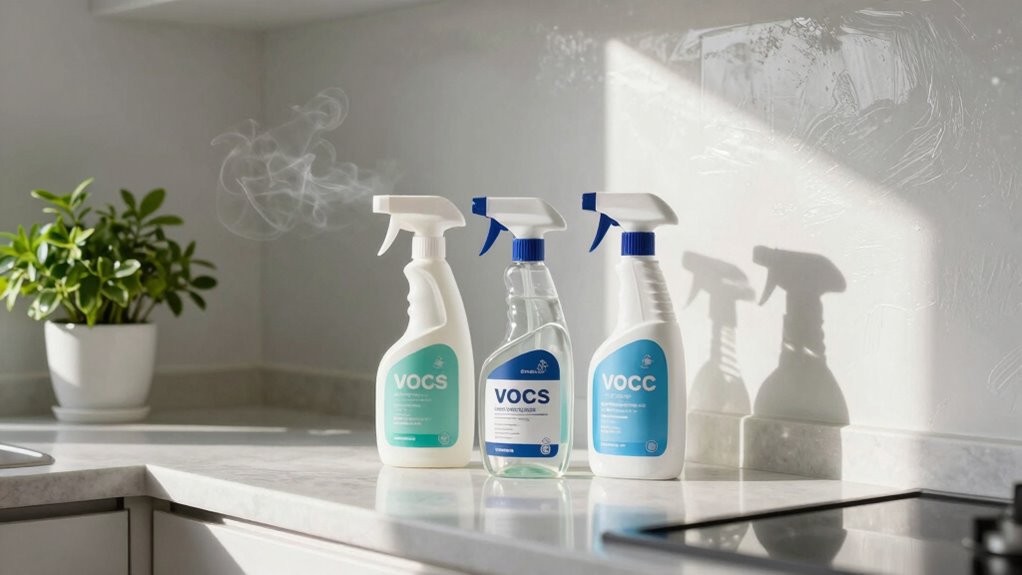
VOCs are in much more than just paint—they’re in many household items like cleaning supplies, air fresheners, furniture, and building materials. These chemicals can vaporize indoors and harm your air quality, causing headaches or respiratory issues over time. You can reduce VOCs today by switching to natural cleaners, improving ventilation, and choosing low-VOC or VOC-free furniture. Want to learn more simple ways to improve your indoor air? Keep exploring for helpful tips.
Key Takeaways
- VOCs are emitted from household items like cleaning supplies, air fresheners, furniture, and building materials, not just paint.
- Use natural cleaning alternatives such as vinegar, baking soda, and lemon juice to reduce VOC release.
- Improve indoor air quality by regularly ventilating spaces with fresh air from windows or exhaust fans.
- Incorporate VOC-absorbing indoor plants like snake plants and peace lilies to naturally filter harmful vapors.
- Choose low-VOC or VOC-free products for furniture, finishes, and household items to minimize ongoing emissions.
Volatile Organic Compounds (VOCs) are chemicals that easily become vapors or gases at room temperature, and they often originate from common household sources. You might not realize it, but everyday items like cleaning supplies, air fresheners, and even furniture release VOCs into the air you breathe. These compounds can contribute to indoor air pollution, potentially causing health issues ranging from headaches to respiratory problems. To reduce your exposure, you need to focus on improving air purification and exploring natural alternatives to chemical-laden products.
VOCs from household sources can pollute indoor air and impact your health.
One of the most effective ways to combat VOCs is through proper air purification. Using air purifiers equipped with activated carbon filters can absorb many VOC molecules, notably improving indoor air quality. HEPA filters are also beneficial for capturing particulate matter, but for VOCs specifically, activated carbon is your best bet. Keep your home well-ventilated by opening windows regularly, especially when using products that emit VOCs. This simple step helps dilute indoor pollutants and brings in fresh air, reducing the concentration of harmful vapors.
Switching to natural alternatives is another essential step. Many household products contain synthetic chemicals that release VOCs, but you can opt for natural options to minimize your exposure. For cleaning, use vinegar, baking soda, or lemon juice instead of chemical cleaners. These natural solutions are effective, affordable, and don’t off-gas harmful fumes. When it comes to air fresheners, avoid aerosol sprays and instead try essential oils or simmer herbs and spices on the stove for a pleasant scent without introducing VOCs into your home. Additionally, choose furniture and building materials made with low-VOC or VOC-free finishes. Look for labels indicating low emissions, and consider using natural wood or sustainably sourced materials.
You can also incorporate plants into your home as natural air purifiers. Certain indoor plants like snake plants, peace lilies, and pothos are known to absorb VOCs and improve air quality naturally. Not only do they add aesthetic value, but they also act as living filters, helping to reduce VOC levels without the need for chemical interventions. Moreover, understanding the role of proper ventilation can significantly enhance your efforts to maintain a healthier indoor environment.
Frequently Asked Questions
How Do VOC Levels Vary by Season Indoors?
You’ll notice VOC levels indoors fluctuate with the seasons due to seasonal fluctuations, like increased heating in winter and ventilation in summer. During colder months, you might see higher VOC levels because windows stay shut, trapping fumes. To reduce this, improve indoor ventilation whenever possible, especially in winter. Venting outdoors helps lower VOC concentrations, creating a healthier indoor environment year-round.
Are There Specific Brands With Lower VOC Emissions?
Yes, you can find eco-friendly brands that offer low emission products, helping you reduce VOC levels indoors. Look for reputable brands committed to sustainability and transparency about their VOC emissions. These brands often label their products as low or zero VOC, making it easier to choose safer options. By selecting low emission products from trusted eco-friendly brands, you’ll improve indoor air quality and create a healthier environment for yourself and your family.
Can Plants Effectively Reduce Indoor VOCS?
Yes, plants can effectively reduce indoor VOCs through natural air purification. You should focus on plant selection, choosing varieties like spider plants, snake plants, or peace lilies, which are known for their air-cleaning abilities. By incorporating these plants into your home, you enhance indoor air quality and create a healthier environment. Regular care and proper placement maximize their VOC-removing benefits, making your space safer and more revitalizing.
What Are the Long-Term Health Effects of VOC Exposure?
Oh, the bliss of breathing in chemicals daily! Long-term VOC exposure can harm your indoor air quality, leading to chronic health issues like respiratory problems, headaches, and even nerve damage. You might think it’s harmless now, but over time, these invisible villains can cause serious health setbacks. Protect yourself today by improving ventilation and reducing VOC sources—because your future self will thank you for prioritizing your health now.
How Often Should I Test My Home’s VOC Levels?
You should test your home’s air quality and VOC levels at least every six months, especially if you’ve made recent renovations or used new products. Regular testing helps you identify potential VOC buildup early, so you can improve ventilation or reduce sources. If anyone in your household has health issues, consider testing more frequently. Keeping an eye on testing frequency guarantees a healthier, safer home environment.
Conclusion
Now that you know VOCs are hiding everywhere—more than just paint—you’ve got the power to kick them out of your home forever. Imagine turning your space into a VOC-free fortress, where your air is so clean, you could exhale a sigh of relief that’s loud enough to shake the walls! Take action today, and soon your home will be a VOC-free paradise, so pure, so invigorating, it’ll feel like you’re living inside a breath of fresh air itself!