
Scent layering in your home transforms each space into an inviting haven. By choosing fragrances that match room purposes—like cozy vanilla and sandalwood in the living room or invigorating citrus in the kitchen—you create distinct scent zones. Use candles, diffusers, or potpourri for a personalized touch. Balance intensity to enhance moods without overwhelming your senses. With the right combinations, you can elevate your home’s ambiance. Discover more ways to customize your scent experience!
Key Takeaways
- Scent layering enhances your home’s atmosphere by creating distinct zones with personalized fragrance combinations for each room.
- Choose fragrances based on room purpose; for example, use vanilla and sandalwood in the living room for warmth.
- Utilize candles, diffusers, and potpourri for effective scent dispersion, ensuring balanced intensity to avoid overwhelming the space.
- Combine scents like citrus and herbal notes in the kitchen for freshness and energy, while lavender and chamomile promote relaxation in the bedroom.
- Tailor your scent signature to your preferences, transforming your home into a sensory journey through thoughtful fragrance blending.
When you think about creating a warm, inviting atmosphere in your home, scent layering can make all the difference. It’s not just about using one fragrance; it’s about fragrance blending to craft a unique sensory experience. By combining different scents, you can evoke specific moods and enhance various areas of your space, turning each room into its own scent zone.
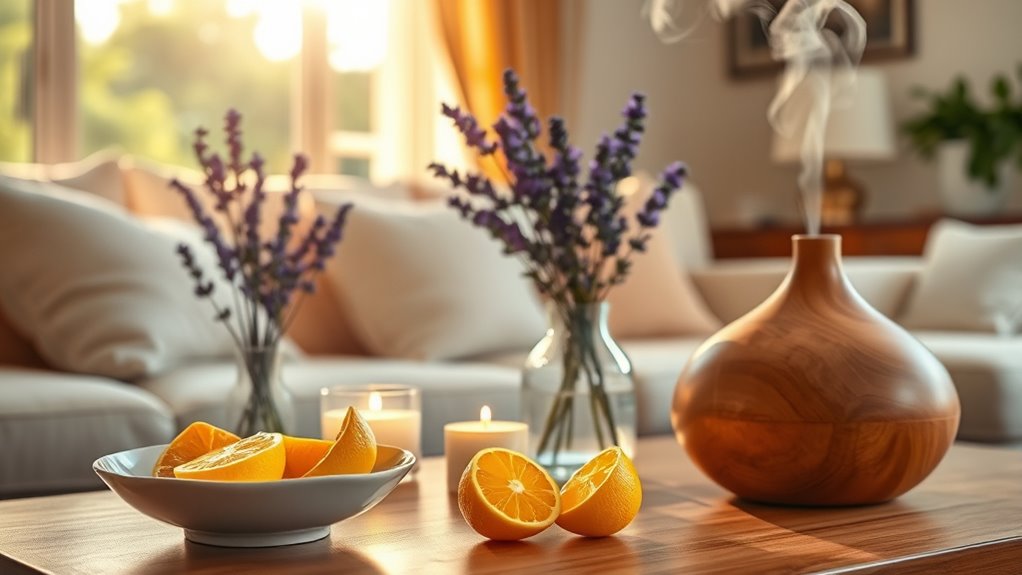
To start, consider the purpose of each room. In your living room, you might want a cozy, welcoming fragrance that invites conversation and relaxation. Think about blending vanilla and sandalwood—these warm, earthy notes can create an inviting environment. You can use candles, diffusers, or potpourri to introduce these scents into the area. By layering them, you’re not only enhancing the atmosphere but also creating a signature scent that feels personal and comforting.
Consider blending vanilla and sandalwood in your living room for a cozy, inviting atmosphere that encourages relaxation and conversation.
Moving to your kitchen, you might want something crisp and invigorating. Citrus scents, like lemon or orange, can uplift and energize the space. You could blend these with herbal notes, such as rosemary or basil, to create a vibrant kitchen scent zone that feels clean and alive. Consider simmering spices on the stove or using essential oil diffusers to spread these fragrances throughout the area. The combination can stimulate appetite and enhance the cooking experience.
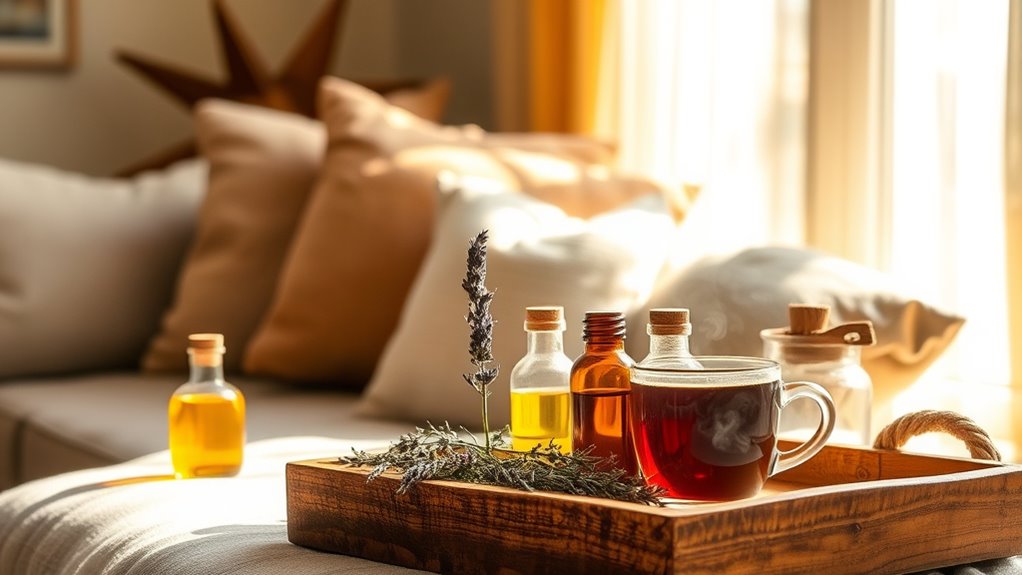
In your bedroom, the goal is often to promote relaxation and rest. A blend of lavender and chamomile can create a calming scent zone that encourages a peaceful atmosphere. Using scented candles or a diffuser with these essential oils can help you unwind after a long day. The key to effective fragrance blending here is moderation; you want the scent to be soothing, not overwhelming.
Lastly, don’t forget about your bathroom. A clean, fresh scent is ideal here. You might blend eucalyptus with mint to create a revitalizing scent zone that feels spa-like. This combination can invigorate your senses while providing an overall sense of cleanliness. Use a combination of scented candles, air fresheners, or even bath products that feature these fragrances.
Frequently Asked Questions
What Are the Best Scent Combinations for Layering?
The best scent combinations for layering include floral and citrus blends, which create a fresh, uplifting atmosphere. Think of pairing jasmine with lemon or lavender with grapefruit. On the other hand, woody and spicy combinations, like sandalwood with cinnamon or cedar with clove, add warmth and depth to your space. Experiment with these blends to find your perfect balance, and you’ll transform your environment into a fragrant haven you’ll love.
How Do I Choose a Base Scent?
To choose a base scent, start by considering your personal preferences. Think about the mood you want to create. Popular options include warm vanilla or fresh linen. You can test scented candles or aroma diffusers to see what resonates with you. Light a candle or activate a diffuser, and let the scent fill the space. This will help you decide if it’s the right foundation for layering your other fragrances.
Can Scent Layering Affect Allergies?
Yes, scent layering can definitely affect allergies. Just like a beautiful painting can overwhelm your senses, too many fragrances can trigger reactions. When you mix scents, you risk creating aroma therapy that’s more irritating than soothing, leading to scent fatigue. If you’re sensitive, stick to a few harmonious layers. Listen to your body; if a scent makes you sneeze or itch, it’s best to let it go and simplify your atmosphere.
How Long Do Layered Scents Typically Last?
Layered scents typically last anywhere from a few hours to a couple of days, depending on the fragrance’s composition and the environment. You’ll notice scent longevity can vary; more concentrated fragrances tend to fade slower. If you’re using lighter scents, they may evaporate quicker, leaving you to refresh them often. To maintain that lovely aroma, consider how the elements in your home, like humidity and temperature, can affect fragrance fading over time.
Are There Any Scents to Avoid When Layering?
Yes, you should avoid synthetic fragrances and overpowering scents when layering. These can clash and create an unpleasant aroma rather than a harmonious blend. Instead, opt for natural, subtle scents that complement each other. Be mindful of strong perfumes, as they can easily dominate the space and mask lighter fragrances. Experiment with lighter notes and find combinations that enhance your environment without overwhelming your senses. Balance is key for a pleasant olfactory experience.
Conclusion
Incorporating scent layering in your home can transform your space into a personal sanctuary. By blending different fragrances that complement each other, you create a unique atmosphere that reflects your style and mood. Imagine walking into a room that feels like a warm hug, inviting and comforting. With just a few simple techniques, you can craft your own signature scent. So, why not explore the endless possibilities and elevate your home’s ambiance today?