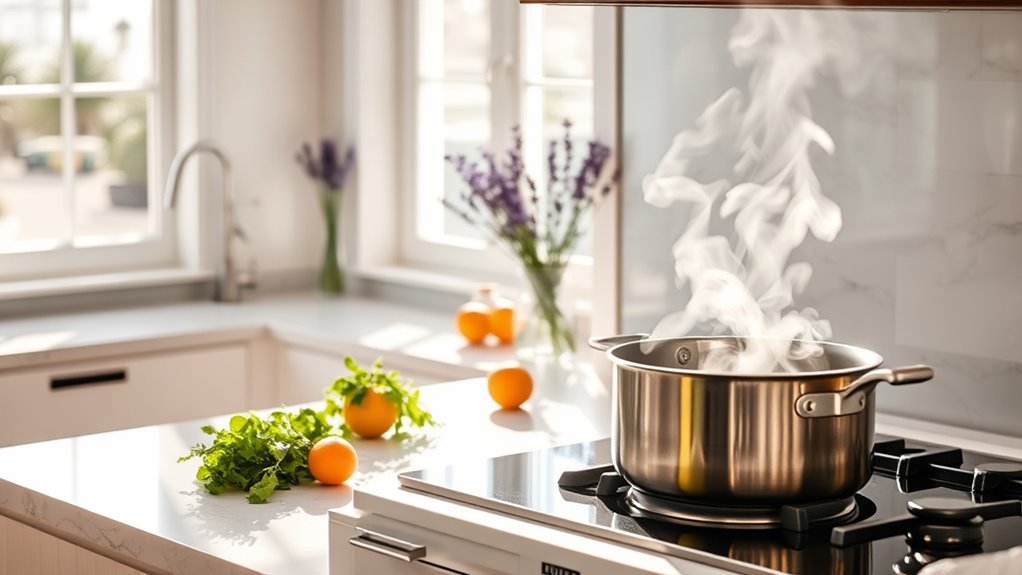

To neutralize cooking smells in your kitchen, start with proper ventilation. Turn on exhaust fans and open windows to let fresh air circulate. Use natural remedies like white vinegar, lemon slices, or baking soda to absorb odors. Clean surfaces and cookware right after use to prevent smells from settling. Regular maintenance keeps your kitchen fresh and inviting. Want to discover more tips for effective odor control? There’s plenty more to explore!
Key Takeaways
- Ensure proper ventilation by using exhaust fans and opening windows to allow fresh air circulation and reduce cooking odors.
- Utilize natural remedies like white vinegar, lemon slices, and baking soda to absorb and neutralize lingering smells effectively.
- Clean surfaces and wash pots immediately after cooking to prevent odors from settling and becoming embedded in your kitchen.
- Combine multiple natural odor neutralizers, such as coffee grounds and vinegar, for enhanced effectiveness in eliminating unwanted smells.
- Implement consistent cleaning routines and quick clean-ups to maintain a fresh kitchen environment and minimize persistent odors.

Have you ever wondered why certain kitchen odors linger long after the meal’s been served? It’s a frustrating experience, isn’t it? You’ve whipped up a delicious feast, but now the smell of burnt garlic or fried fish seems to haunt you. Thankfully, there are effective ways to neutralize those stubborn cooking smells. By employing some effective ventilation tips and natural remedies, you can reclaim your kitchen’s freshness.
First, let’s talk about ventilation. Proper airflow is vital in dissipating odors. When cooking, always turn on your exhaust fan. This simple step helps to draw out steam and smells right from the source. If you don’t have an exhaust fan, crack a window or open a door to allow fresh air to circulate. You’d be amazed at how just a little airflow can make a big difference. When you’re done cooking, keep the ventilation going for a while to guarantee any residual odors are whisked away.
Proper ventilation is key to eliminating cooking odors—turn on your exhaust fan or open a window for fresh airflow!
Next, consider using natural remedies that can help neutralize those pesky smells. One of the most effective options is vinegar. Fill a small bowl with white vinegar and place it on your countertop while you cook. The vinegar absorbs odors, leaving your kitchen smelling clean. Alternatively, you could simmer a mixture of water and lemon slices on the stove. Not only does this release a pleasant citrus aroma, but it also helps mask any lingering smells.
Baking soda is another fantastic natural remedy. You can sprinkle it on surfaces or leave an open container in your kitchen to absorb unwanted odors. It’s a simple solution that works wonders. If you’ve used spices or strong ingredients, try placing a few coffee grounds in a bowl nearby. They’ll help to neutralize the smells and add a lovely scent to the air.
Lastly, don’t underestimate the power of regular clean-up. Wipe down surfaces after cooking to prevent odors from settling in. Make it a habit to clean pots and pans right after use—this way, you won’t give the smells a chance to linger.
In addition to these methods, integrating intelligent tutoring systems in culinary education can provide personalized techniques for aspiring cooks to master odor management efficiently.
With these ventilation tips and natural remedies, you can enjoy cooking without the aftermath of unwanted odors. Take charge of your kitchen’s ambiance, and you’ll find it’s much easier to enjoy your culinary creations without the smells sticking around longer than you’d like.
Frequently Asked Questions
How Can I Prevent Odors Before Cooking?
To prevent odors before cooking, focus on ventilation strategies and odor neutralizing techniques. Open windows and use exhaust fans to promote air circulation. Place bowls of vinegar or baking soda around the kitchen to absorb potential smells. Consider simmering citrus peels or herbs in water on the stove to create a pleasant aroma. By taking these steps, you can minimize unpleasant scents and create a more inviting cooking environment.
What Materials Absorb Odors Best in Kitchens?
When it comes to battling kitchen odors, think of carbon filters as your trusty knights, bravely capturing unwanted smells in their grasp. You’ll find that activated charcoal is among the best odor absorbers, silently working behind the scenes to cleanse the air. Baking soda plays its part too, neutralizing odors like a gentle breeze. Combine these materials, and you’ll create a fortress against unwanted scents, ensuring your kitchen remains a fragrant haven.
Do Air Purifiers Help With Cooking Smells?
Yes, air purifiers can help with cooking smells. Their effectiveness often hinges on the type of filter used. HEPA filters capture larger particles, while activated carbon filters excel at odor absorption, trapping those persistent smells. If you combine an air purifier with odor absorption materials like baking soda or charcoal, you’ll enhance the overall neutralizing effect. So, investing in a good air purifier can considerably improve your kitchen air quality.
Can Pets Contribute to Kitchen Odors?
Absolutely, your pets can contribute to kitchen odors. Their fur shedding leads to dander and pet odor that can linger in the air. If your furry friend’s been lounging around while you cook, you might notice a blend of smells. Keeping their space clean and grooming them regularly helps reduce those odors. So, if you want a fresher kitchen, consider giving your pet a little TLC to minimize any unwanted scents.
Is There a Way to Eliminate Smoke Odors?
Sure, you can eliminate smoke odors effectively! First, tackle soot removal by thoroughly cleaning surfaces with a mixture of vinegar and water. Use an air purifier with a HEPA filter to capture lingering particles. Open windows to let fresh air circulate, and consider using baking soda or activated charcoal to absorb odors. If damage is extensive, you might need professional help to restore your space completely. Don’t forget to ventilate while cooking to prevent future issues!
Conclusion
In the battle against kitchen odors, you’ve got the tools to reclaim your space. With a sprinkle of baking soda or a simmering pot of spices, you can turn lingering smells into distant memories. Remember, every meal’s aroma tells a story, but you can choose which ones linger. So, breathe easy and let your kitchen be the fragrant haven it was meant to be, where every dish is a delightful chapter waiting to be savored.